

Parks Canada’s move to transfer jobs to Quebec criticized
Advertisement
Read this article for free:
or
Already have an account? Log in here »
To continue reading, please subscribe:
Monthly Digital Subscription
$1 per week for 24 weeks*
- Enjoy unlimited reading on winnipegfreepress.com
- Read the E-Edition, our digital replica newspaper
- Access News Break, our award-winning app
- Play interactive puzzles
*Billed as $4.00 plus GST every four weeks. After 24 weeks, price increases to the regular rate of $19.95 plus GST every four weeks. Offer available to new and qualified returning subscribers only. Cancel any time.
Monthly Digital Subscription
$4.99/week*
- Enjoy unlimited reading on winnipegfreepress.com
- Read the E-Edition, our digital replica newspaper
- Access News Break, our award-winning app
- Play interactive puzzles
*Billed as $19.95 plus GST every four weeks. Cancel any time.
To continue reading, please subscribe:
Add Free Press access to your Brandon Sun subscription for only an additional
$1 for the first 4 weeks*
*Your next subscription payment will increase by $1.00 and you will be charged $16.99 plus GST for four weeks. After four weeks, your payment will increase to $23.99 plus GST every four weeks.
Read unlimited articles for free today:
or
Already have an account? Log in here »
Hey there, time traveller!
This article was published 29/07/2019 (2424 days ago), so information in it may no longer be current.
OTTAWA — Parks Canada plans to transfer three jobs from Winnipeg to Quebec as part of its plan to move artifacts out of Manitoba, a decision that has sparked increasing criticism.
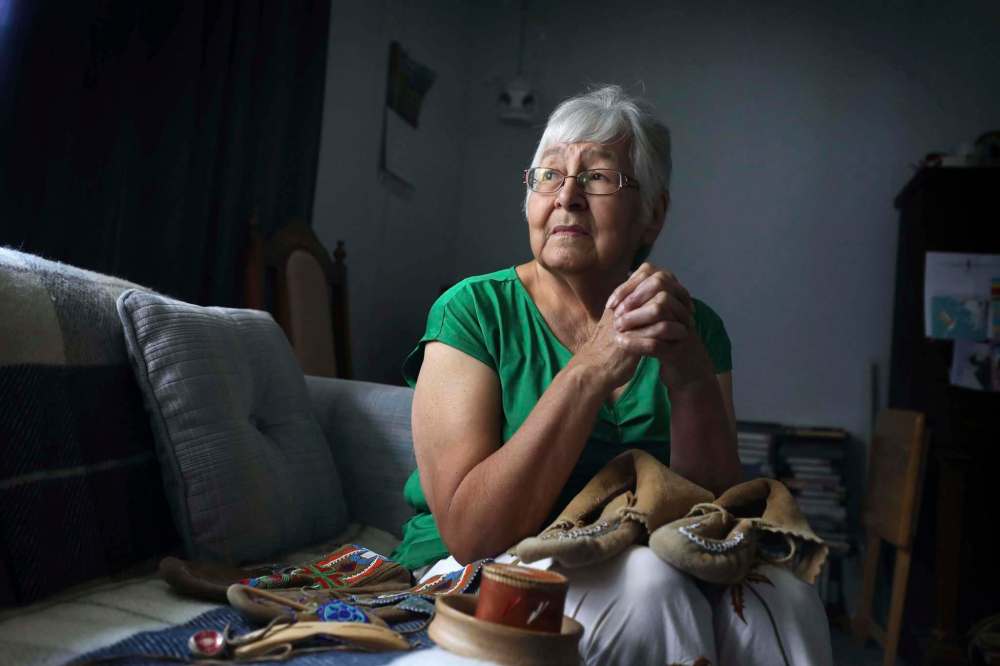
“These artifacts belong to the Aboriginal people, and they should stay here,” said Ruth Christie, a First Nations elder who has spent two decades working for Parks Canada.
Last week, the Trudeau government unveiled the details of a years-long plan to move federal heritage collections from across Canada to a warehouse in Gatineau, Que., near Ottawa.
The facility would house 25 million artifacts, about five million of which are in a depot at 145 McDermot Ave. The former Harper government proposed the idea in 2012 as a way to save $4 million.
The federal government insists the move, which is scheduled for 2022, is aimed at preserving the collection. It says 60 per cent of objects are “at risk from inappropriate environmental storage conditions and security measures.”
The majority of the Manitoba objects were found on historical sites, and many include fragments from First Nations people before they encountered Europeans. Others are household objects used by residents of the Red River Colony, and there are seven objects linked to Ukrainian settlers. There are no Mennonite or Icelandic objects in the Manitoba collection.
Liberal MP MaryAnn Mihychuk has urged her government to keep the objects in Manitoba. She has connected with local groups that might be able to keep the artifacts in various collections in the province.
Christie, an elder who has Cree and Orkney ancestors, worked at Lower Fort Garry as a Parks Canada employee for two decades. She relayed her ancestors’ role in fur-trading, helping Icelandic settlers and working on the Crown’s behalf against Louis Riel. The Selkirk woman has told stories in Europe and across Canada.
She uses the artifacts as part of her storytelling, the way her people have passed along their history for centuries. She said moving the artifacts outside Manitoba feels like the continuation of residential schools erasing languages and Hydro developments displacing communities.
“The past just can’t be changed — and things are going on presently. And now they want to take the artifacts, which our oral history is connected to? I disagree with that.”
Parks Canada stressed it will work with Indigenous groups to keep much of the collection in Manitoba.
“Parks Canada is committed to working with all interested parties, and is open to finding solutions that meet their needs, including short and long-term loans,” spokeswoman Natalie Fay wrote.
She said officials have met with Manitoba’s heritage department, 17 Indigenous communities, as well as the organizations that legally represent Manitoba’s Métis and northern First Nations people, and the Inuit of western Nunavut.
Fay gave more details about why the Winnipeg warehouse is inadequate.
“The Winnipeg facility’s main environmental issue is frequent and sharp variations of relative humidity. When the relative humidity goes up or down, objects, particularly objects made of materials like wood, bone and leather, expand and contract in response,” Fay wrote on Friday.
“In an object with multiple parts, like a chair, each part expands and contracts at a different rate, creating stresses within the object. The cycle of expansion and contraction causes cracking and flaking and excess humidity can cause rusting and mould.”
Mary Jane McCallum, a University of Winnipeg professor, fears that accessing the objects will leave Indigenous Peoples at the whim of federal bureaucrats, if it’s anything like her experience getting records at Library and Archives Canada’s Ottawa facilities.
“It feels like a loss. It doesn’t make sense from an access point of view.”– University of Winnipeg professor, Mary Jane McCallum
In the past decade, the agency has cut back on interlibrary loans as well as visiting hours, making jam-packed research trips to Ottawa tougher.
“It feels like a loss,” McCallum said. “It doesn’t make sense from an access point of view.”
The head of the Association of Manitoba Museums said the move could make it harder for the province’s researchers and curators to tell Manitoba’s history.
“I’m all for storing artifacts in good conditions, but they need to be accessible,” Monique Brandt said.
It would make sense to move the collection if it has been seldom accessed by local researchers, she added.
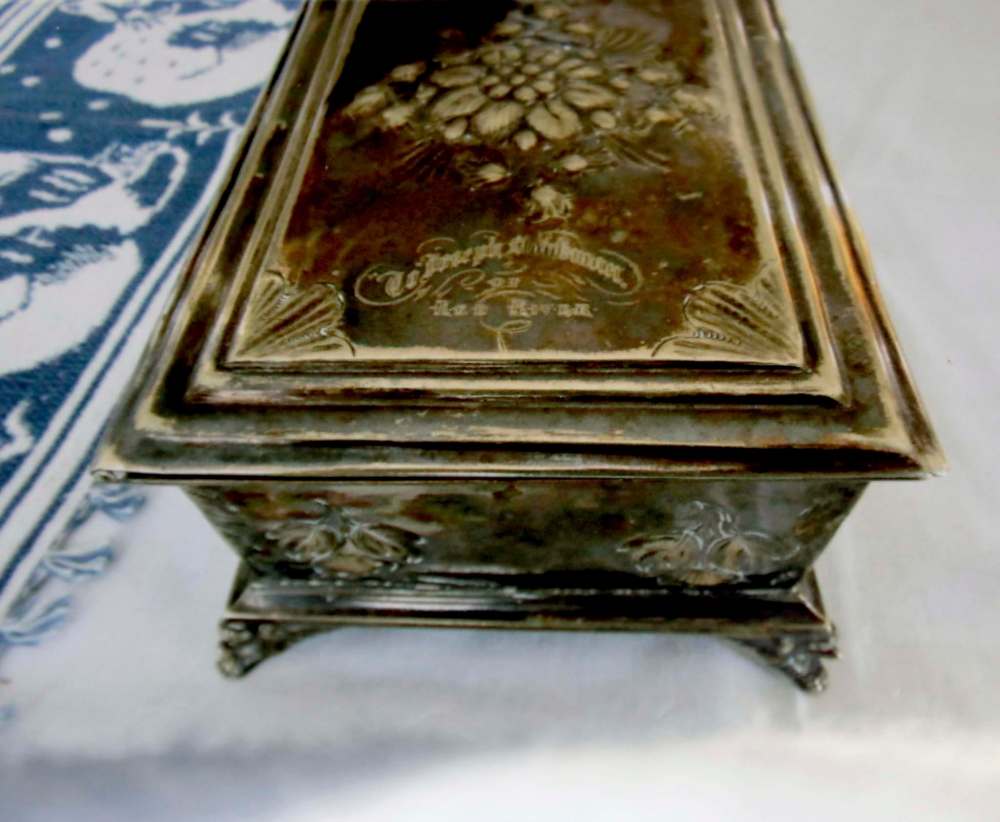
Christie inherited a silver box that the Royal Family had given to her great-great-grandfather, Joseph Monkman, in the late 1800s. It was to thank him for helping to get Manitoba lieutenant-governor John Christian Schultz to safety when Riel’s troops were pursuing him.
She loaned it to the Manitoba Museum instead of her former employer, fearing they’d send it to Quebec. Christie has toured the facility, which houses items with embroidery, traditional plows and keepsakes. It pains her to think of those objects leaving Winnipeg.
Ottawa said it looked at options, including renovating the existing site, and concluded that a new, centralized location “was found to be the best value for money.”
Parks Canada wants to amalgamate collections from Winnipeg; Cornwall, Ont.; Ottawa and Quebec City to Gatineau, Que. Most objects from the Atlantic region will stay in Nova Scotia because Parks Canada has renovated a facility there.
That’s why Christie has started a petition asking Ottawa to create a new facility in Winnipeg. She is arguing the west deserves as much as the east.
Privately, some of the Manitoba Museum’s curation experts have voiced concern about the move and have tried to find alternatives. Publicly, the institution has resisted pushing back, with a spokeswoman saying its leadership doesn’t want “to rock the boat.”
When the move goes through, three of the jobs in Winnipeg will be moved to Quebec. “Parks Canada’s archeologists and historians will remain in their respective regions to continue their important work,” Fay wrote.
McCallum said Indigenous Manitobans such as herself are starting to discover their family histories, and she worries only those who can fly to Ottawa will be able to access them.

“Many of us want to re-teach ourselves, and there’s nothing (better) like primary sources to be able to do that. It’s so important to have those accessible.”
Fay said her agency is sensitive to that concern.
“Parks Canada recognizes that Indigenous groups have a vested interest in the objects and associated documentation in the collections and will work to ensure Indigenous Peoples are involved in the care and presentation of these objects,” she wrote.
The new facility would include workspace for researchers as well as ceremonial space to allow for smudging.
dylan.robertson@freepress.mb.ca
Parks Canada response to questions on relocating Manitoba artifacts
Don’t repeat Icelandic-objects mistake, expert says
The head of the New Iceland Heritage Museum in Gimli said she fears Parks Canada’s planned relocation of artifacts will repeat a mistake made decades ago.
Julianna Roberts said many in her community remember a federal official gathering Icelandic settlers’ objects and taking them to the Canadian Museum of History, which is also in Gatineau, Que.
“I would hate to see the same thing happen to these artifacts. If they don’t need to go, I don’t see why they are being shipped there,” she said.
“To me, it just sounds like they just don’t want to be bothered with caring for them anymore.”
Federal spokeswoman Natalie Fay insisted that’s not the case.
“Parks Canada is open to discussions and committed to working with other interested parties to find solutions that meet their interests and ensure that these objects remain accessible for research, ceremonial, educational and exhibit purposes,” she wrote.
— Dylan Robertson
Related Articles
Plan to move artifacts to Ottawa panned

Advertisement Advertise With Us
Advertisement Advertise With Us