

Politicians set to play game of musical chairs

Advertisement
Read this article for free:
or
Already have an account? Log in here »
To continue reading, please subscribe:
Monthly Digital Subscription
$1 per week for 24 weeks*
- Enjoy unlimited reading on winnipegfreepress.com
- Read the E-Edition, our digital replica newspaper
- Access News Break, our award-winning app
- Play interactive puzzles
*Billed as $4.00 plus GST every four weeks. After 24 weeks, price increases to the regular rate of $19.95 plus GST every four weeks. Offer available to new and qualified returning subscribers only. Cancel any time.
Monthly Digital Subscription
$4.99/week*
- Enjoy unlimited reading on winnipegfreepress.com
- Read the E-Edition, our digital replica newspaper
- Access News Break, our award-winning app
- Play interactive puzzles
*Billed as $19.95 plus GST every four weeks. Cancel any time.
To continue reading, please subscribe:
Add Free Press access to your Brandon Sun subscription for only an additional
$1 for the first 4 weeks*
*Your next subscription payment will increase by $1.00 and you will be charged $16.99 plus GST for four weeks. After four weeks, your payment will increase to $23.99 plus GST every four weeks.
Read unlimited articles for free today:
or
Already have an account? Log in here »
Hey there, time traveller!
This article was published 14/01/2019 (2652 days ago), so information in it may no longer be current.
The name “Manitoba Electoral Boundaries Commission” isn’t particularly intimidating on its own. In fact, it sounds like a pretty boring endeavour.
However, every 10 years this non-elected group can have a profound effect on the future prospects of political candidates and their parties.
True to form, the 2018 electoral boundaries commission has really shaken up Manitoba’s political map.
It was almost as if the commission took a hammer and smashed the electoral map, shattering the 57 ridings and creating new constituencies with new names and dramatically different boundaries.
The effect on political parties from boundary redistribution of this magnitude cannot be understated.
The changes take effect for the 2020 election.
Not only are elected representatives forced to make difficult decisions about where to run, but the parties and riding associations have to scramble to reconstitute around the new boundaries. Money raised and held by each riding association has to be redistributed, riding executives have to be reformed and election strategies have to be redrafted.
The biggest change in this iteration of boundary redistribution is the addition of one seat in Winnipeg and loss of one seat in rural Manitoba.
How will that dynamic affect the parties and candidates in 2020?
The Progressive Conservatives will feel the greatest impact from boundary redistribution, given that they hold the greatest number of seats in the legislature and because the Tories dominate rural ridings.
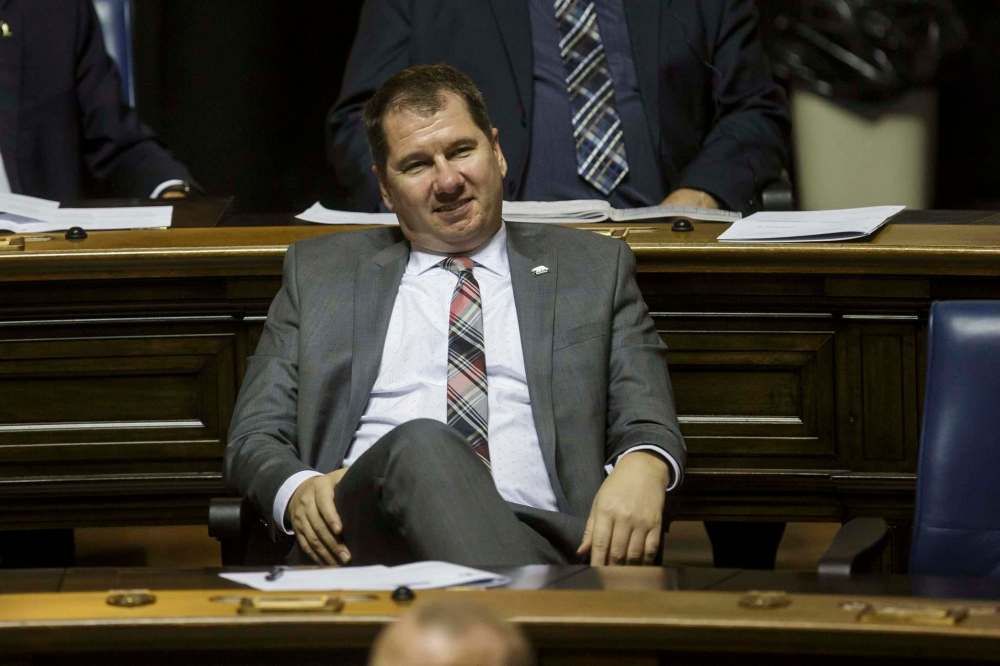
Among the Tories most affected will be Shannon Martin, the MLA for Morris, which will no longer exist after the redistribution of electoral boundaries. Pieces of Martin’s riding will be split between three new ridings.
A huge tract will go to the new riding of Roblin, which includes most of the urban seat formerly known as Charleswood, along with a huge tract of rural community directly west of Winnipeg that was part of the Morris constituency. The rest of Martin’s riding is further split between the newly created Springfield-Ritchot and Midland.
The problem for Martin — who lives in Lasalle, just north of the town of Morris — is that the constituencies that will take part of his constituency all appear to have Tory incumbents.
Tory Growth and Enterprise Minister Blaine Pedersen appears to be the logical choice to run in Midland. Infrastructure Minister Ron Schuler is expected to run in the new riding of Springfield-Ritchot, although there is also a possibility that he could consider the newly formed Red River North, which includes a section of his current riding.
The Tories do have open ridings — ones that they won in 2016, but that will not have incumbents — which could be options for Martin. The PC party’s decisions to expel Steven Fletcher in Assiniboia and Cliff Graydon in Emerson (which will become Borderland) leave holes that theoretically could be filled by Martin. That would require him to become a parachute candidate, running in a riding in which he does not live. That is not necessarily a barrier for Martin; several MLAs, including Premier Brian Pallister, currently live outside their constituencies.
North of Winnipeg, a similar crunch could take place involving the upcoming riding of Interlake-Gimli.
Currently, Municipal Relations Minister Jeff Wharton represents the riding of Gimli, while MLA Derek Johnson represents Interlake. With those two ridings mashed together, a difficult decision will be required to alleviate the candidate gridlock. All of the ridings in the immediate vicinity of Interlake-Gimli appear to have incumbents.
For the most part, there is nowhere to put Johnson other than Interlake-Gimli, which encompasses the gross majority of his current riding. Agriculture Minister Ralph Eichler appears to be a lock for Lakeside, while Alan Lagimodiere would be a logical choice to run in Selkirk. That leaves the aforementioned Red River North, which does run up against parts of Wharton’s current riding, but does not include the town of Gimli itself, where he lives.
In Winnipeg, there will no doubt be similar conflicts, although there may be many more open ridings for candidates to consider.
A rash of retirements and expulsions has created openings in the aforementioned Assiniboia riding and new ridings of Lagimodière, McPhillips and Union Station.
The NDP faces a number of critical decisions for its urban seats, not least of which may be numerous vacancies.
The Maples is essentially an open seat now that the NDP has ejected MLA Mohinder Saran from its caucus. The same holds true for Wolseley and Fort Garry, where MLAs Rob Altemeyer and James Allum, respectively, won’t seek re-election in 2020.
There is also uncertainty for NDP MLA Andrew Swan, whose Minto riding will disappear. Swan lives in Wolseley and could run there, so he has options.

Open as well is the new riding of Union Station, carved from the southern part of the Point Douglas constituency. Union Station will be an enclave made up of new, upper-middle-class voters who have been slowly populating the downtown east of Main Street and south of Higgins Avenue. The NDP has owned Point Douglas, but Union Station may prove to be a tougher battle for the official Opposition.
Once all the candidates have identified their constituency of choice, it may turn out that, unlike a game of musical chairs, there is a seat for everyone.
Or it won’t.
As boring as it may sound, the electoral boundaries commission is, in actuality, quite a wild card.
dan.lett@freepress.mb.ca.
Dan Lett is a columnist for the Free Press, providing opinion and commentary on politics in Winnipeg and beyond. Born and raised in Toronto, Dan joined the Free Press in 1986. Read more about Dan.
Dan’s columns are built on facts and reactions, but offer his personal views through arguments and analysis. The Free Press’ editing team reviews Dan’s columns before they are posted online or published in print — part of the our tradition, since 1872, of producing reliable independent journalism. Read more about Free Press’s history and mandate, and learn how our newsroom operates.
Our newsroom depends on a growing audience of readers to power our journalism. If you are not a paid reader, please consider becoming a subscriber.
Our newsroom depends on its audience of readers to power our journalism. Thank you for your support.
Dan Lett is a columnist for the Free Press, providing opinion and commentary on politics in Winnipeg and beyond. Born and raised in Toronto, Dan joined the Free Press in 1986. Read more about Dan.
Dan’s columns are built on facts and reactions, but offer his personal views through arguments and analysis. The Free Press’ editing team reviews Dan’s columns before they are posted online or published in print — part of the our tradition, since 1872, of producing reliable independent journalism. Read more about Free Press’s history and mandate, and learn how our newsroom operates.
Our newsroom depends on a growing audience of readers to power our journalism. If you are not a paid reader, please consider becoming a subscriber.
Our newsroom depends on its audience of readers to power our journalism. Thank you for your support.
Advertisement Advertise With Us
Advertisement Advertise With Us