

Prof: ‘What is the signal we’re sending here?’

Advertisement
Read this article for free:
or
Already have an account? Log in here »
To continue reading, please subscribe:
Monthly Digital Subscription
$1 per week for 24 weeks*
- Enjoy unlimited reading on winnipegfreepress.com
- Read the E-Edition, our digital replica newspaper
- Access News Break, our award-winning app
- Play interactive puzzles
*Billed as $4.00 plus GST every four weeks. After 24 weeks, price increases to the regular rate of $19.95 plus GST every four weeks. Offer available to new and qualified returning subscribers only. Cancel any time.
Monthly Digital Subscription
$4.99/week*
- Enjoy unlimited reading on winnipegfreepress.com
- Read the E-Edition, our digital replica newspaper
- Access News Break, our award-winning app
- Play interactive puzzles
*Billed as $19.95 plus GST every four weeks. Cancel any time.
To continue reading, please subscribe:
Add Free Press access to your Brandon Sun subscription for only an additional
$1 for the first 4 weeks*
*Your next subscription payment will increase by $1.00 and you will be charged $16.99 plus GST for four weeks. After four weeks, your payment will increase to $23.99 plus GST every four weeks.
Read unlimited articles for free today:
or
Already have an account? Log in here »
Hey there, time traveller!
This article was published 24/02/2011 (5489 days ago), so information in it may no longer be current.
IN a Thompson court, a sentencing decision hinged partly on a question: What was the victim wearing the night she was raped?
Now, some experts on sexual assault law are pondering a different question: What was Queen’s Bench Justice Robert Dewar thinking when he suggested the victim’s outfit sent signals to her attacker that “sex was in the air?”
“It’s really reprehensible in this day and age that we’re still talking about whether someone wore a tube top with no bra as if that means that you deserve to be raped,” said University of Winnipeg professor Shannon Sampert.
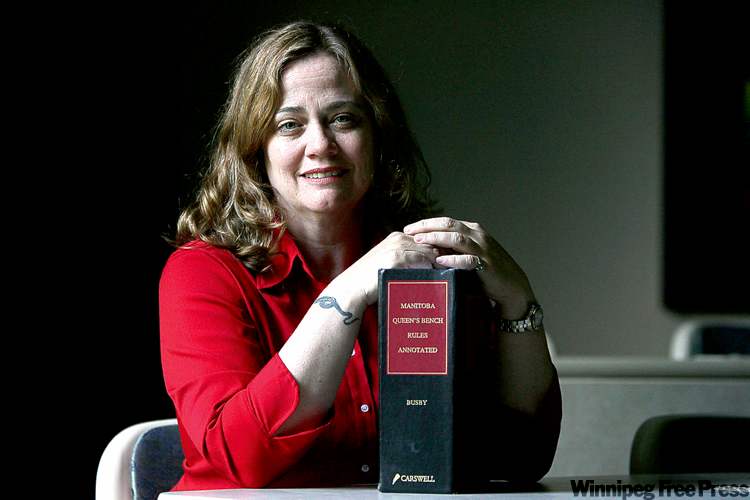
“What is the signal we’re sending here? We’re saying, don’t bother coming to us unless you’re a virgin, wearing white, and have never consumed any alcohol and have never had a life outside of a convent.”
Sampert called on the crown attorney to appeal the sentence, calling it a “dangerous precedent” if left to stand — especially in a country where as few as one in 10 sexual assaults is ever brought to police.
But the judge’s comments already fall into a long tradition. Since 1992, Canadian law holds that there is no such thing as “implied consent,” and that clothing or kissing choices aren’t the same thing as consenting to sex — but you wouldn’t always know it from listening to some justice and law-enforcement authorities.

Just last week, a Toronto police officer told a crowd of university students at a safety session not to “dress like sluts” in order to avoid being raped. The officer was later disciplined, and apologized.
“Sadly we see it frequently,” said University of Manitoba law professor Karen Busby, who teaches a seminar on gender and the law. “I always ask students (if they would) report to police if they were sexually assaulted. To a person they say ‘no,’ because they’re afraid of having their personal life raked over the coals. It’s not all judges, not all the time… but they’re still there. And women know that.”
While the attitude that victims invite their own rape by their appearance or behaviour is “less rampant” than 20 years ago, Busby said, it is still “deeply resistant to change.”

Perhaps it will continue to resist change until society talks more about the law, and does more to teach youth what free and willing consent truly means. “The law changed almost 20 years ago… I would have thought it would have been clearer by now,” Busby said. “But it’s a story that’s still out there: that women who party, women who dress like sluts, none of these women are worthy of the law’s protection.”
melissa.martin@freepress.mb.ca
Melissa Martin
Reporter-at-large
Melissa Martin reports and opines for the Winnipeg Free Press.
Every piece of reporting Melissa produces is reviewed by an editing team before it is posted online or published in print — part of the Free Press‘s tradition, since 1872, of producing reliable independent journalism. Read more about Free Press’s history and mandate, and learn how our newsroom operates.
Our newsroom depends on a growing audience of readers to power our journalism. If you are not a paid reader, please consider becoming a subscriber.
Our newsroom depends on its audience of readers to power our journalism. Thank you for your support.
Melissa Martin
Reporter-at-large
Melissa Martin reports and opines for the Winnipeg Free Press.
Every piece of reporting Melissa produces is reviewed by an editing team before it is posted online or published in print — part of the Free Press‘s tradition, since 1872, of producing reliable independent journalism. Read more about Free Press’s history and mandate, and learn how our newsroom operates.
Our newsroom depends on a growing audience of readers to power our journalism. If you are not a paid reader, please consider becoming a subscriber.
Our newsroom depends on its audience of readers to power our journalism. Thank you for your support.
Related Articles
Rape victim 'inviting,' so no jail
Advertisement Advertise With Us
Advertisement Advertise With Us