

Proposed bill limits access to restitution for harms done by big business: NDP
Justice minister doesn't answer questions

Advertisement
Read this article for free:
or
Already have an account? Log in here »
To continue reading, please subscribe:

Digital Subscription
One year of digital access for only $205*
- Enjoy unlimited reading on winnipegfreepress.com
- Read the E-Edition, our digital replica newspaper
- Access News Break, our award-winning app
- Play interactive puzzles
*First annual payment billed as $205.00 + GST for one year. This annual subscription will automatically renew at $233.00 + GST every 52 weeks (10% off the regular annual price of $259.35). Offer available to new and qualified returning subscribers only. Cancel any time.
To continue reading, please subscribe:
Add Free Press access to your Brandon Sun subscription for only an additional
$1 for the first 4 weeks*
- Enjoy unlimited reading on winnipegfreepress.com
- Read the E-Edition, our digital replica newspaper
- Access News Break, our award-winning app
- Play interactive puzzles
*Your next Brandon Sun subscription payment will increase by $1.00 and you will be charged $17.95 plus GST for four weeks. After four weeks, your payment will increase to $24.95 plus GST every four weeks.
Read unlimited articles for free today:
or
Already have an account? Log in here »
Hey there, time traveller!
This article was published 08/03/2021 (2027 days ago), so information in it may no longer be current.
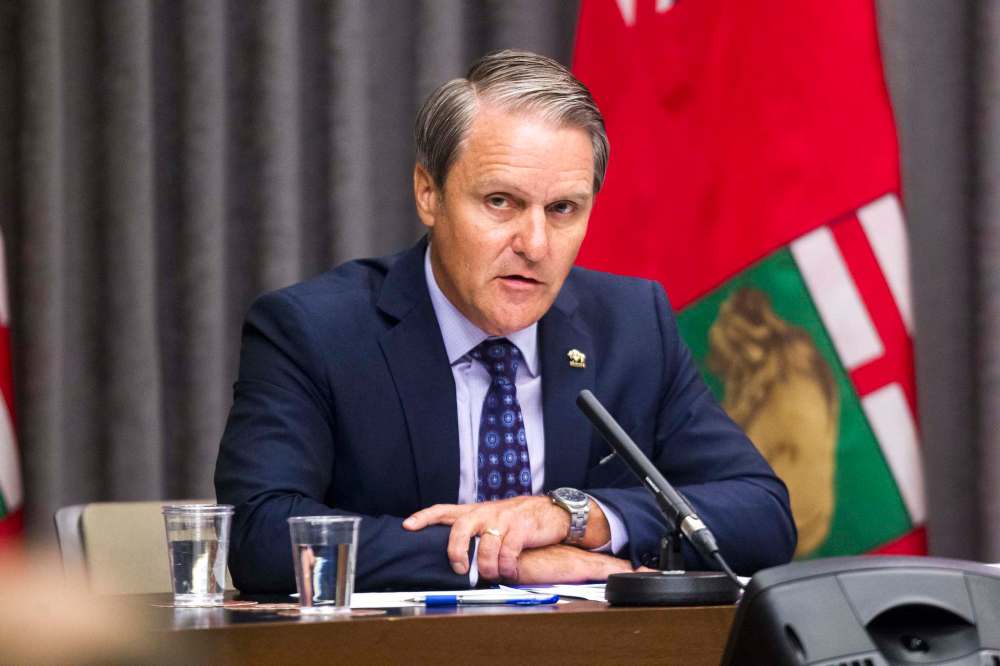
Manitoba Justice Minister Cameron Friesen has left unanswered questions in the wake of two bills introduced in November, but not made available to MLAs or the public until Monday.
One will make it harder for Manitobans to access restitution for harms done to them by big business and government, says the opposition NDP.
Bill 51 (the Limitations Act) says Aboriginal and treaty rights are affirmed by the Constitution but any claims based on them “must not be commenced more than 30 years after the day the act or omission on which the claim is based took place.” For other civil claims, it sets a two-year limit that begins the day the claim is discovered — when the person with the claim knew, or ought to have known, its material facts.
“We are concerned this bill, which was hidden from the public for more than four months, appears to hurt the rights of all Manitobans to address harms caused by big corporations, private groups and even government,” NDP justice critic Nahanni Fontaine said.
“This is especially concerning on issues like environmental damages to services families depend on, workplace exposures that lead to health issues, and even violations to Indigenous rights which may take years to come to light,” she said in an email after question period Monday.
“Government should make it easier for people to access restitution, not harder.”
Although Friesen was present in the chamber Monday, he would not answer questions from reporters about either of the justice bills, as ministers customarily do when their legislation is distributed to MLAs.
Friesen’s press secretary said the minister couldn’t leave the chamber because he had to take part in second-reading debate on legislation distributed last week.
On Monday night, Friesen released a brief statement: “Manitoba is modernizing our limitations act and (this bill) would bring Manitoba in line with other provinces. This legislation would provide a common set of rules to limitations periods within Manitoba. Sexual-assault claims, along with claims for recovering money owed to the Crown, and select claims brought by the Crown, continue to have no limitation period.”
Earlier, the government issued a news release about the other bill: Bill 46 (the Court Practice and Administration Act) would update court service fees and increase juror compensation.
“Our government continues to modernize Manitoba’s courts, to take advantage of technologies, provide better services and decrease wait times for access. This includes addressing fees that have not been updated in years,” Friesen said in the news release.
“Current juror fees have become a barrier, and these changes will increase fairness for jurors and acknowledge their investment of time.”

The bill would modernize the reasons for exemption from jury duty and improve compensation for jurors, who are now paid $30 per day beginning on the 11th day of a trial. Under the new legislation, juror pay would increase and begin on the first day of service.
Court payment options such as credit or electronic transfers would be available “as many Manitobans have begun to move away from cash and cheques,” the release said.
Meanwhile, amendments would allow for adjustments to court fees “to more reasonably reflect the cost of services and the value received by Manitobans.”
The legislation would also support the government’s goal to modernize and digitize court registries, and “help to ensure timeliness, effectiveness and consistency of cases prosecuted in criminal courts.”
carol.sanders@freepress.mb.ca
Carol Sanders
Legislature reporter
Carol Sanders is a reporter at the Free Press legislature bureau. The former general assignment reporter and copy editor joined the paper in 1997. Read more about Carol.
Every piece of reporting Carol produces is reviewed by an editing team before it is posted online or published in print — part of the Free Press‘s tradition, since 1872, of producing reliable independent journalism. Read more about Free Press’s history and mandate, and learn how our newsroom operates.
Our newsroom depends on a growing audience of readers to power our journalism. If you are not a paid reader, please consider becoming a subscriber.
Our newsroom depends on its audience of readers to power our journalism. Thank you for your support.
Carol Sanders
Legislature reporter
Carol Sanders is a reporter at the Free Press legislature bureau. The former general assignment reporter and copy editor joined the paper in 1997. Read more about Carol.
Every piece of reporting Carol produces is reviewed by an editing team before it is posted online or published in print — part of the Free Press‘s tradition, since 1872, of producing reliable independent journalism. Read more about Free Press’s history and mandate, and learn how our newsroom operates.
Our newsroom depends on a growing audience of readers to power our journalism. If you are not a paid reader, please consider becoming a subscriber.
Our newsroom depends on its audience of readers to power our journalism. Thank you for your support.
Advertisement Advertise With Us
Advertisement Advertise With Us
History
Updated on Monday, March 8, 2021 7:09 PM CST: Adds written statement about the bill