

Province floats disaster financial assistance program to tune of $10M
Advertisement
Read this article for free:
or
Already have an account? Log in here »
To continue reading, please subscribe:

Digital Subscription
One year of digital access for only $205*
- Enjoy unlimited reading on winnipegfreepress.com
- Read the E-Edition, our digital replica newspaper
- Access News Break, our award-winning app
- Play interactive puzzles
*First annual payment billed as $205.00 + GST for one year. This annual subscription will automatically renew at $233.00 + GST every 52 weeks (10% off the regular annual price of $259.35). Offer available to new and qualified returning subscribers only. Cancel any time.
To continue reading, please subscribe:
Add Free Press access to your Brandon Sun subscription for only an additional
$1 for the first 4 weeks*
- Enjoy unlimited reading on winnipegfreepress.com
- Read the E-Edition, our digital replica newspaper
- Access News Break, our award-winning app
- Play interactive puzzles
*Your next Brandon Sun subscription payment will increase by $1.00 and you will be charged $17.95 plus GST for four weeks. After four weeks, your payment will increase to $24.95 plus GST every four weeks.
Read unlimited articles for free today:
or
Already have an account? Log in here »
Hey there, time traveller!
This article was published 09/05/2022 (1595 days ago), so information in it may no longer be current.
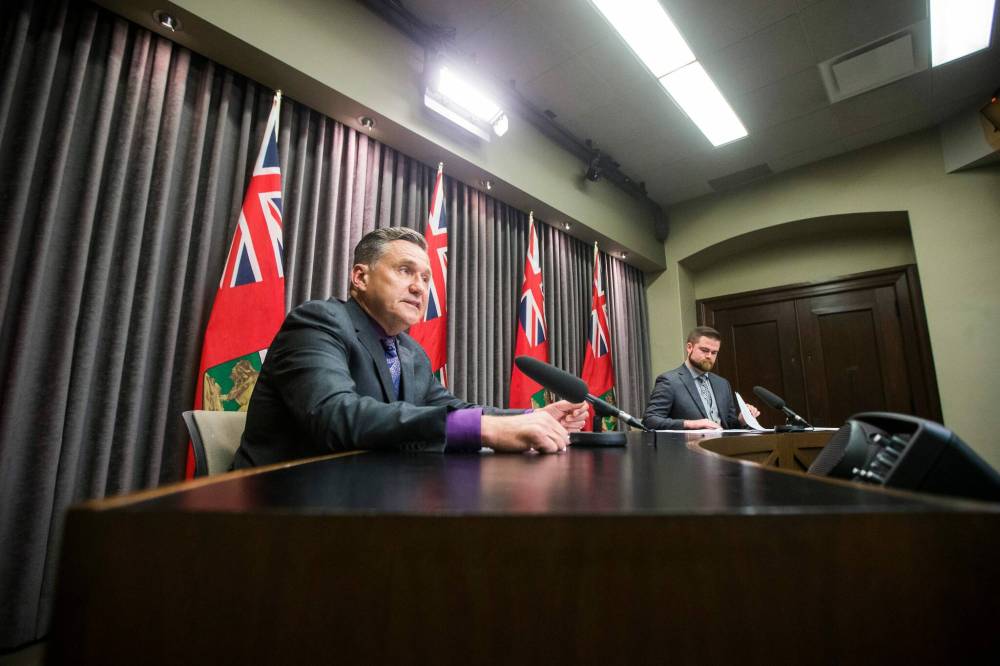
The Manitoba government will cover non-insurable damage caused by overland flooding and historic precipitation with disaster relief expected to cost the province more than $10 million.
Property owners, businesses and municipalities can now apply to the province’s disaster financial assistance program, Transportation and Infrastructure Minister Doyle Piwniuk said Monday.
“We still have a flood situation happening,” Piwniuk said. “We are continuously monitoring the damages that we’ve had in our infrastructure.”
Basic and essential property, including losses of infrastructure, private residences, farms and small business due to spring flooding are eligible for coverage under the program. However, eligible property cannot be insurable.
Damage caused by sewer backups will not be covered under the provincial program. People are urged to review their insurance policies before applying for provincial disaster relief funding.
Piwniuk said early estimates put the program cost at around $10 million but that number is expected to rise after flood waters recede.
“All the municipalities have to do their own assessments, including the City of Winnipeg, and then we’ll… look at the actual overall costs,” Piwniuk said.
The minister noted more than 300 people have been evacuated from more than 140 households (not including Peguis First Nation) and the province will not know how much the disaster financial assistance program will cost until those damage reports are received.
Piwniuk said the province’s hydrologic forecast centre is monitoring additional precipitation forecast this week; the rainfall is likely to prolong the peak on the Red River and possibly raise river levels or create localized flooding.
“We don’t know what’s coming at us in the next week here. We’re forecasting between 40 and 50 millimetres of rain,” Piwniuk said. “That’s going to be the biggest factor.”
The federal government is also expected to provide financial assistance to the province, Piwniuk said.
Rural Municipality of Montcalm Reeve Paul Gilmore, who welcomed the announcement, said the extent of damage for communities along Highway 75 remains unclear as water levels are still high.
He anticipates many roads will undergo work once the water recedes.
“It’s still too early to put a dollar figure on it, but most of our roads are in terrible shape,” said Gilmore.
Assistant deputy minister and emergency management organization head Johanu Botha said the province will cover all losses reported by municipalities who opt-in to a cost sharing program.
The program will ensure cash continues to be available for long-term flood mitigation programs. Since 2020, municipalities have had the option to redirect a portion of their disaster financial assistance costs to resiliency programs.
More information is expected to be released in the near future, the province said.
Botha also emphasized the program will also cover future losses related to the spring flood as forecast rainfall could wreak additional havoc on communities already managing significant amounts of water.
Meantime, additional financial assistance for farmers still unsure of seeding schedules and potential losses related to flooding is a matter for the agriculture department, Botha said.
“By and large, if costs were clearly not insurable, livestock being a good example, then they would fall under this (disaster financial assistance) program,” Botha said.

Excessive moisture in recent weeks has saturated fields and resulted in a late start to seeding, the Keystone Agricultural Producers said in a statement. Overland flooding has also closed roads, complicating marketing efforts.
Despite severe weather contingency plans, multiple and consecutive shocks cause significant impacts to farm operations, the association said.
“The availability of the disaster financial assistance program is welcome news for farmers who have suffered losses that are not covered by their insurance policy,” president Bill Campbell said in a statement. “KAP looks forward to working with the Department of Transportation and Infrastructure in ensuring the needs of farmers are met during this challenging time.”
— with files from Chris Kitching
danielle.dasilva@freepress.mb.ca