

Province opens first of five planned rapid-access addiction clinics
Advertisement
Read this article for free:
or
Already have an account? Log in here »
To continue reading, please subscribe:
Monthly Digital Subscription
$1 per week for 24 weeks*
- Enjoy unlimited reading on winnipegfreepress.com
- Read the E-Edition, our digital replica newspaper
- Access News Break, our award-winning app
- Play interactive puzzles
*Billed as $4.00 plus GST every four weeks. After 24 weeks, price increases to the regular rate of $19.95 plus GST every four weeks. Offer available to new and qualified returning subscribers only. Cancel any time.
Monthly Digital Subscription
$4.99/week*
- Enjoy unlimited reading on winnipegfreepress.com
- Read the E-Edition, our digital replica newspaper
- Access News Break, our award-winning app
- Play interactive puzzles
*Billed as $19.95 plus GST every four weeks. Cancel any time.
To continue reading, please subscribe:
Add Free Press access to your Brandon Sun subscription for only an additional
$1 for the first 4 weeks*
*Your next subscription payment will increase by $1.00 and you will be charged $16.99 plus GST for four weeks. After four weeks, your payment will increase to $23.99 plus GST every four weeks.
Read unlimited articles for free today:
or
Already have an account? Log in here »
Hey there, time traveller!
This article was published 05/09/2018 (2745 days ago), so information in it may no longer be current.
The provincial government has unveiled the first of five new addiction clinics that are being touted as an important step in breaking the stranglehold drugs and alcohol have on the lives of many Manitobans.
Health Minister Cameron Friesen announced the official opening of the first Rapid Access to Addictions Medicine clinic Wednesday, which is now up and running out of Winnipeg’s Crisis Response Centre, three days a week for two hours each day.
Winnipeg’s second clinic will open on the 100 block of Magnus Avenue on Sept. 13, operating two days a week for two hours each day. Those locations will be followed by three additional clinics in Selkirk, Brandon and Thompson that are expected be rolled out within two months.
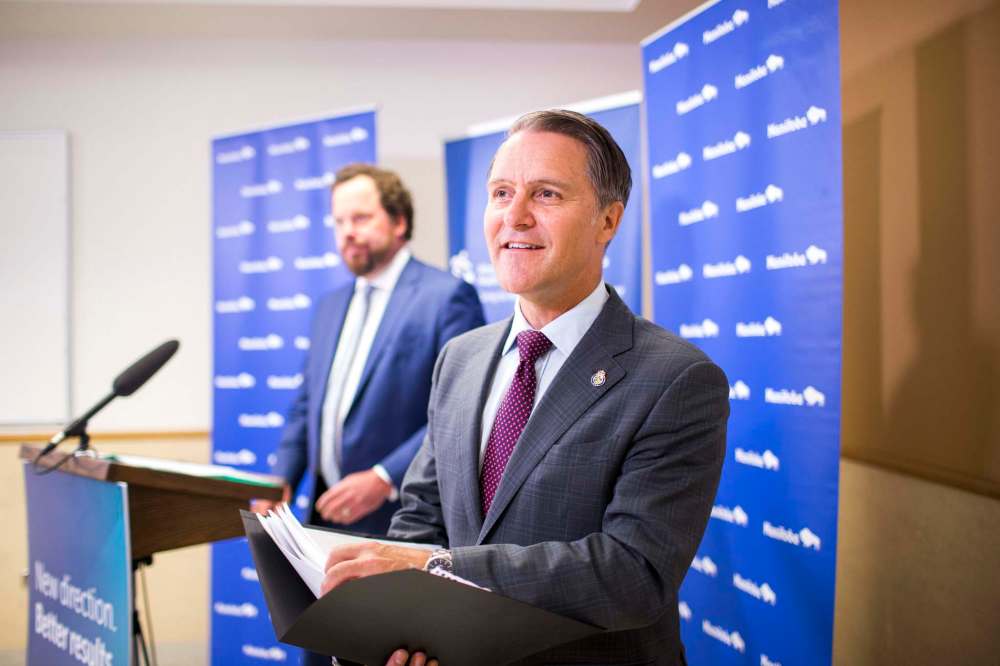
“Before, someone would have gone to all the trouble and challenge to say, ‘I’m struggling with an addiction’ and to go to a practitioner, then to take a recommendation to go to a specialist, and then to wait. The essential quality of these clinics, at least one of them, is that it collapses that whole wait time,” Friesen said.
“You can walk in without a referral and you can be seen that day or in a short amount of time. I believe the doctors said that the target is within a week to have that person seen.”
The clinics, which are modelled on a similar initiative in Ontario, are designed to streamline the process for those seeking help for substance abuse and addiction. In total, creating the clinics cost the province $1.2 million.
On-site staff will provide assessment and counselling for those who walk through the door. No referrals are necessary to get help. Staff will also prescribe medication and help forge connections between patients and community treatment programs and resources.
Winnipeg’s two clinics will operate a collective five days a week for a total of 10 hours — although Friesen said the hours could be expanded. It remains unclear what the hours of operation will be at the clinics outside the city.
“We’re going to be looking at the data that’s coming out of these centres. We’re starting, some might say, in some modest ways. But remember as well, even in Ontario that was also a partial service to start off with. And we’ll be looking to enhance the services as soon as we can determine this is having value,” he said.
NDP health critic and MLA for Minto Andrew Swan said that while the idea behind the clinics makes sense, there are real concerns about what tangible impact they’ll have, given the limited hours of operation.
“The Pallister PCs have done nothing until now, either on the opioid crisis or the meth crisis, which are both taking a huge toll in Winnipeg. Our concern is they’ve waited until now when we have these two crises and our fear is this step is too little, too late,” Swan said.
He went on to add that since the Crisis Response Centre is open 24 hours a day, seven days a week, the province should provide additional resources to the new clinic housed there so it can match those hours of operation.
Swan also questioned what community-based resources the clinics in rural Manitoba will be able to refer patients to, given budget cuts to the Addictions Foundation of Manitoba.
On Wednesday, Friesen wouldn’t reveal what other addictions initiatives are coming down the pipe, but said more announcements will be made later this fall. He also wouldn’t say whether the provincial government has made a final decision about creating a supervised injection site in Winnipeg.

“I’m not saying (a supervised injection site) wouldn’t provide value. I think that everything that we do would probably provide some value to someone. I think as a policy-maker and the minister of health, my responsibility is to take limited system resources, to listen hard to Manitobans — listen hard to the evidence — then make the best choices to put forward policies and resources in a way that will benefit the maximum number of people,” he said.
Swan countered that evidence on the effectiveness of supervised injection sites is clear. He pointed to the fact they’re considered a best practice in other major cities and said if the provincial government won’t move to create one, they’re “risking peoples’ lives.”
“If Minister Friesen wants to get some evidence, he can look to B.C., he can look to Toronto, where conservative mayor John Tory is a strong supporter of safe injection sites and has welcomed them into his city. I’m sure they would provide all the information they would need,” he said.
ryan.thorpe@freepress.mb.ca
Twitter: @rk_thorpe