

Province to centralize health-care services to new gov’t entity
Shared Health Services Manitoba to be up and running by April 2018: minister
Advertisement
Read this article for free:
or
Already have an account? Log in here »
To continue reading, please subscribe:
Digital Subscription
One year of digital access for only $1.44 a week*
- Enjoy unlimited reading on winnipegfreepress.com
- Read the E-Edition, our digital replica newspaper
- Access News Break, our award-winning app
- Play interactive puzzles
*Billed as $5.77 plus GST every four weeks. After 52 weeks, price increases to the regular rate of $19.95 plus GST every four weeks. Offer available to new and qualified returning subscribers only. Cancel any time.
To continue reading, please subscribe:
Add Free Press access to your Brandon Sun subscription for only an additional
$1 for the first 4 weeks*
- Enjoy unlimited reading on winnipegfreepress.com
- Read the E-Edition, our digital replica newspaper
- Access News Break, our award-winning app
- Play interactive puzzles
*Your next Brandon Sun subscription payment will increase by $1.00 and you will be charged $17.95 plus GST for four weeks. After four weeks, your payment will increase to $24.95 plus GST every four weeks.
Read unlimited articles for free today:
or
Already have an account? Log in here »
Hey there, time traveller!
This article was published 28/06/2017 (3258 days ago), so information in it may no longer be current.
The Pallister government is continuing to roll out major changes to Manitoba’s health care system.
On Wednesday, it announced the creation of a new provincial organization that will oversee an array of provincial health services and reduce administrative duplication within the province’s five regional health authorities.
Health Minister Kelvin Goertzen told a news conference that the role of the Winnipeg Regional Health Authority “will be scaled back.”
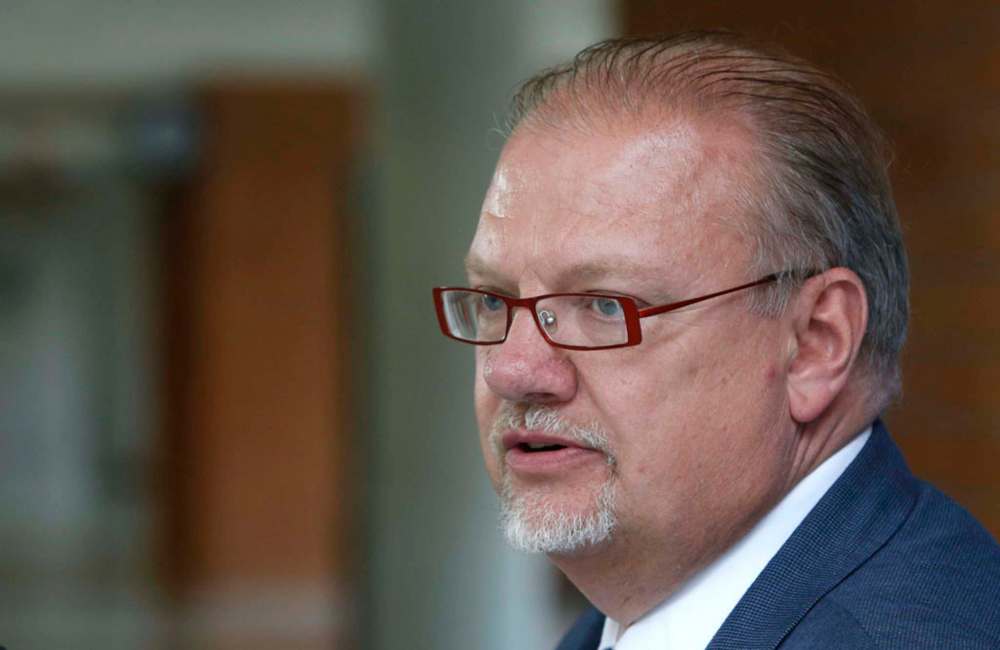
Over the years, he said, it has taken on so many different responsibilities that it has “grown to become in many ways the Department of Health.” In the future, the minister said, the WRHA will stick to its original role in delivering health services to patients.
“We need to plan provincially and deliver locally,” Goertzen said in announcing the creation of the new provincial entity to be called Shared Health Services Manitoba. The plan is to have it up and running by April 1 of next year.
Shared Health will be headed by Dr. Brock Wright, currently the WRHA’s senior vice-president and chief medical officer. Goertzen said that Wright will also oversee the overall transformation of the provincial health care system.
Wright said the new organization will provide “provincial leadership” in major health specialty areas and will organize teams of health professionals that will look at the most cost-effective ways of delivering high quality patient care across Manitoba.
The new entity will also co-ordinate the recruitment and retention of health professionals for the benefit of patients across Manitoba, he said.
“Why should that expertise be available only to the Winnipeg Regional Health Authority when it could be working and supporting all of the health authorities and adding to the cost-effectiveness of the system?” Wright said.
“We are going to centrally manage clinical functions and non-clinical functions where it makes sense to do so,” he said.
The benefits of better provincial co-ordination will mean fewer patients will have to travel to Winnipeg to receive health care, Wright said. He said there will be benefits for Winnipeggers, who should see wait times for service improve.
Under the new system, Manitoba’s largest hospital, the Health Sciences Centre, will fall under the umbrella of Shared Health Services Manitoba, rather than the WRHA. So will Children’s Hospital.
Goertzen said creation of the new provincial organization stems from recommendations by outside consultant Dr. David Peachey and a health care sustainability review conducted by KPMG. The province has refused to release the latter study.
In April, the government and the WRHA announced a massive reorganization of the city’s hospital system that will begin to take effect this fall. It includes closing three hospital emergency rooms along with Misericordia’s urgent care centre. Proponents of the reorganization say the changes will lead to a more effective and efficient system.
Goertzen wouldn’t speculate on how many jobs might be lost or how much money could be saved in the latest provincial health initiative.
“I will never apologize for efficiencies…” he said, adding they usually result in a better system and better care.
NDP health critic Matt Wiebe accused the minister of disrupting the health care system without explaining to Manitobans why he’s doing it.
“The minister is making massive changes to our health care system, causing disruption and sowing confusion, based on reports the premier refuses to release to the public,” Wiebe said in a prepared statement.
“Manitobans cannot understand why these changes are being made, unless the premier and his minister stop misleading and release the reports Manitobans paid for,” said the NDP health critic. “The minister could not clearly explain how creating a new organization, shuffling responsibilities, and cutting more health care professionals will result in better patient care,” he said.

Lanette Siragusa, provincial lead for clinical and preventive services planning and oversight, said northern and rural Manitoba will benefit from the new system.
There will be better access to specialists for Manitobans, wherever they may live, she said.
“We can recruit and retain health care professionals together as one province rather than have five different regions compete for the same people,” Siragusa said.
Meanwhile, the administrative burden on regional health authorities will be eased, she said, “so staff can focus on patient care rather than generate redundant policy and guidelines on the same topic.”
larry.kusch@freepress.mb.ca