

Province urged to shame code-red rule-breakers
Ethics expert says people accused of violating COVID-19 orders should be named

Advertisement
Read this article for free:
or
Already have an account? Log in here »
To continue reading, please subscribe:

Digital Subscription
One year of digital access for only $205*
- Enjoy unlimited reading on winnipegfreepress.com
- Read the E-Edition, our digital replica newspaper
- Access News Break, our award-winning app
- Play interactive puzzles
*First annual payment billed as $205.00 + GST for one year. This annual subscription will automatically renew at $233.00 + GST every 52 weeks (10% off the regular annual price of $259.35). Offer available to new and qualified returning subscribers only. Cancel any time.
To continue reading, please subscribe:
Add Free Press access to your Brandon Sun subscription for only an additional
$1 for the first 4 weeks*
- Enjoy unlimited reading on winnipegfreepress.com
- Read the E-Edition, our digital replica newspaper
- Access News Break, our award-winning app
- Play interactive puzzles
*Your next Brandon Sun subscription payment will increase by $1.00 and you will be charged $17.95 plus GST for four weeks. After four weeks, your payment will increase to $24.95 plus GST every four weeks.
Read unlimited articles for free today:
or
Already have an account? Log in here »
Hey there, time traveller!
This article was published 02/01/2021 (2091 days ago), so information in it may no longer be current.
While the public has been encouraged to tattle on neighbours who hold parties in defiance of pandemic restrictions, the Manitoba government stands accused of failing to keep people in line by refusing to name rule-breakers.
A Winnipeg ethics professor believes people accused of violating public health orders should be listed in the province’s enforcement data, which is released weekly. While businesses and churches that have been fined are identified, individuals are not. for several weeks, the province has encouraged people to report offenders via phone or email.
Arthur Schafer, founding director of the Centre for Professional and Applied Ethics at the University of Manitoba said he “strongly” disagrees with the province’s choice to withhold the names of alleged offenders.
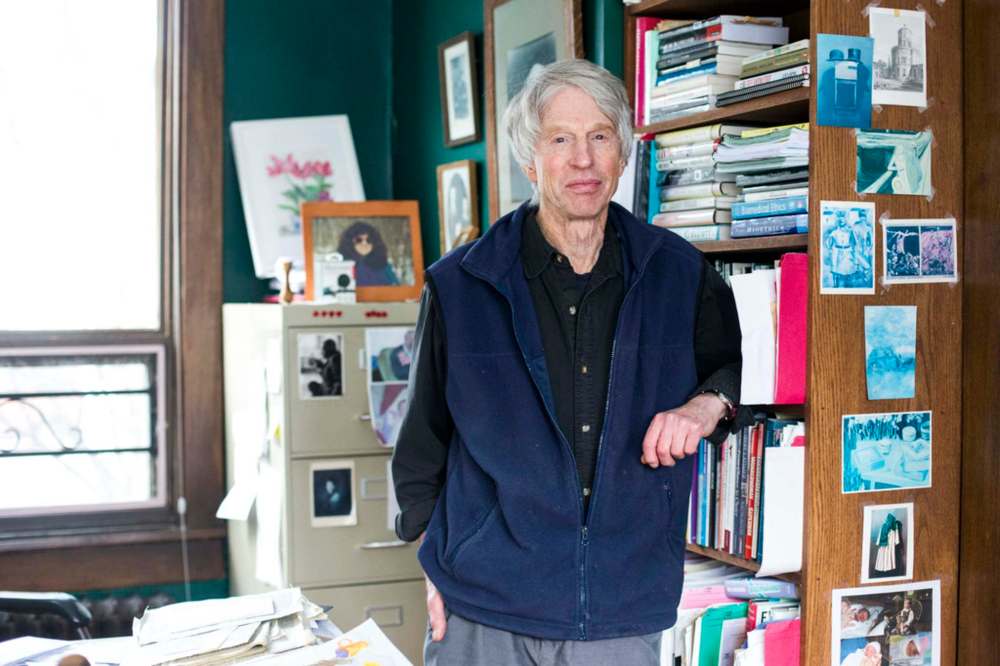
“It seems as if violation of the pandemic regulations meant to protect public safety has been disappointingly widespread in our province,” Schafer said.
“I think there’s a very strong case to be made for using every tool in the tool-kit to encourage Manitobans to comply with the regulations and protect all of us.”
The most recent data, released Wednesday, indicate most tickets have been doled out to individuals for hosting or attending gatherings at private residences.
In December, Manitoba’s COVID enforcement team — made up of municipal police, RCMP, private security firms, bylaw officers and liquor inspectors — had issued about 200 tickets in the amount of $1,296 to individual offenders caught breaking code-red rules, including the limit on gathering sizes and requirement to wear masks in indoor public places. The province said from Dec. 21 to 27, more than 85 per cent of individual tickets were doled out in response to gatherings at people’s homes.
Asked why the province names businesses and churches but not individuals, a provincial representative cited concerns over individual safety and privacy, and noted tickets may be challenged in court, so naming the offenders would be “premature.”
Schafer said thats explanation “makes no sense at all.”
The stakes are high in a public health emergency, he said, and “protecting public safety” should be the government’s highest priority, usurping concerns over individual privacy. Privacy considerations for individuals who may be named are “not absolute,” he added, against the larger issue of safety for all.
Schafer pointed to the example of Rod Phillips, who was forced to resign as Ontario’s finance minister Thursday after a severe public backlash for travelling to a Caribbean island despite his government’s rules against non-essential travel.
The naming and shaming of people, he noted, would help deter rule-breaking both on an individual level — by increasing the cost of non-compliance to a financial and social consequence — and on a community level.
“Part of what we want to do is reinforce the norm that it’s a really important part of being a member of this community that you take steps not just to protect yourself, but steps necessary to protect others who may be vulnerable,” said Schafer.
“So I think by publicizing the names what we’re doing is a kind of public denunciation, it’s a way of reinforcing community values, in this case the value that public safety is more important than my desire to party with friends or get together with a number of other people against the rules.”
Meantime, anti-lockdown organizer Patrick Allard, who has been given three fines for contravening public health orders, believes the government’s enforcement response has been heavy-handed.
Allard’s most recent ticket, issued after he participated in a Dec. 20 gathering at the Manitoba legislature, was served by nine officers, he said.
“I’m not worried about a ticket, but what bothers me is… they don’t need nine (officers) to come. They could send two police officers. I don’t like that waste of the taxpayer money,” Allard said Thursday.

Allard said he’s seen tickets issued with little discretion, noting he has been ticketed for attending religious services, but not at protests and rallies for other causes.
“Whether you agree with this virus being a super-killer or not, you’ve got to agree that we need a more balanced approach,” he said.
Allard said he plans to challenge all three of his tickets in court, and has found legal representation to mount a constitutional defence in response to the offences. As he continues to gather with friends over the holidays, Allard said he’s “fairly certain” the three tickets won’t be his last.
julia-simone.rutgers@freepress.mb.ca
Twitter: @jsrutgers
Julia-Simone Rutgers is an investigative reporter who joined the Free Press in 2020. Read more about Julia-Simone.
Every piece of reporting Julia-Simone produces is reviewed by an editing team before it is posted online or published in print — part of the Free Press‘s tradition, since 1872, of producing reliable independent journalism. Read more about Free Press’s history and mandate, and learn how our newsroom operates.
Our newsroom depends on a growing audience of readers to power our journalism. If you are not a paid reader, please consider becoming a subscriber.
Our newsroom depends on its audience of readers to power our journalism. Thank you for your support.
Julia-Simone Rutgers is an investigative reporter who joined the Free Press in 2020. Read more about Julia-Simone.
Every piece of reporting Julia-Simone produces is reviewed by an editing team before it is posted online or published in print — part of the Free Press‘s tradition, since 1872, of producing reliable independent journalism. Read more about Free Press’s history and mandate, and learn how our newsroom operates.
Our newsroom depends on a growing audience of readers to power our journalism. If you are not a paid reader, please consider becoming a subscriber.
Our newsroom depends on its audience of readers to power our journalism. Thank you for your support.
Advertisement Advertise With Us
Advertisement Advertise With Us