Reawakening roots
Ojibwa software engineer develops language-preservation programs used by First Nations across continent
Advertisement
Read this article for free:
or
Already have an account? Log in here »
To continue reading, please subscribe:

Digital Subscription
One year of digital access for only $205*
- Enjoy unlimited reading on winnipegfreepress.com
- Read the E-Edition, our digital replica newspaper
- Access News Break, our award-winning app
- Play interactive puzzles
*First annual payment billed as $205.00 + GST for one year. This annual subscription will automatically renew at $233.00 + GST every 52 weeks (10% off the regular annual price of $259.35). Offer available to new and qualified returning subscribers only. Cancel any time.
To continue reading, please subscribe:
Add Free Press access to your Brandon Sun subscription for only an additional
$1 for the first 4 weeks*
- Enjoy unlimited reading on winnipegfreepress.com
- Read the E-Edition, our digital replica newspaper
- Access News Break, our award-winning app
- Play interactive puzzles
*Your next Brandon Sun subscription payment will increase by $1.00 and you will be charged $17.95 plus GST for four weeks. After four weeks, your payment will increase to $24.95 plus GST every four weeks.
Read unlimited articles for free today:
or
Already have an account? Log in here »
Hey there, time traveller!
This article was published 09/03/2020 (2396 days ago), so information in it may no longer be current.
One father’s effort to teach his daughter Ojibwa has matured into an international software development company supporting Indigenous-language revitalization efforts across North America.
Darrick Baxter is the founder of Ogoki Learning, which he incorporated in Winnipeg in 2017. The St. James-based company employs eight people full time and last year opened an office in Taiwan with an expanded staff to develop new products and collaborate with companies in the region.
The foundation for Ogoki, which has produced more than 170 language programs for Indigenous communities that reach thousands of learners in Canada and the U.S., was set on a weekday afternoon in Westwood more than a decade ago, when Baxter’s daughter approached him with a question.
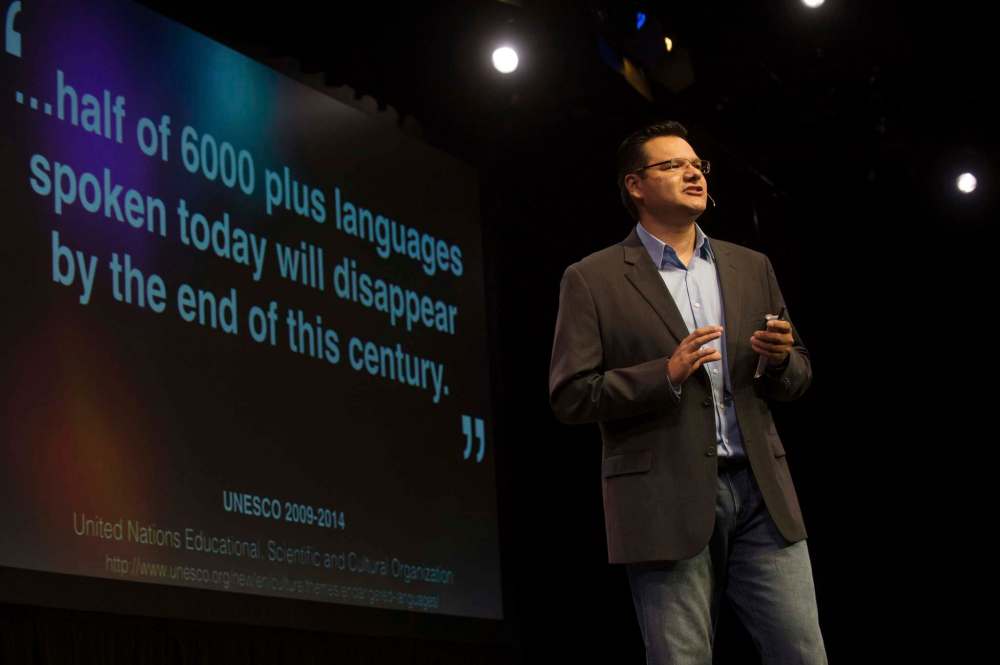
“My daughter came home and said, ‘Am I Ojibwa?’” the father of three from Sandy Bay First Nation recalled. “That’s something you never want to hear as an Ojibwa father.”
While not quite a polyglot, Baxter does have a command of multiple dialects: Java, Swift and Objective C are just a few of the programming languages he was using at the time as a computer science professional and software developer. One of the more elusive languages for Baxter, however, was Ojibwa, the tongue spoken by his mother and in his childhood home.
Growing up in Winnipeg’s North End, the 44-year-old said Ojibwa was his first language and a common part of family life. But as an adult pursuing a career in the information-technology world, Baxter’s exposure to Ojibwa faded, as did his grasp on the language and his ability to teach it.
“It was never taught to (his daughter). I never did teach her,” he said. “It was a wake-up moment, I would say.”
Baxter enlisted the help of the late artist Eddy Munroe, a close friend he had asked to recite Ojibwa words and phrases into a voice recorder he had devised from a video camera. With the audio files loaded onto a used computer he purchased for the purpose of creating the app, he coded a rudimentary Ojibwa-language program for his daughter’s iPad.
‘My daughter came home and said, “Am I Ojibwa?” That’s something you never want to hear as an Ojibwa father’– Darrick Baxter, founder of Ogoki Learning
At the time, Baxter hoped to create a program that would capture his daughter’s attention long enough to learn the basics and reintroduce the language to his household, but after he decided to release the app and publish the source code, inquiries from across the world started to trickle in.
When leaders from the Blackfeet Nation in Montana called with a request to develop an app for the local college, Baxter realized he’d tapped into an underserved market. Their call was followed by five similar requests from other Indigenous communities as community leaders across the continent sought ways to preserve their languages.
“We’ve all been in the same place; we’re all trying to teach the young people to speak and we’re trying to teach them in a fun and exciting way on a medium that they use,” said Baxter who, for a time, taught computer science at the University of Winnipeg.
“I could have easily gone and developed games, or all types of utilities and tools,” he added. “I felt like the calling was more with language apps because it meant more.”
One appeal of Ogoki Learning’s approach is that Indigenous communities are active participants in the development of their program, he said. Local elders and people fluent in the language are relied upon to provide audio recordings, to explain word and phrase development and provide context for regional differences in dialect.

Ogoki returns all the recordings and raw materials to the community. The files serve as a time capsule of the unique intonations, idiomatic expressions and culture at that moment, even after elders and community members are gone.
“That’s very valuable,” said Patricia Ningewance, an esteemed Ojibwa educator and author from Lac Seul First Nation near Dryden, Ont. “If we record as many of the dialects as possible that way, you’re definitely preserving the language of that community.
“Even though it’s all the same language from Saskatchewan to even eastern Quebec… that’s all Ojibwa country there, there are different dialects all across,” she said. “If you get to understand all the dialects, you get to appreciate the beauty of the entire language and its variety.”

Ningewance says environments in which Indigenous languages are spoken are becoming harder to find and predicts within two decades some dialects will be lost if new speakers aren’t created today.
“Even if you go to a reserve somewhere, where it used to be all the language, now it’s mostly English-speaking,” said Ningewance, 68. “So if developers like Darrick can create electronic environments like that, I think that’s really good.”
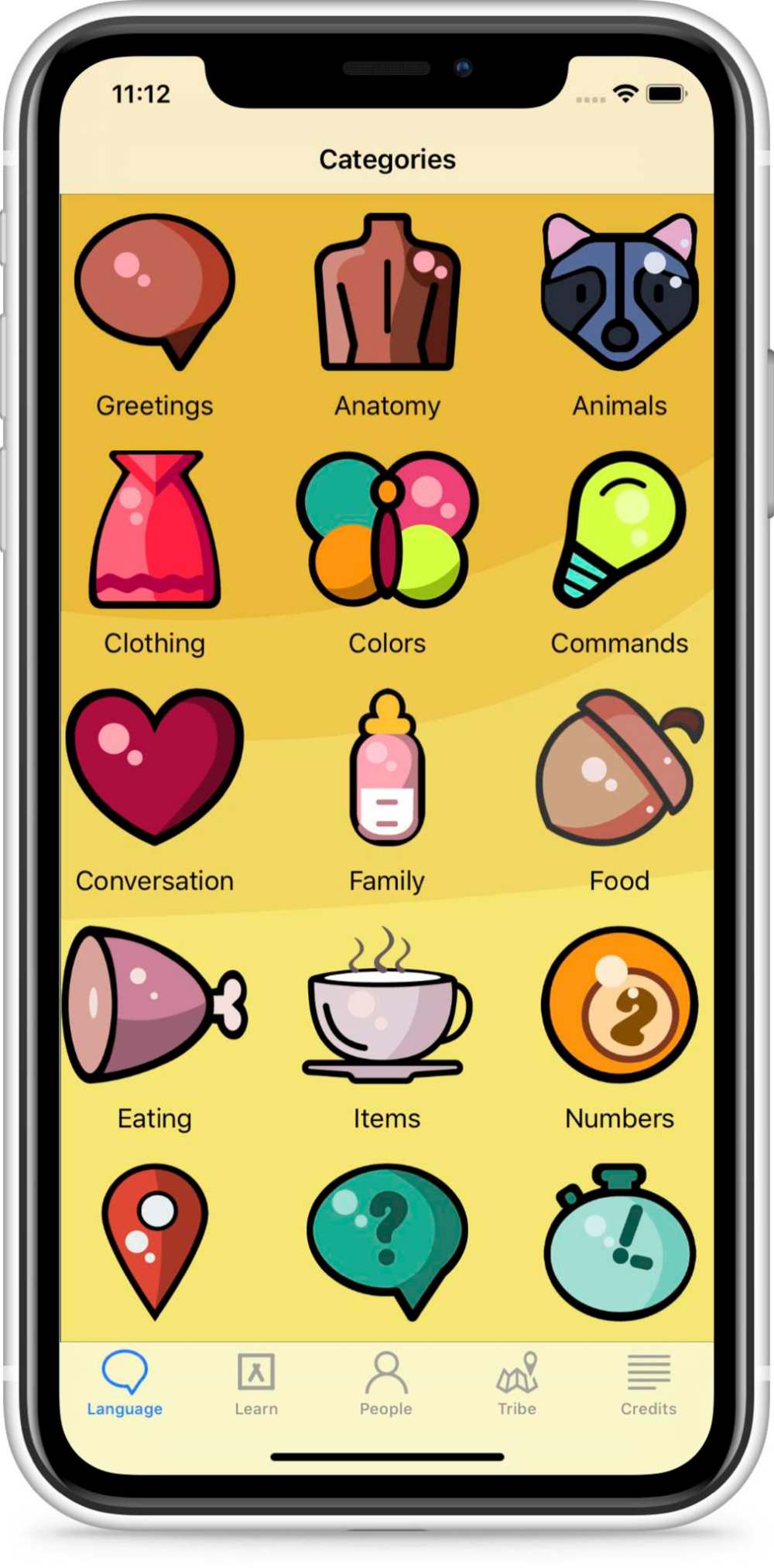
Ningewance — who Baxter has turned to over the years as a mentor — said her contemporary’s approach to language revitalization is complementary to her own; where her publications focus on grassroots language education and knowledge transfer from fluent Ojibwa speakers, Baxter’s is targeting the other end of the spectrum, creating foundations for youths to start their journeys in native languages.
“You can access the oral language through them, which is really a wonderful thing.”
danielle.dasilva@freepress.mb.ca