

Registrations of restricted firearm on the rise in Manitoba
Advertisement
Read this article for free:
or
Already have an account? Log in here »
To continue reading, please subscribe:
Monthly Digital Subscription
$1 per week for 24 weeks*
- Enjoy unlimited reading on winnipegfreepress.com
- Read the E-Edition, our digital replica newspaper
- Access News Break, our award-winning app
- Play interactive puzzles
*Billed as $4.00 plus GST every four weeks. After 24 weeks, price increases to the regular rate of $19.95 plus GST every four weeks. Offer available to new and qualified returning subscribers only. Cancel any time.
Monthly Digital Subscription
$4.99/week*
- Enjoy unlimited reading on winnipegfreepress.com
- Read the E-Edition, our digital replica newspaper
- Access News Break, our award-winning app
- Play interactive puzzles
*Billed as $19.95 plus GST every four weeks. Cancel any time.
To continue reading, please subscribe:
Add Free Press access to your Brandon Sun subscription for only an additional
$1 for the first 4 weeks*
*Your next subscription payment will increase by $1.00 and you will be charged $16.99 plus GST for four weeks. After four weeks, your payment will increase to $23.99 plus GST every four weeks.
Read unlimited articles for free today:
or
Already have an account? Log in here »
Hey there, time traveller!
This article was published 17/07/2019 (2440 days ago), so information in it may no longer be current.
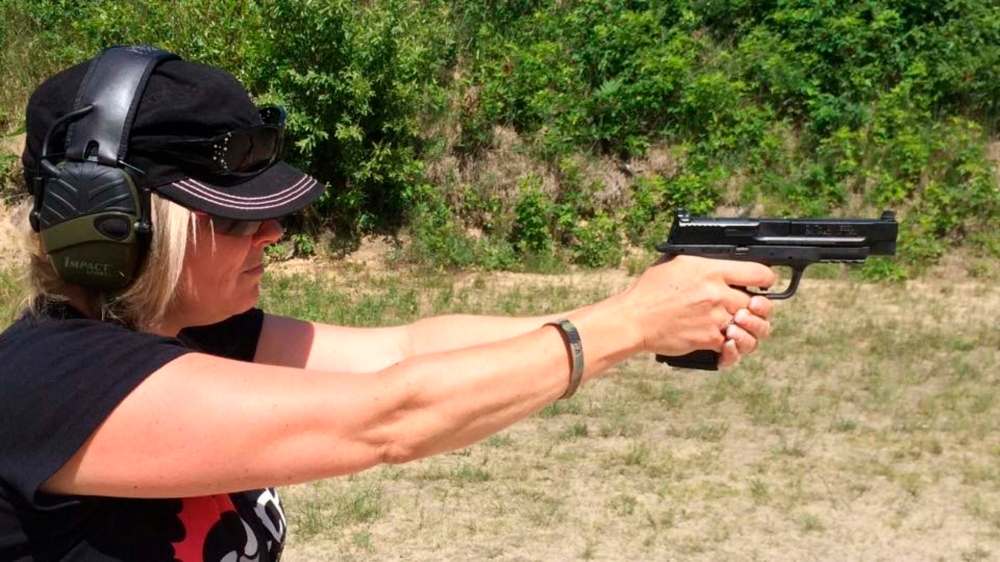
SEVEN thousand more restricted firearms have been legally registered in Manitoba in the last four years and experts on both sides of the issue suggest it could be due to the popularity of shooting sports or as a reaction to possible bans.
There were just under 30,000 restricted firearms (mainly handguns, but the category also includes some rifles such as AR-15s) registered in Manitoba in 2015. By last year, it was 37,000. Restricted firearm ownership is on the rise nationally as well.

!function(e,t,s,i){var n=”InfogramEmbeds”,o=e.getElementsByTagName(“script”)[0],d=/^http:/.test(e.location)?”http:”:”https:”;if(/^/{2}/.test(i)&&(i=d+i),window[n]&&window[n].initialized)window[n].process&&window[n].process();else if(!e.getElementById(s)){var r=e.createElement(“script”);r.async=1,r.id=s,r.src=i,o.parentNode.insertBefore(r,o)}}(document,0,”infogram-async”,”https://e.infogram.com/js/dist/embed-loader-min.js”);
Gun enthusiasts say it’s because shooting sports are attracting more people.
“These are sports that are really on the rise,” said Tracey Wilson of the Canadian Coalition for Firearm Rights, adding it’s inclusive for all bodies. At her home range, there are shooters who use wheelchairs, others up to 65. Wilson said for smaller people, handguns are easier to use than a long gun.
High-profile shootings in recent years have led to calls for a handgun ban, including a motion being debated at Toronto city council this month.
“Whenever you have legislation that directly targets gun owners, you will see trends that affect participation in various ways,” Wilson said.

!function(e,t,s,i){var n=”InfogramEmbeds”,o=e.getElementsByTagName(“script”)[0],d=/^http:/.test(e.location)?”http:”:”https:”;if(/^/{2}/.test(i)&&(i=d+i),window[n]&&window[n].initialized)window[n].process&&window[n].process();else if(!e.getElementById(s)){var r=e.createElement(“script”);r.async=1,r.id=s,r.src=i,o.parentNode.insertBefore(r,o)}}(document,0,”infogram-async”,”https://e.infogram.com/js/dist/embed-loader-min.js”);
She cited ruminations from Organized Crime Reduction Minister Bill Blair about banning AR-15 semi-automatic rifles following 51 deaths at New Zealand mosques in March. Canadian Shooting Sports put out a press release titled “Bill Blair: Greatest AR-15 Salesman in Canadian History.”
“With that came an influx of purchasing of AR-15s, because usually, governments would grandfather you in,” Wilson said.
On June 21, Bill C-71, “An Act to amend certain Acts and Regulations in relation to firearms,” got royal assent. It extends the amount of time mental health or violent behaviour concerns can be considered in licensing, requires logging of long-gun transfers and tighter rules for taking handguns away from home.

!function(e,t,s,i){var n=”InfogramEmbeds”,o=e.getElementsByTagName(“script”)[0],d=/^http:/.test(e.location)?”http:”:”https:”;if(/^/{2}/.test(i)&&(i=d+i),window[n]&&window[n].initialized)window[n].process&&window[n].process();else if(!e.getElementById(s)){var r=e.createElement(“script”);r.async=1,r.id=s,r.src=i,o.parentNode.insertBefore(r,o)}}(document,0,”infogram-async”,”https://e.infogram.com/js/dist/embed-loader-min.js”);
“The idea there was to get a little tougher on checking things out,” said University of Manitoba criminology professor Frank Cormier. He said U.S. data shows correlations more guns are bought when bans are discussed.
“At the end of the day, I wish the government would focus on legislation that targets criminals,” Wilson said. “But as long as they target gun owners, I think you’re going to see more and more people get interested in the sport, just to see what the big deal is.”
While the vast majority of guns owned by Canadians are long guns, up to 60 per cent of firearm-related crimes in Canada involve handguns, Statistics Canada data shows.

“With more guns in circulation, there is a greater probability of those firearms finding their way into the wrong people’s hands, and that could be an indicator for why there has been an uptick in shootings in many of the major cities across Canada,” said University of Toronto sociology professor Jooyoung Lee.
While for decades most crime guns have come from the United States, in recent years some studies have suggested more are coming from within Canada. Lee said there’s not enough data to know which is right.
“We have very select data that paints these two vastly different pictures, which in turn would demand … vastly different policy interventions. And yet we don’t know,” he said.
tvanderhart@freepress.mb.ca
Twitter: @tessavanderhart
History
Updated on Wednesday, July 17, 2019 1:10 PM CDT: Typos fixed.