

Residential school records to be destroyed

Advertisement
Read this article for free:
or
Already have an account? Log in here »
To continue reading, please subscribe:

Digital Subscription
One year of digital access for only $205*
- Enjoy unlimited reading on winnipegfreepress.com
- Read the E-Edition, our digital replica newspaper
- Access News Break, our award-winning app
- Play interactive puzzles
*First annual payment billed as $205.00 + GST for one year. This annual subscription will automatically renew at $233.00 + GST every 52 weeks (10% off the regular annual price of $259.35). Offer available to new and qualified returning subscribers only. Cancel any time.
To continue reading, please subscribe:
Add Free Press access to your Brandon Sun subscription for only an additional
$1 for the first 4 weeks*
- Enjoy unlimited reading on winnipegfreepress.com
- Read the E-Edition, our digital replica newspaper
- Access News Break, our award-winning app
- Play interactive puzzles
*Your next Brandon Sun subscription payment will increase by $1.00 and you will be charged $17.95 plus GST for four weeks. After four weeks, your payment will increase to $24.95 plus GST every four weeks.
Read unlimited articles for free today:
or
Already have an account? Log in here »
Hey there, time traveller!
This article was published 07/10/2017 (3272 days ago), so information in it may no longer be current.
The director of the Winnipeg-based National Centre for Truth and Reconciliation said it is getting the word out to survivors of residential school abuse: if they want their detailed records preserved, they need to say so, or the documents will be destroyed.
The Supreme Court ruled Friday some of the records detailing painful abuses suffered by residential school students will be shredded as soon as 2019. The Supreme Court upheld a lower court ruling that said the sensitive material collected from former pupils should be destroyed after 15 years, though individuals could consent to archival preservation of their stories.
“The National Centre for Truth and Reconciliation looks forward to working collaboratively to make sure remaining survivors are provided full clarity as Indigenous people of their right to transmit their history to future generations,” Ry Moran, director of the centre, said in an interview Friday.
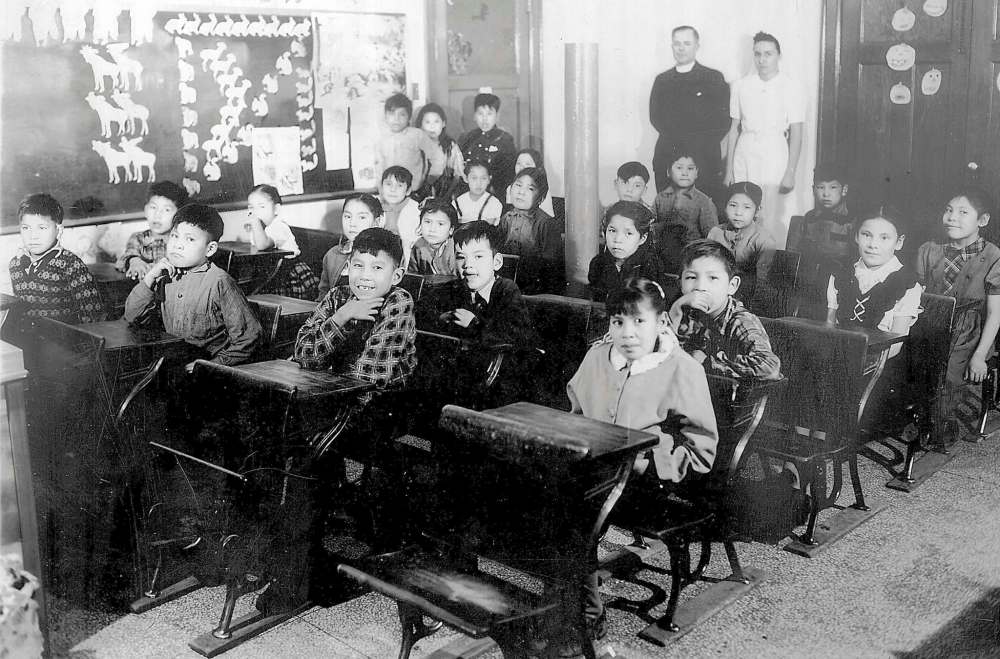
The records are personal accounts of physical, sexual and emotional abuse collected as part of an independent assessment process to determine compensation — a program that flowed from a major 2006 settlement agreement aimed at ensuring a lasting resolution of the residential schools legacy. The settlement agreement led to the creation of a Truth and Reconciliation Commission that documented the history of residential schools. It is now archiving records of the commission.
In its reasons for the decision, the Supreme Court said the negotiators of the settlement agreement intended the assessment process to be a confidential and private one, and claimants and alleged perpetrators relied on these confidentiality assurances.
Under the process, claimants disclosed intimate personal information, including a first-person narrative outlining his or her request for compensation. Applications were then forwarded to the federal government and the church organization that operated the residential school in question.
If the claim was not settled at this stage, it proceeded to a hearing before an adjudicator, supervised by the chief adjudicator of the Indian Residential Schools Adjudication Secretariat. The settlement-agreement operations branch of the federal Indigenous affairs department represented the government as a defendant to the claims.
Participants were advised the hearings would be held in private, and each person who attended must sign a confidentiality agreement.
The secretariat and the operations branch both possess digital and physical copies of various records pertaining to more than 37,000 claims made under the assessment process.
The Assembly of First Nations had told the Supreme Court overturning the decision to allow destruction of the records would amount to another breach of trust for the same vulnerable people who were abused at residential schools as young children.
The federal government unsuccessfully argued the documentary record must be fully preserved to ensure what happened is never forgotten.
It said federal laws governing access to information, privacy and archives provide the proper balance for safeguarding the records of historical value while protecting individual privacy and confidentiality.

“More than just records, these documents contain an unprecedented amount of truth over what occurred in residential schools across this country,” Moran said.
“Beyond the harms inflicted on survivors by abusers, these records also detail the administration of justice, the fairness of that justice and the compensation awarded to survivors,” he said after meeting with a survivors committee at the centre Friday.
“Legally, it’s occurred and there is no going backward,” he said. “Collectively, our obligation now is to survivors to assure them their records are safe and they will be treated with the utmost respect going forward and promises of confidentiality are maintained and fully understood by all parties.”
— with files from The Canadian Press
carol.sanders@freepress.mb.ca
Carol Sanders
Legislature reporter
Carol Sanders is a reporter at the Free Press legislature bureau. The former general assignment reporter and copy editor joined the paper in 1997. Read more about Carol.
Every piece of reporting Carol produces is reviewed by an editing team before it is posted online or published in print — part of the Free Press‘s tradition, since 1872, of producing reliable independent journalism. Read more about Free Press’s history and mandate, and learn how our newsroom operates.
Our newsroom depends on a growing audience of readers to power our journalism. If you are not a paid reader, please consider becoming a subscriber.
Our newsroom depends on its audience of readers to power our journalism. Thank you for your support.
Carol Sanders
Legislature reporter
Carol Sanders is a reporter at the Free Press legislature bureau. The former general assignment reporter and copy editor joined the paper in 1997. Read more about Carol.
Every piece of reporting Carol produces is reviewed by an editing team before it is posted online or published in print — part of the Free Press‘s tradition, since 1872, of producing reliable independent journalism. Read more about Free Press’s history and mandate, and learn how our newsroom operates.
Our newsroom depends on a growing audience of readers to power our journalism. If you are not a paid reader, please consider becoming a subscriber.
Our newsroom depends on its audience of readers to power our journalism. Thank you for your support.
Advertisement Advertise With Us
Advertisement Advertise With Us