

School division debated ignoring education minister’s order to cap increases
Provincial budget actually cuts WSD budget, chairwoman says
Advertisement
Read this article for free:
or
Already have an account? Log in here »
To continue reading, please subscribe:
Monthly Digital Subscription
$1 per week for 24 weeks*
- Enjoy unlimited reading on winnipegfreepress.com
- Read the E-Edition, our digital replica newspaper
- Access News Break, our award-winning app
- Play interactive puzzles
*Billed as $4.00 plus GST every four weeks. After 24 weeks, price increases to the regular rate of $19.95 plus GST every four weeks. Offer available to new and qualified returning subscribers only. Cancel any time.
Monthly Digital Subscription
$4.99/week*
- Enjoy unlimited reading on winnipegfreepress.com
- Read the E-Edition, our digital replica newspaper
- Access News Break, our award-winning app
- Play interactive puzzles
*Billed as $19.95 plus GST every four weeks. Cancel any time.
To continue reading, please subscribe:
Add Free Press access to your Brandon Sun subscription for only an additional
$1 for the first 4 weeks*
*Your next subscription payment will increase by $1.00 and you will be charged $16.99 plus GST for four weeks. After four weeks, your payment will increase to $23.99 plus GST every four weeks.
Read unlimited articles for free today:
or
Already have an account? Log in here »
Hey there, time traveller!
This article was published 13/03/2018 (2954 days ago), so information in it may no longer be current.
Of the four Winnipeg school divisions that have finalized budgets for the coming fiscal year, all chose to abide by the provincial government’s recommendation to cap special-requirement increases at two per cent.
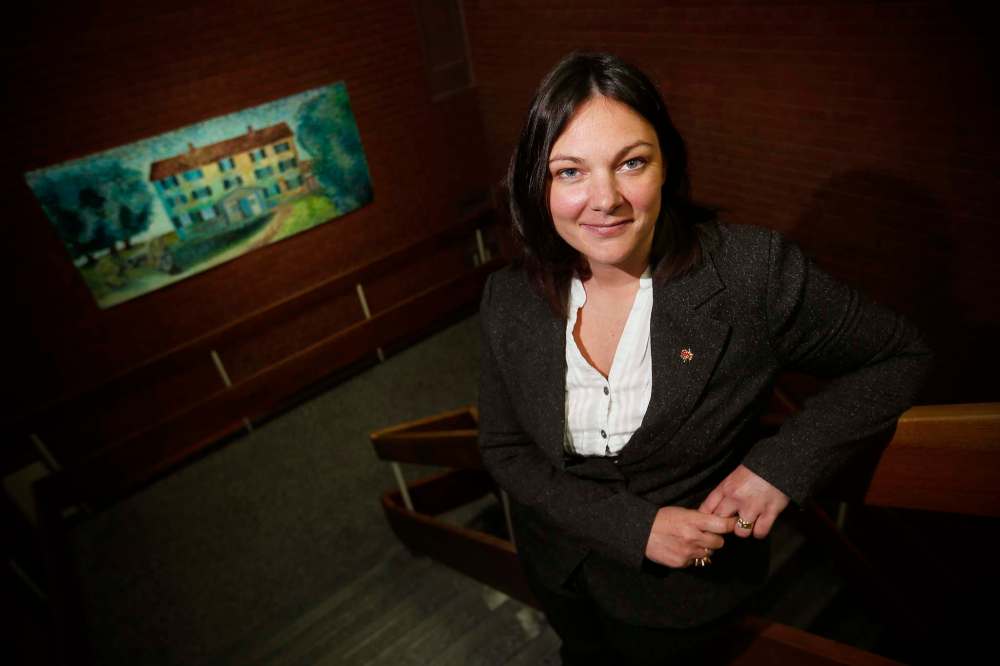
But for at least one school division, that decision wasn’t easy to make. According to Winnipeg School Division chairwoman Sherri Rollins, their board of trustees flirted with approving a budget that would have ignored Education Minister Ian Wishart’s cap on special-requirement increases.
“We had a very lively debate about whether or not we should do what we were told. A lot of people came to us who said ‘Don’t do it. We know you’re being squeezed. We have priorities that we need you to fund.’ Trustees were very torn,” Rollins said.
The “special requirement” differs from property tax. Rather than being based on the calendar year (like property tax), special requirement is based on the school year. Despite the difference, special requirement increases still lead to property tax increases for homeowners.
For residents in the Winnipeg School Division’s boundary, that two per cent special-requirement increase will result in a 3.3 per cent increase in property taxes, roughly $45. But had the school division approved a different budget in consideration, residents would have seen a three per cent increase in special requirement and a resulting 3.71 per cent, or $51, increase in property taxes.
Seven Oaks and River East Transcona school divisions also implemented budgets with two per cent special-requirement increases. Meanwhile, Pembina Trails School Division’s budget featured an increase of 1.9 per cent.
St. James-Assiniboia and Louis Riel school divisions have yet to pass budgets for the 2018-19 fiscal year. Louis Riel School Division is expected to announce their approved budget Wednesday.
When Wishart announced in February the province was advising school divisions to cap their special-requirement increases at two per cent, Rollins accused the provincial government of fear mongering, adding it was clear education wasn’t a priority for them.
“My neck is a convenient neck for an education minister because they can hang me out there and say, ‘Don’t raise property taxes,'” Rollins told the Free Press at the time.
When asked Tuesday if she still felt that way following the province’s unveiling of its budget, Rollins said — if anything — the province had doubled down on the message that K-12 education wasn’t a priority.
“I’m not happy. This feels like an albatross around my neck. I think they’ve ignored the concerns of the education sector. It’s tough, because I want to be gracious. They’re such an important partner. I want to hold them up in a light befitting that partnership,” Rollins said.
“But this is a cut. They’re not calling it a cut, but it’s a cut. And that speaks to the lack of transparency that we’ve seen throughout this process.”
The provincial government’s budget includes an increase in public education funding by 0.5 per cent, or $6.6 million. That’s the smallest increase in funding in roughly two decades and works out to roughly $600,000 for Rollins’ school division.
But when you factor in inflation, staff salary increments, Canadian Pension Plan and Employment Insurance premiums, as well as payroll taxes, it results in a defacto cut, Rollins said.

In addition, she believes the province’s looming carbon tax will hit the school division’s pocketbook for roughly $400,000, effectively eating into two-thirds of their ostensible funding increase.
“I think (the province) fundamentally heard Manitobans who said they don’t want to see cuts to front-line services, so instead what you heard (the province) say is they funded education more. But underlining that narrative is the real story: they effectively cut education,” Rollins said.
“It’s just not transparent. What’s being passed off as an increase actually ends up being a substantive cut for me. I think the whole province sort of feels that way. Today isn’t a good day for the education sector. Yesterday wasn’t either.”
ryan.thorpe@freepress.mb.ca
Twitter: @rk_thorpe
History
Updated on Tuesday, March 13, 2018 6:57 PM CDT: Full write throught