

Restorative justice push underway

Advertisement
Read this article for free:
or
Already have an account? Log in here »
To continue reading, please subscribe:
Monthly Digital Subscription
$1 per week for 24 weeks*
- Enjoy unlimited reading on winnipegfreepress.com
- Read the E-Edition, our digital replica newspaper
- Access News Break, our award-winning app
- Play interactive puzzles
*Billed as $4.00 plus GST every four weeks. After 24 weeks, price increases to the regular rate of $19.95 plus GST every four weeks. Offer available to new and qualified returning subscribers only. Cancel any time.
Monthly Digital Subscription
$4.99/week*
- Enjoy unlimited reading on winnipegfreepress.com
- Read the E-Edition, our digital replica newspaper
- Access News Break, our award-winning app
- Play interactive puzzles
*Billed as $19.95 plus GST every four weeks. Cancel any time.
To continue reading, please subscribe:
Add Free Press access to your Brandon Sun subscription for only an additional
$1 for the first 4 weeks*
*Your next subscription payment will increase by $1.00 and you will be charged $16.99 plus GST for four weeks. After four weeks, your payment will increase to $23.99 plus GST every four weeks.
Read unlimited articles for free today:
or
Already have an account? Log in here »
Hey there, time traveller!
This article was published 28/01/2020 (2278 days ago), so information in it may no longer be current.
A push to set up restorative justice programs in all northern Manitoba communities is underway.
In the wake of a Free Press series detailing systemic problems with northern courts, and after Manitoba Court of Queen’s Bench Justice Chris Martin ruled two northern Manitobans had their charter rights violated because of long bail-hearing delays, the leader of an Indigenous political advocacy organization says he’s working on a plan to expand restorative justice across the North.
“Every community needs to have this, because it’s a cultural practice. Historically, we’ve always found ways to find balance in our communities, and I’m a firm believer that our ways work for our people and I think it’s time that we be given the opportunity to use our ways to deal with justice,” said Manitoba Keewatinowi Okimakanak Grand Chief Garrison Settee.
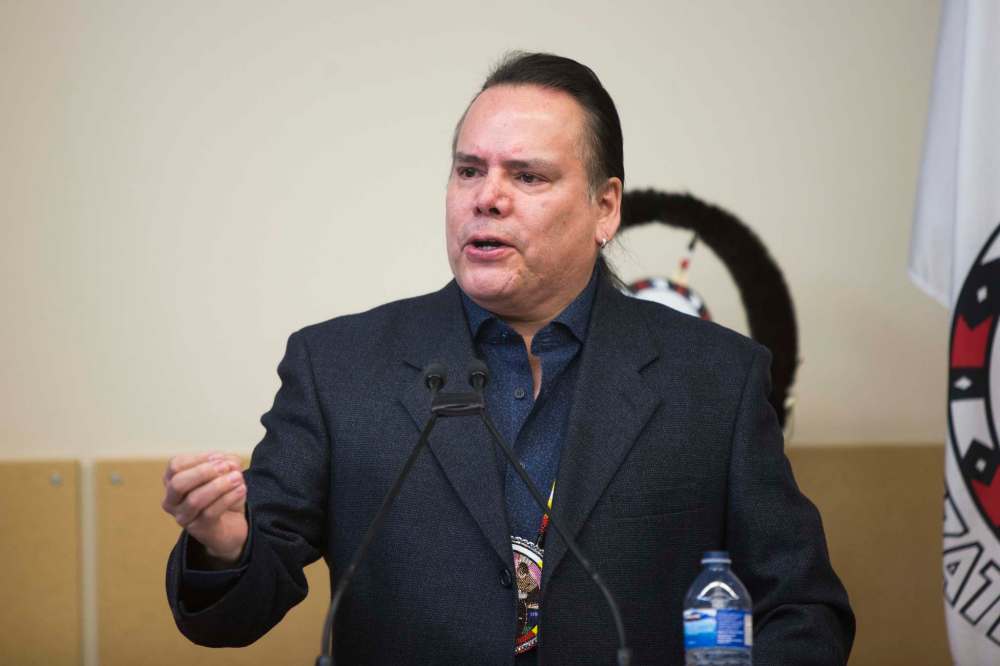
Only about half of northern First Nations communities represented by MKO currently have their own restorative justice programs. Settee said he’s met with Manitoba Justice Minister Cliff Cullen to discuss how that can change.
“He was very respectful and very sincere in his discussion with me,” Settee said of Cullen. “So I think there’s a hope, a possibility and potential for us to work together.”
Settee said MKO hopes to present a plan to the justice department for the program’s expansion. The Indigenous advocacy group was one of the first to offer restorative justice programs in Manitoba decades ago, but low wages for staff and a general lack of resources for programming have hampered their progress, Settee said.
The meeting with Cullen before Christmas focused on restorative justice services, Settee said. It happened after MKO chiefs unanimously passed a motion in November, calling for an overhaul of restorative justice programs in the North and for the construction of a jail in Thompson.
The provincial government has publicly committed to neither.

Cullen was unavailable for an interview Tuesday.
Asked whether he would support the expansion of such programs in the North, his office responded with a statement, saying the province increased restorative justice funding last year, including an extra $250,000 for northern communities, in addition to $2.8-million annual spending.
“Recommendations from the Martin decision, including the need for a remand facility in Thompson, continue to be carefully considered. In the meantime, we have been working diligently to improve and modernize the administration of justice for northern Manitobans,” read the statement.
katie.may@freepress.mb.ca
Twitter: @thatkatiemay
Katie May is a multimedia producer for the Free Press.
Our newsroom depends on a growing audience of readers to power our journalism. If you are not a paid reader, please consider becoming a subscriber.
Our newsroom depends on its audience of readers to power our journalism. Thank you for your support.
Katie May is a multimedia producer for the Free Press.
Our newsroom depends on a growing audience of readers to power our journalism. If you are not a paid reader, please consider becoming a subscriber.
Our newsroom depends on its audience of readers to power our journalism. Thank you for your support.
Advertisement Advertise With Us
Advertisement Advertise With Us