

‘She knew something was wrong’
Spouse of Alzheimer sufferer reaching out

Advertisement
Read this article for free:
or
Already have an account? Log in here »
To continue reading, please subscribe:
Monthly Digital Subscription
$1 per week for 24 weeks*
- Enjoy unlimited reading on winnipegfreepress.com
- Read the E-Edition, our digital replica newspaper
- Access News Break, our award-winning app
- Play interactive puzzles
*Billed as $4.00 plus GST every four weeks. After 24 weeks, price increases to the regular rate of $19.95 plus GST every four weeks. Offer available to new and qualified returning subscribers only. Cancel any time.
Monthly Digital Subscription
$4.99/week*
- Enjoy unlimited reading on winnipegfreepress.com
- Read the E-Edition, our digital replica newspaper
- Access News Break, our award-winning app
- Play interactive puzzles
*Billed as $19.95 plus GST every four weeks. Cancel any time.
To continue reading, please subscribe:
Add Free Press access to your Brandon Sun subscription for only an additional
$1 for the first 4 weeks*
*Your next subscription payment will increase by $1.00 and you will be charged $16.99 plus GST for four weeks. After four weeks, your payment will increase to $23.99 plus GST every four weeks.
Read unlimited articles for free today:
or
Already have an account? Log in here »
Hey there, time traveller!
This article was published 07/01/2019 (2662 days ago), so information in it may no longer be current.
Winnipeg teacher Beverly Scott would be taking her class of Grade 2 students to the gym and forget where she was going. Cleverly, she’d ask: “Who was listening? Who knows where we are going?”
That was in late 2005, recalled her husband, Gavin Scott, also a retired teacher.
“She knew something was wrong. She tried to cope and do the best she could,” said Gavin, who volunteers with the Alzheimer Society of Manitoba.
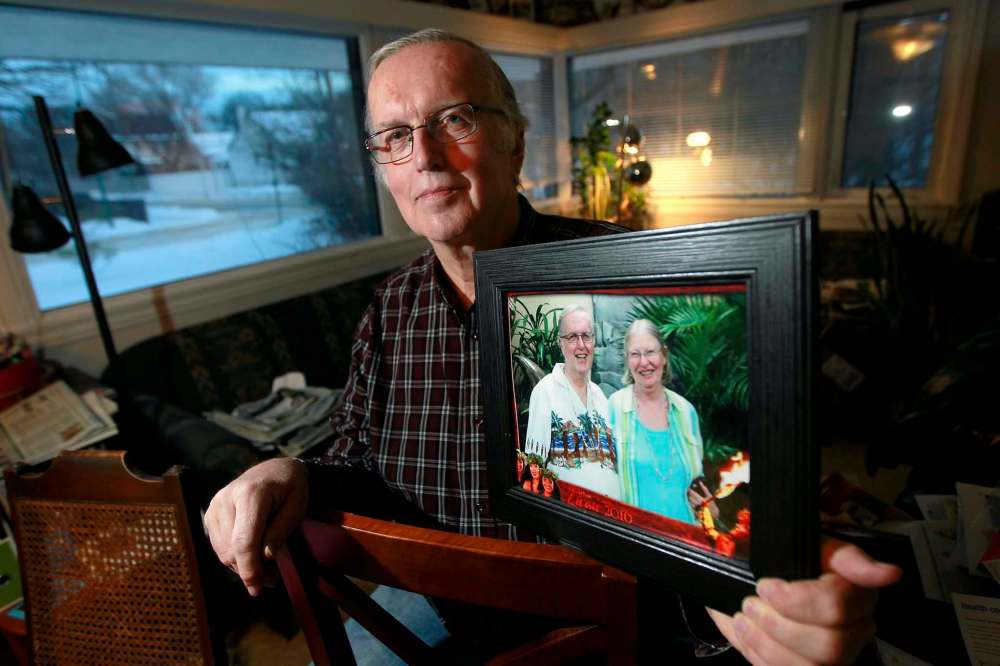
The incidence of the disease is growing at an alarming rate. It affects 22,500 Manitobans, including Beverly, who is in hospital now that the disease has progressed. By 2038, it is expected to reach more than 40,700 people in the province.
By sharing his experiences, Gavin said, he can help others who are just starting out, while helping himself by just talking about it.
“We’re on a ride we can’t get off,” he said, adding caregivers need to educate themselves about the disease, seek help from the society, friends and family and take care of themselves.
“You can get really burned out,” the 69-year-old said.
“It’s been a long go,” he said of the time since Beverly, 68, was hit with cognitive impairment 13 years ago. It ended her career, which she loved, at Christmastime.
“She had to leave her class halfway through the school year, which is very hard for a teacher,” said her husband, who worked as a teacher for another three years before retiring. “At one point, I knew I couldn’t leave her at home. By then, I’d reached retirement age and I could afford to.”
He and Beverly were then able to travel to Hawaii and drove to the Maritimes.
“They were good years, but frustrating at the same time,” he said.
“We’d be in the car and she’d say, ‘I’ve already seen all of this yesterday,’” Gavin reminisced. “And there were times like when she got lost in the mall in Quebec City. There are all kinds of little stories like that.”
He’s had revelations, too. As a caregiver to a loved one who has dementia, he’s learned how to live in the moment, he said.
“Sitting down, talking and having coffee or giving them a little shoulder rub became more important,” he said. “Living in the moment, that’s all Beverly could do. She couldn’t remember the past or live in the future.”
After being married for 41 years, Gavin believes she’d be as loving towards him if the caregiving situation were switched.
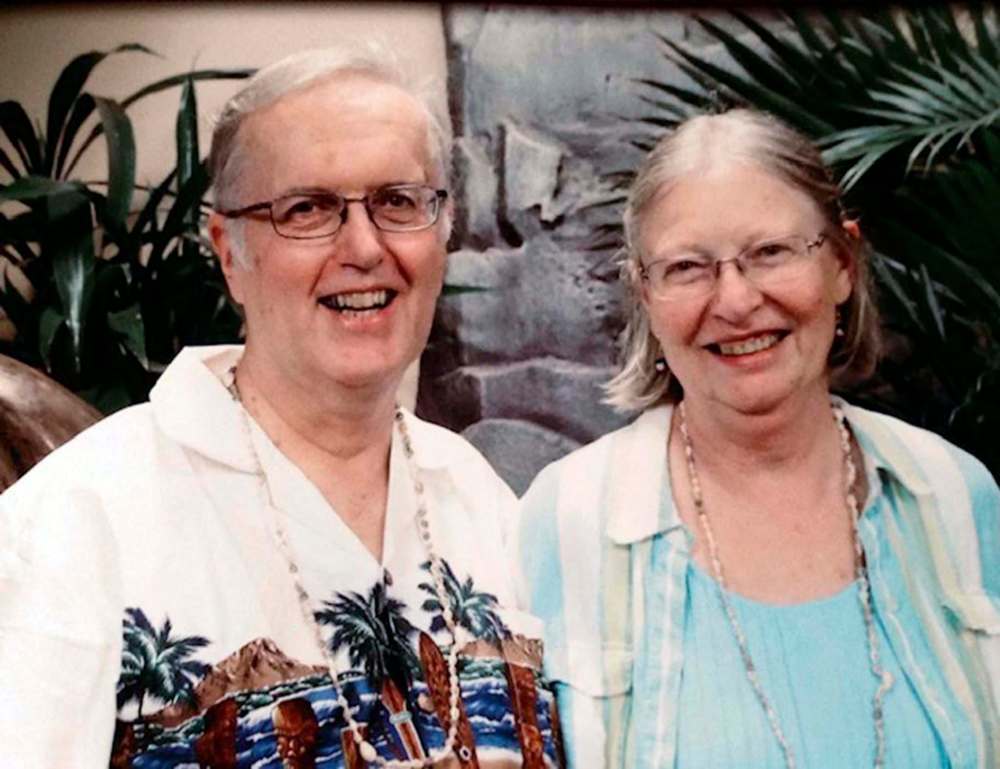
“It’s about doing the best job you can,” he said. “There is an appreciation you’ve done the best for your partner that you could. If the roles were reversed, I would hope that someone would love me enough to stick with me.”
That’s not always the case, though. “Sometimes, friends are put in the role of caregiver,” he said.
Most often, dementia takes hold when a person is elderly, not in middle age, like when it hit Beverly. More and more people are affected by Alzheimer’s each year, as baby boomers advance into old age.

“It’s almost like cancer — so many people are touched by dementia,” Gavin said, urging those impacted to reach out to the Alzheimer Society of Manitoba.
“There are a lot of people with a lot of knowledge,” said Gavin, who belongs to a support group.
The society’s website (alzheimer.mb.ca) offers tips about how to help end the stigma, challenges attitudes about the disease and provides resources.
“And hang in there,” he added.
carol.sanders@freepress.mb.ca
Carol Sanders
Legislature reporter
Carol Sanders is a reporter at the Free Press legislature bureau. The former general assignment reporter and copy editor joined the paper in 1997. Read more about Carol.
Every piece of reporting Carol produces is reviewed by an editing team before it is posted online or published in print — part of the Free Press‘s tradition, since 1872, of producing reliable independent journalism. Read more about Free Press’s history and mandate, and learn how our newsroom operates.
Our newsroom depends on a growing audience of readers to power our journalism. If you are not a paid reader, please consider becoming a subscriber.
Our newsroom depends on its audience of readers to power our journalism. Thank you for your support.
Carol Sanders
Legislature reporter
Carol Sanders is a reporter at the Free Press legislature bureau. The former general assignment reporter and copy editor joined the paper in 1997. Read more about Carol.
Every piece of reporting Carol produces is reviewed by an editing team before it is posted online or published in print — part of the Free Press‘s tradition, since 1872, of producing reliable independent journalism. Read more about Free Press’s history and mandate, and learn how our newsroom operates.
Our newsroom depends on a growing audience of readers to power our journalism. If you are not a paid reader, please consider becoming a subscriber.
Our newsroom depends on its audience of readers to power our journalism. Thank you for your support.
Advertisement Advertise With Us
Advertisement Advertise With Us