

Support for federal Conservatives up in Manitoba: Probe poll

Advertisement
Read this article for free:
or
Already have an account? Log in here »
To continue reading, please subscribe:
Monthly Digital Subscription
$1 per week for 24 weeks*
- Enjoy unlimited reading on winnipegfreepress.com
- Read the E-Edition, our digital replica newspaper
- Access News Break, our award-winning app
- Play interactive puzzles
*Billed as $4.00 plus GST every four weeks. After 24 weeks, price increases to the regular rate of $19.95 plus GST every four weeks. Offer available to new and qualified returning subscribers only. Cancel any time.
Monthly Digital Subscription
$4.99/week*
- Enjoy unlimited reading on winnipegfreepress.com
- Read the E-Edition, our digital replica newspaper
- Access News Break, our award-winning app
- Play interactive puzzles
*Billed as $19.95 plus GST every four weeks. Cancel any time.
To continue reading, please subscribe:
Add Free Press access to your Brandon Sun subscription for only an additional
$1 for the first 4 weeks*
*Your next subscription payment will increase by $1.00 and you will be charged $16.99 plus GST for four weeks. After four weeks, your payment will increase to $23.99 plus GST every four weeks.
Read unlimited articles for free today:
or
Already have an account? Log in here »
Hey there, time traveller!
This article was published 27/12/2018 (2634 days ago), so information in it may no longer be current.
With less than a year to go until the next federal election, the Conservative party appears to be in line to give the Liberals a decent run for their seats in Manitoba, with increased support in rural strongholds and in Winnipeg.
A new Probe Research poll conducted for the Free Press on federal voting preferences that surveyed 1,105 Manitobans at random, Liberal support provincewide has dropped by 11 percentage points since the 2015 election, while the Tories have enjoyed a seven-point boost over the same period.
!function(e,t,s,i){var n=”InfogramEmbeds”,o=e.getElementsByTagName(“script”)[0],d=/^http:/.test(e.location)?”http:”:”https:”;if(/^/{2}/.test(i)&&(i=d+i),window[n]&&window[n].initialized)window[n].process&&window[n].process();else if(!e.getElementById(s)){var r=e.createElement(“script”);r.async=1,r.id=s,r.src=i,o.parentNode.insertBefore(r,o)}}(document,0,”infogram-async”,”https://e.infogram.com/js/dist/embed-loader-min.js”);
In 2015, when Justin Trudeau ousted Stephen Harper from Sussex Drive after nearly a decade in the Prime Minister’s Office, the Tories lost six Parliament seats in Winnipeg and the Liberals picked up seven in Manitoba’s capital.
“The question for the Conservatives now is, do they win one back? Two? Six? None?” asked Curtis Brown, Probe’s vice-president.
During the last federal election, Manitoba voters swarmed toward the Liberals, triggering a downturn in provincial support for the Conservative party. In 2011, the Conservatives received 53 per cent of Manitoba votes. By 2015, support had decreased to 35 per cent. Now, 42 per cent of Probe’s decided and leaning respondents say they’ll likely support a Conservative candidate in October 2019, with a little more than a third saying the same about the Liberals.
!function(e,t,s,i){var n=”InfogramEmbeds”,o=e.getElementsByTagName(“script”)[0],d=/^http:/.test(e.location)?”http:”:”https:”;if(/^/{2}/.test(i)&&(i=d+i),window[n]&&window[n].initialized)window[n].process&&window[n].process();else if(!e.getElementById(s)){var r=e.createElement(“script”);r.async=1,r.id=s,r.src=i,o.parentNode.insertBefore(r,o)}}(document,0,”infogram-async”,”https://e.infogram.com/js/dist/embed-loader-min.js”);
Brandon University political science department chair Kelly Saunders was initially taken aback by the stark drop in Liberal support since Trudeau’s government came into power. But she said the results follow somewhat expected trends when analyzed further.
“The Liberals are still ahead in most areas of Winnipeg,” said Saunders, an associate professor who was born in Winnipeg and has lived in Brandon for 11 years.
“It seems the Conservatives are gaining support outside of Winnipeg in rural areas,” she said, pointing out that the party’s five current seats were all won handily in the same regions in which support is growing.
“What it really means is that the Conservatives would win seats they already hold by more than they did in the previous election,” Brown said.
“It’s not that big of a deal if you win a rural riding by five more percentage points than you won by in the previous election,” Saunders added. “You’re still going to only have one seat.”
“What it really means is that the Conservatives would win seats they already hold by more than they did in the previous election.” – Curtis Brown
Saunders said the discrepancies between Winnipeg — where the Liberals hold an overall 10 percentage-point lead over the Conservatives — and non-Winnipeg regions, where the Tories hold a commanding 58 per cent of support to the Liberals’ 19, as an example of a “growing urban-rural split.”
Conservatives typically win their Manitoba seats in sweeping fashion outside of the city, where values and ideals more neatly align within their party’s framework, Saunders said. Meanwhile, the Liberals and the NDP tend to fare much better within urban centres where their social-democratic ideals find significantly more support.
“There really are two different political cultures,” said Saunders. “As Winnipeg continues to grow and develop a different persona than the rest of Manitoba, I think that chasm between urban and rural is only going to increase.”
Saunders said the overwhelming rural Conservative support is expected, which signals that the party should put more effort into securing support inside Winnipeg, where the Liberals appear to be in good shape despite the decrease in support.
In Winnipeg, according to Probe, the Liberals hold a slight edge over the Conservatives in nearly every region, with a 28-point lead in the city’s core, a 14-point lead in the northwest, a 10-point lead in the southwest, and a five-point lead in the southeast. In the northeast, however, the Conservatives sit three points ahead.
“As Winnipeg continues to grow and develop a different persona than the rest of Manitoba, I think that chasm between urban and rural is only going to increase.”–Kelly Saunders
Given that Winnipeg’s population and influence is growing, while rural Manitoba is seeing the opposite trend, Saunders said constituencies inside the Perimeter Highway have become more important to both parties.
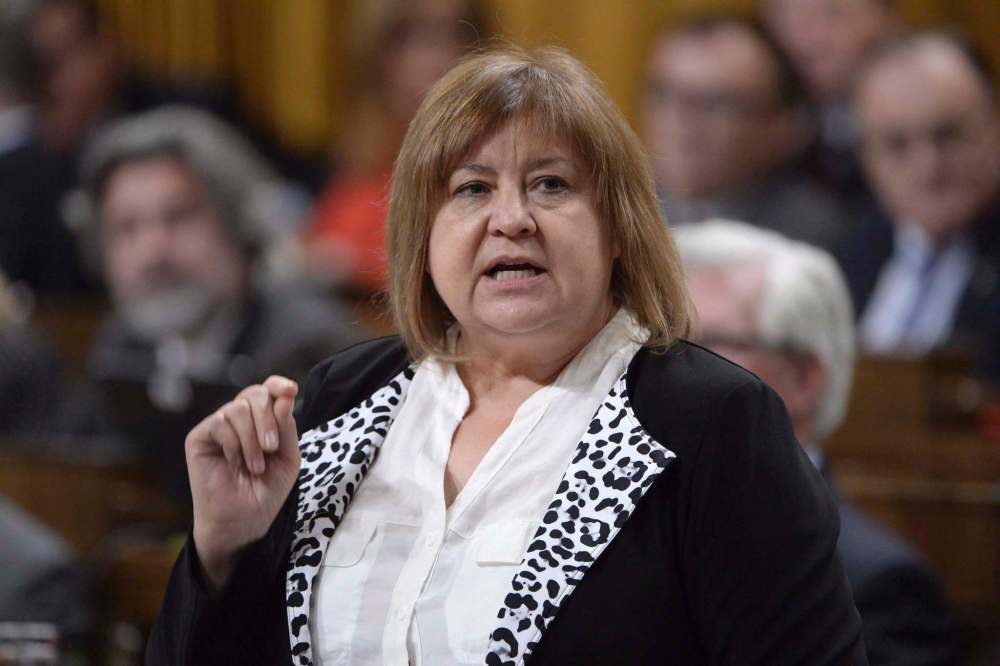
“Those Winnipeg seats are going to be a battleground between the Liberals and the Conservatives,” she said, singling out the Kildonan-St. Paul seat, which is held by Liberal MaryAnn Mihychuk, as a toss-up.
Overall, both Saunders and Brown say that the decrease in Liberal support is not shocking given the momentum the party had attained when Trudeau was elected.
“It was such a significant success in 2015, and to win seven seats in Manitoba was historic for the Liberals,” said Saunders.
“You see this reflected nationally as well,” said Brown. “It would seem the honeymoon is wearing off.”
In Manitoba, Saunders said, the decrease in support has been spurred, in part, by Premier Brian Pallister, who has “painted an ‘us vs. them’ narrative with his language and rhetoric” toward the Liberal government, specifically regarding the carbon tax or the federal deficit.
“I think a lot of that has stayed in voters’ minds,” she added.
Meanwhile, the NDP has held steady in both Winnipeg and rural areas since the 2015 election.
The Probe poll found the party recorded a three-point increase in the city (to 17 per cent) and has an even 13 per cent outside of Winnipeg.
Fourteen per cent of the poll’s respondents said they were undecided.

Brown said many of those voters won’t cast a ballot on election day.
Saunders said that barring an egregious mistake by the Liberals, undecided voters tend to side with the incumbent.
“This poll represents a snapshot in time,” cautioned Brown. “The election is still almost a year away.”
The Probe poll was conducted from Nov. 27 to Dec. 6 and involved a random and representative sampling of 1,105 Manitoba residents.
The results are within plus or minus 2.9 percentage points of what they would have been had the entire adult population of Manitoba been surveyed.
Ben Waldman is a National Newspaper Award-nominated reporter on the Arts & Life desk at the Free Press. Born and raised in Winnipeg, Ben completed three internships with the Free Press while earning his degree at Ryerson University’s (now Toronto Metropolitan University’s) School of Journalism before joining the newsroom full-time in 2019. Read more about Ben.
Every piece of reporting Ben produces is reviewed by an editing team before it is posted online or published in print — part of the Free Press‘s tradition, since 1872, of producing reliable independent journalism. Read more about Free Press’s history and mandate, and learn how our newsroom operates.
Our newsroom depends on a growing audience of readers to power our journalism. If you are not a paid reader, please consider becoming a subscriber.
Our newsroom depends on its audience of readers to power our journalism. Thank you for your support.
Ben Waldman is a National Newspaper Award-nominated reporter on the Arts & Life desk at the Free Press. Born and raised in Winnipeg, Ben completed three internships with the Free Press while earning his degree at Ryerson University’s (now Toronto Metropolitan University’s) School of Journalism before joining the newsroom full-time in 2019. Read more about Ben.
Every piece of reporting Ben produces is reviewed by an editing team before it is posted online or published in print — part of the Free Press‘s tradition, since 1872, of producing reliable independent journalism. Read more about Free Press’s history and mandate, and learn how our newsroom operates.
Our newsroom depends on a growing audience of readers to power our journalism. If you are not a paid reader, please consider becoming a subscriber.
Our newsroom depends on its audience of readers to power our journalism. Thank you for your support.
Advertisement Advertise With Us
Advertisement Advertise With Us