

Supreme Court justices arrive

Advertisement
Read this article for free:
or
Already have an account? Log in here »
To continue reading, please subscribe:
Monthly Digital Subscription
$1 per week for 24 weeks*
- Enjoy unlimited reading on winnipegfreepress.com
- Read the E-Edition, our digital replica newspaper
- Access News Break, our award-winning app
- Play interactive puzzles
*Billed as $4.00 plus GST every four weeks. After 24 weeks, price increases to the regular rate of $19.95 plus GST every four weeks. Offer available to new and qualified returning subscribers only. Cancel any time.
Monthly Digital Subscription
$4.99/week*
- Enjoy unlimited reading on winnipegfreepress.com
- Read the E-Edition, our digital replica newspaper
- Access News Break, our award-winning app
- Play interactive puzzles
*Billed as $19.95 plus GST every four weeks. Cancel any time.
To continue reading, please subscribe:
Add Free Press access to your Brandon Sun subscription for only an additional
$1 for the first 4 weeks*
*Your next subscription payment will increase by $1.00 and you will be charged $16.99 plus GST for four weeks. After four weeks, your payment will increase to $23.99 plus GST every four weeks.
Read unlimited articles for free today:
or
Already have an account? Log in here »
Hey there, time traveller!
This article was published 23/09/2019 (2410 days ago), so information in it may no longer be current.
As he embarks on a historic visit to the centre of Canada, the country’s chief judge says he is ready to listen.
A few hours after landing in Winnipeg Sunday, Supreme Court Justice Richard Wagner is settling in to his new space at the offices of Manitoba’s Court of Appeal, which is hosting the Supreme Court of Canada’s first-ever hearings outside of Ottawa this week. Wagner has been here before, but never like this.
He and the other eight justices who serve on Canada’s highest court are in the city as part of an unprecedented effort to connect with people outside of the nation’s capital — something that has never happened in the court’s 144-year history. As the judiciary sets out on a quest to become more modern and manage the court of public opinion, they’re here because of Winnipeg’s geographic and sociological place in the country. It’s the city’s intersection of First Nations, Métis and francophone culture that Wagner says could be the first step toward a stronger future for the Supreme Court — one that requires reconciliation of past injustice.
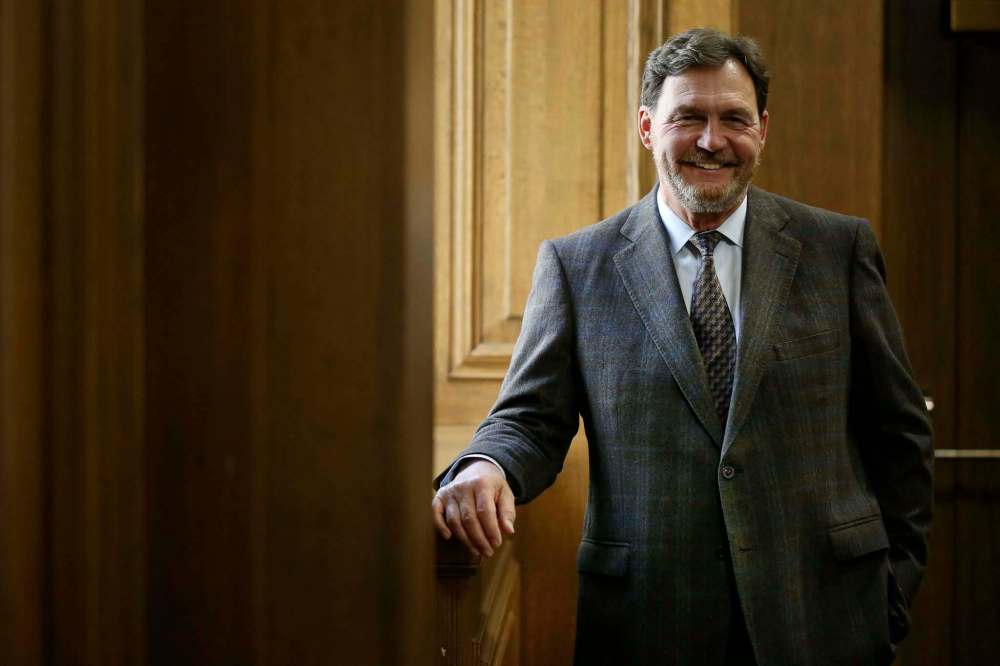
“If people don’t have faith in the judicial system, that’s the end of democracy,” he said in an interview Sunday.
Asked how the top court plans to consider public input in a part of the country where recent high-profile criminal cases have tested or broken Indigenous People’s faith in the justice system, Wagner said giving people information is key to helping them access justice.
“I always say that ignorance is the source of bias and prejudice. So to eliminate prejudice and bias, we have to give the information to people. And very often, once the people (get) the right information, the prejudices and the biases will go away. But in Manitoba, of course there are particular problems, with respect to — not only in Manitoba but across Canada — about the Indigenous people. They are over-represented in jails, they suffered for so many years in many ways,” he said.
“We have undertaken this reconciliation process, which not only concerns the government officials, but concerns every citizen of this country, including the judiciary. We have our own share to do. And I think that if we could improve and support this reconciliation process by giving the right information and avoiding additional bias and prejudice, I think it would be a good step in the right direction, so far as the courts are concerned.”
Apart from presiding over two Supreme Court cases this week, the panel of judges will be meeting with members of the Indigenous and francophone communities. They’ll be talking to leaders, local law associations, high school students and participating in a rare public question-and-answer session at the Canadian Museum for Human Rights.
Part of the reason for this “listening tour,” as Wagner describes it, is because the court is aware more Canadians rely on social media to stay informed — “Unfortunately, the traditional media is struggling these days,” he says — so the court needs to get out and reach them directly. The Supreme Court has its own social-media accounts on Facebook and Twitter firing off frequent updates during this visit.
The court’s recent rulings on trial delays, bail processes and pre-trial custody have tackled issues that have disproportionately affected Indigenous people in Manitoba, which still has some of the highest incarceration and remand rates in the country.
Wagner says he believes the top court has always paid attention to the specific circumstances Indigenous Peoples face in the justice system.
“I think that the court throughout the years, and it goes back many years, is and was always sensitive to the specificity of the Indigenous people in Canada,” he says.

“Once the message is out, of course we don’t do politics, we only apply the law or defend the law. It’s up to the elected officials to look and hear and use our decisions and to act appropriately.”
As for the Supreme Court’s priorities on trying to make sure all Canadians have equal access to justice, Wagner says he wants the court to bring about “actions to justice,” in the form of new processes that can help Canadians. For example, he says the court is increasingly using e-filed documents and helping self-represented litigants take their cases to the top court. They represent 30 per cent of all applications for leave that the Supreme Court receives, Wagner says.
“We’re always open to new ways to make sure that people have access to justice. But I think that government officials have responsibility as well (as lawyers and the media),” he says, “to make sure that the population can have proper and good access to justice. And I always say that people who have the means can have access to their justice, but we have to find good justice for all and not exceptional justice for a few.”
katie.may@freepress.mb.ca
Twitter: @thatkatiemay
Katie May is a multimedia producer for the Free Press.
Our newsroom depends on a growing audience of readers to power our journalism. If you are not a paid reader, please consider becoming a subscriber.
Our newsroom depends on its audience of readers to power our journalism. Thank you for your support.
In a rare move, the Supreme Court justices will take questions from the public during a free event this week at the Canadian Museum for Human Rights.
It’s happening Wednesday, Sept. 25 from 3 p.m. to 4:30 p.m. and is set to include an informal meet-and-greet.
For more information, visit: https://humanrights.ca/event/supreme-court-of-canada-at-the-museum
Katie May is a multimedia producer for the Free Press.
Our newsroom depends on a growing audience of readers to power our journalism. If you are not a paid reader, please consider becoming a subscriber.
Our newsroom depends on its audience of readers to power our journalism. Thank you for your support.
Advertisement Advertise With Us
Advertisement Advertise With Us