Swingin’ spot brought in big names
Legendary acts played city's coolest big band club
Advertisement
Read this article for free:
or
Already have an account? Log in here »
To continue reading, please subscribe:
Digital Subscription
One year of digital access for only $1.44 a week*
- Enjoy unlimited reading on winnipegfreepress.com
- Read the E-Edition, our digital replica newspaper
- Access News Break, our award-winning app
- Play interactive puzzles
*Billed as $5.77 plus GST every four weeks. After 52 weeks, price increases to the regular rate of $19.95 plus GST every four weeks. Offer available to new and qualified returning subscribers only. Cancel any time.
To continue reading, please subscribe:
Add Free Press access to your Brandon Sun subscription for only an additional
$1 for the first 4 weeks*
- Enjoy unlimited reading on winnipegfreepress.com
- Read the E-Edition, our digital replica newspaper
- Access News Break, our award-winning app
- Play interactive puzzles
*Your next Brandon Sun subscription payment will increase by $1.00 and you will be charged $17.95 plus GST for four weeks. After four weeks, your payment will increase to $24.95 plus GST every four weeks.
Read unlimited articles for free today:
or
Already have an account? Log in here »
Hey there, time traveller!
This article was published 13/12/2015 (3968 days ago), so information in it may no longer be current.
While much is made of Winnipeg’s flourishing rock ‘n’ roll scene in the 1960s, the city swung to a different beat in the decade that preceded it.
The latter 1940s and ’50s were a golden age for dance bands, with nightclubs and dance halls throughout the city and beyond. Hundreds of local musicians were kept busy with steady work as the demand for live big band music was insatiable.
Clubs such as the Cave on Donald Street at Ellice Avenue, Rainbow Dance Gardens (later J’s Discotheque) on Smith Street at Graham Avenue, Harry Smith’s Club Morocco on Portage Avenue, the Highwayman supper club out on Pembina Highway near University Crescent, Jack’s Place (later the 4th Dimension coffeehouse) behind the Pembina Drive-In theatre, the Normandy Dance Hall on Sherbrook Street, the Alhambra Dance Gardens on Fort Street and the Roseland, on the second floor of the Bradburn Building at Portage and Kennedy Street, were drawing crowds every weekend. You could also take the Moonlight Express train to Winnipeg Beach and dance at the Pavilion, which boasted the largest dance floor in the province.

The best-known of the many clubs and dance halls was the Rancho Don Carlos at 650 Pembina Hwy., just south of where Grant Avenue intersects with Pembina, between what is now a McDonald’s restaurant and Knight Auto Haus. The Rancho opened its doors on New Year’s Eve 1951, and over the next six or seven years booked some of the top names in the entertainment world, including Louis Armstrong, Cab Calloway, Vicki Carr, Rosemary Clooney, Nat King Cole, Ella Fitzgerald, Bob Hope, Lena Horne, Harry James, Spike Jones, Frankie Laine and Sophie Tucker, and comedians such as Shelly Berman and Myron Cohen, among others.
The club was owned and operated by one of the most colourful characters of the day, Carlo (Charlie) Mazzone. Mazzone is as legendary as the club he ran and the acts he booked.
Born in Italy in 1905, he came to Winnipeg with his family as a youngster in 1913. Raised in Fort Rouge, by his early teens he was already working at the CNR’s Fort Rouge shop. During the Second World War, Mazzone, who played violin, led the Royal Canadian Air Force band Saturday nights at the downtown Marlborough Hotel, where he acquired the name Don Carlos. After his military service, or so the story goes (with Mazzone, many colourful stories abound), he won big on a horse named Lover’s Lass at Sportman’s Park in Chicago, earning him enough money to open the Don Carlos Castle in Winnipeg in 1945.
Located in the basement of the International Order of Oddfellows Hall at 293 Kennedy St., just north of Portage, Mazzone boasted the club was “the home of refined dancing.” Unfortunately, it burned down the next year, but was reopened later that year.
Mazzone ran dances at various locations before building the Don Carlos Casino on Pembina in 1947.
“It wasn’t a casino like we think of today, with gambling,” says veteran Winnipeg musician and educator Owen Clark, who penned the marvellous book Musical Ghosts, which tells the story of the big band era in the city.
“It was just a way of romanticizing the club.”
‘It was the end of an era,
before the world entered a new decade of dramatic change’
— Garth Steek
Built to resemble a medieval castle, the club quickly became the entertainment hub of the city, where internationally renowned performers were paid top dollar. Ever the impresario, Mazzone would often book the acts for a one-off concert at the Playhouse or Dominion Theaters while they were playing a week at the Casino (and later the Rancho). This defrayed some of his costs.
Mazzone was able to bring Hope to town three times with a similar arrangement, as well as singers Sarah Vaughan and Della Reese.
“Charlie had a lot of guts,” says Clark. “He knew how to wheel and deal. He was the only guy in town bringing in high-class acts, top-echelon entertainment. Every major star, with the exception of Frank Sinatra.”
Mazzone was also a card shark, hosting high-stakes poker games in the back of the club. Rumours were rife he had connections to the Mafia, but nothing was ever proven, although a couple of men in pinstriped suits from Chicago appeared at the club one night. Regardless, you could often spot top-level members of the police force at a front table of the club, mixing with the business elite.
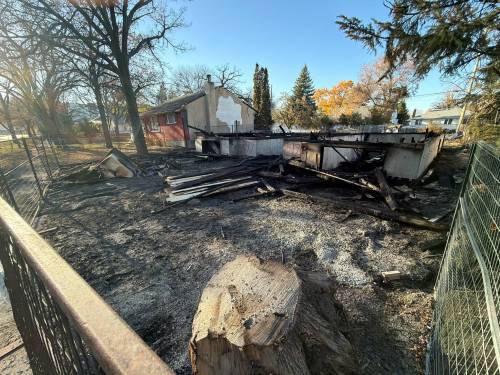
The Don Carlos Casino mysteriously burned down the night of Jan. 3, 1950, but Mazzone rebuilt the club on the same location, reopening it as the Rancho Don Carlos a year later. The club included living quarters at the back for bachelor Mazzone and his two dogs. Two miniature jockey statues flanked the entrance to the club. A visionary, Mazzone opened one of the city’s first outdoor patios at the Rancho.
The Rancho carried on where the Don Carlos Casino left off, as the top club in town.

James and his band, featuring drummer Buddy Rich, was booked by Mazzone for two shows at the Red River Exhibition, along with a midnight show at the Rancho, at a rumoured cost of $20,000 for a week. Cole appeared at the Rancho for $7,500. Nightclub sensation Calloway appeared for a week with his full revue, including dancers. His high-energy performance was filmed by CBWT and is preserved on YouTube. Calloway was backed by local musicians, including drummer Ed Sersen, who traded bars in a solo with Calloway.
When jazz pioneer Armstrong arrived for a weeklong Rancho gig with his band, he informed Mazzone on the third night his piano player was ill and asked if he could recommend someone to fill in. George Reznick, who was playing with Johnny Bering’s group opening the shows, was recruited to play with Armstrong’s band. He had no rehearsal.
“Some of the tempos were so fast, and the bars were flying by,” Reznick remembers. “After the first show, I was completely flaked out in my brain. I was sweating and thought I had played badly. I was backstage in the dressing room when Louis Armstrong opened the door and said, ‘Hey kid, you did real good!’ I replied, ‘Thank you, Mr. Armstrong.’ ‘Call me Louis, kid,’ he told me.”
An added attraction for Armstrong to come to Winnipeg was the Polo Park horse-racing track. He loved to bet on the ponies. Armstrong and Mazzone visited the track and won big, enough to cover Armstrong’s hefty fee.
“You have to remember that in the States, black performers had to enter clubs from the back door,” says Rancho aficionado and former city councillor Garth Steek. Steek operates Myer’s Delicatessen at 1842 Grant Ave., where the walls are dotted with vintage Rancho photos and memorabilia, and people come in to share memories.
“Here in Canada, they were treated as equals. That’s why they liked coming up here to the Rancho.”

“Charlie was well-respected in the local music community,” says Clark. “He gave a lot of local guys work at the Rancho.”
Clark himself played the club in 1960 with the Johnny Bering Band.
“When he would book these big acts for a sit-down concert at the Playhouse or Auditorium, according to musician’s union rules, he had to hire the same number of local union players to be on standby at the concert. At the Rancho, if a singer was booked, they came with music charts, and Charlie had to provide the backing band. Playing with some of the big-name acts meant you had to be able to read quickly and learn fast because you generally had one rehearsal,” he said.
“I don’t think the musicians in this city would have developed as quickly without the Rancho. He gave local musicians a chance to play with major artists. Also, musicians got to see and interact with some of the finest musicians on the North American scene. I never ever heard any local musicians say anything bad about Charlie.”
“He was a sturdy, tough Italian guy, but he was very warm,” says Reznick of Mazzone.
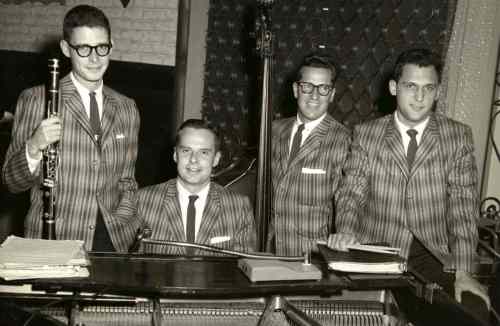
A who’s who of local talent, including Johnny Bering, Paul Grosney, Gary Gross, Jimmy King, José Ponéira, Dave Shaw, Del Wagner, Maxine Ware, Jimmy Weber and Dave Young also graced the Rancho stage.
“When you worked for Charlie, you really worked for Charlie,” says Sersen. “I remember a Monday night, which is a bad night for clubs. There was nobody in the room, so we figured we wouldn’t be playing. Charlie gets on the phone, and soon after this couple arrives and sits way at the back of the room all night. So we had to play all night for these two people. That was Charlie.”

In the 1940s to mid-’50s, Manitoba liquor laws were antiquated. The Rancho was unable to secure a liquor licence, so patrons brought their own spirits in paper bags that were tucked under the table at their feet. The club then charged between $2 and $3 for mix and ice. You could buy a bottle of Coca-Cola for 10 cents in a store, but patrons gladly forked over the exorbitant price.
The police were required to inspect the club from time to time for liquor violations but would give Mazzone a courtesy call in advance so patrons could be alerted to hide their booze. Liquor laws were updated in 1956, allowing clubs to be licensed.
As writer Pat Garland recalled in an article published in the Free Press on Jan. 22, 1969, “Sunday… became family day at the Rancho. Charlie would serve an early dinner, which was great for young families, and a later dinner with the show.”
Vocal groups were in vogue in the early ’50s, and Mazzone booked acts such as the Mills Brothers, Harry Douglass and the Deep River Boys, the Four Aces and Canadian group the Four Lads, who enjoyed huge success in the U.S. He also brought in singer Jimmie Rodgers of Honeycomb and Kisses Sweeter than Wine fame. Country music star Ferlin Husky also played at the Rancho at the height of his career.
Guess Who and Bachman-Turner Overdrive guitarist Randy Bachman made a pilgrimage from West Kildonan by bus to the Rancho to see musical hero Les Paul, who appeared at the club in the late ’50s with his wife, Mary Ford. Unable to get in because he was underage, Bachman managed to stand in the doorway of the kitchen to watch the show.
“After the show, as he was coming back out for another bow, he said to me as he passed by in the kitchen, ‘Here kid, hold this,’ and I held his Les Paul guitar,” Bachman said.

“Man, was it heavy. When he came back, I asked him if he could show me the lick he played in How High the Moon. It was a very simple run down the high E string. So he showed me how he played it.”
By the late ’50s, rock ‘n’ roll was becoming popular, and the club wasn’t drawing the same crowds anymore. The Town ‘n’ Country supper club had opened on Kennedy and was competing with the Rancho. Mazzone sold the club and moved to Edmonton before returning to Reggio di Calabria, Italy, with his Italian-born wife, Sarah, and establishing a successful automobile dealership. He died in 1992.
Several owners tried to reignite the glory days of the Rancho Don Carlos over the next few years, including entrepreneur David Saifer.
“My parents used to invite some of the entertainers over for dinner,” says daughter Shawn Saifer, who as a youngster recalls comedian Henny Youngman at their house.

“My sister got so excited she threw up,” she remembers. “Every Saturday, I used to be dropped off at the Rancho for a turkey sandwich after my ballet class. I would walk around the empty club. It seemed so classy to me.”
Barney Gorenstein managed the club for a time before the doors closed in 1961. The club would open and close a few more times until a fire in 1967 finally ended the Rancho’s days.

“It was the end of an era, before the world entered a new decade of dramatic change,” says Steek. “I remember an older friend saying to me, ‘The Rancho was a place full of smoke, booze, laughter and exciting people. Here I am sitting five feet away from Lena Horne singing Stormy Weather. It didn’t get any better than that.’ “
With thanks to Owen Clark for the photos and Garth Steek for the memorabilia.
History
Updated on Sunday, December 13, 2015 10:23 AM CST: Photos changed.