

Tories promise changes to privacy law
Advertisement
Read this article for free:
or
Already have an account? Log in here »
To continue reading, please subscribe:
Monthly Digital Subscription
$1 per week for 24 weeks*
- Enjoy unlimited reading on winnipegfreepress.com
- Read the E-Edition, our digital replica newspaper
- Access News Break, our award-winning app
- Play interactive puzzles
*Billed as $4.00 plus GST every four weeks. After 24 weeks, price increases to the regular rate of $19.95 plus GST every four weeks. Offer available to new and qualified returning subscribers only. Cancel any time.
Monthly Digital Subscription
$4.99/week*
- Enjoy unlimited reading on winnipegfreepress.com
- Read the E-Edition, our digital replica newspaper
- Access News Break, our award-winning app
- Play interactive puzzles
*Billed as $19.95 plus GST every four weeks. Cancel any time.
To continue reading, please subscribe:
Add Free Press access to your Brandon Sun subscription for only an additional
$1 for the first 4 weeks*
*Your next subscription payment will increase by $1.00 and you will be charged $16.99 plus GST for four weeks. After four weeks, your payment will increase to $23.99 plus GST every four weeks.
Read unlimited articles for free today:
or
Already have an account? Log in here »
Hey there, time traveller!
This article was published 03/01/2019 (2668 days ago), so information in it may no longer be current.
Manitoba’s health minister said the government plans to introduce amendments to the Personal Health Information Act this year to enhance patient safeguards and improve reporting on instances of snooping.
“We won’t go into specifics right now, but we’ll be talking about increased accountability (on privacy breaches),” Cameron Friesen said in an interview Thursday.
He said amendments could include mandatory reporting to a central body, such as the provincial ombudsman’s office, when health staff inappropriately access patient files.
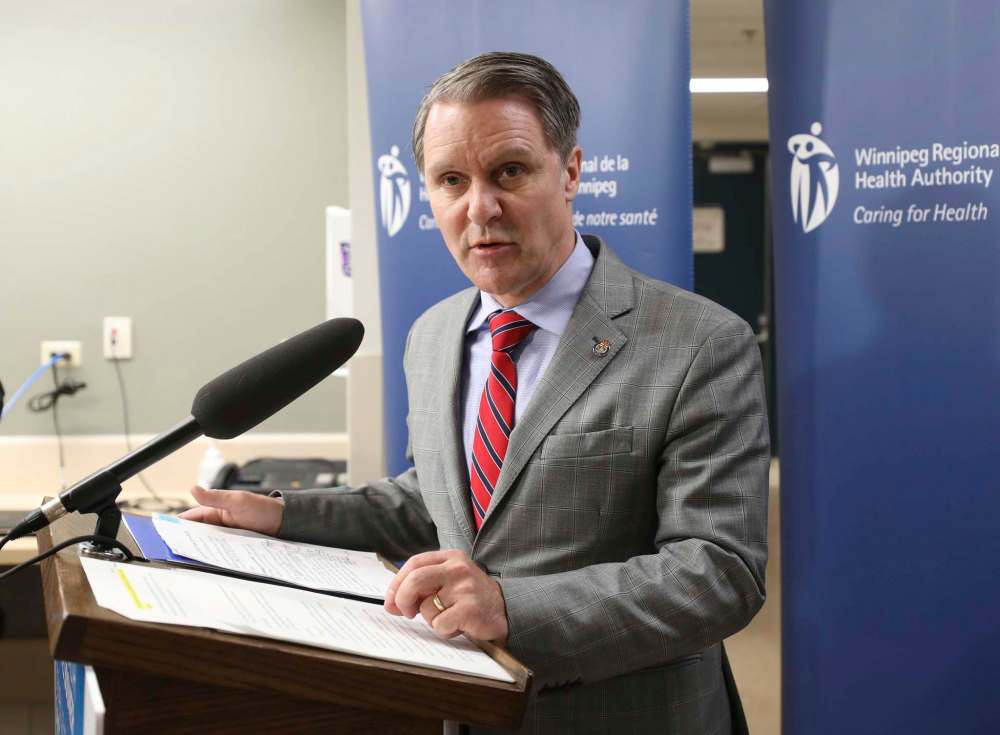
Friesen’s comments follow a Free Press report this week that revealed a Grace Hospital employee was fired in 2015 for snooping into the medical records of five Winnipeg Jets hockey players. The article also reported the Winnipeg Regional Health Authority’s reluctance to divulge information about the frequency of snooping and any disciplinary action taken.
Friesen said he did not want to comment about a specific privacy breach. But he said he wanted to assure Manitobans he takes the privacy of patient records seriously, and new safeguards are continuing to be introduced in Winnipeg.
“We care about his very much,” he said by phone from Winkler. “It is tremendously alarming to all Manitobans when they learn that someone snooped in files… It’s why we’re looking at (Personal Health Information Act) right now to better understand if there is more we can do.”
Arthur Schafer, founding director of the University of Manitoba’s Centre for Professional and Applied Ethics, called hospital officials’ refusal to be more forthcoming about instances of patient-records snooping a “deep failure of accountability.”
He likened it to the lack of information provided by U of M administrators with regards to two recent scandals involving a former music professor and the head of the Richardson Centre for Functional Foods and Nutraceuticals.
What’s happened in both cases is “public officials are hiding under the skirts of privacy legislation,” Schafer said. “It’s especially disturbing because we look to our leading public institutions… to be models of public accountability.”
The public is entitled to know the magnitude of the snooping problem and how it’s being addressed, so they can judge whether those in charge are doing their jobs, Schafer said.
“Without knowing how common, how frequent the problem is, the public can’t have an informed, rational opinion about the safety of their most personal health information. And they can’t have an informed opinion about the competence of the people who are supposed to be protecting that privacy.”
The public deserves to be alerted to any illegal activities by medical staff, Schafer said, adding failure to be upfront about instances of snooping could undermine public trust in the system, perhaps causing patients to withhold personal health information.
“Who would be willing to disclose that information if our neighbour who works at the hospital can gain access to it?”
The provincial ombudsman has recommended the law be amended to require trustees of health information to alert the office to any instances of snooping. Currently, hospitals and health authorities inform the ombudsman — who also acts as the province’s chief privacy officer — of privacy breaches at their own discretion.
NDP Leader Wab Kinew said he agrees health officials should be required to disclose instances of snooping to the ombudsman, but he would go a step further and also make it mandatory to let the watchdog know when files are accessed unintentionally.
He said by reporting all instances of inappropriate accessing of patient records, the ombudsman would be in a better position to advise health institutions on how to improve their systems.
Liberal Leader Dougald Lamont recommended greater safeguards be instituted to improve patient privacy, pointing to stringent processes in place at the Canada Revenue Agency, as an example.

He said the Grace Hospital staffer who blew the whistle on snooping into Jets players’ patient files wound up being driven out of his job due to bullying and harassment from co-workers, pointing to “a serious problem” within the system and the need for improved protections for whistleblowers.
Meanwhile, Friesen said a greater number of randomized and strategic audits have been carried out in recent years to identify potential snoopers. The WRHA has also introduced new software that will, for instance, track repeated instances where a health staffer accesses a patient file with the same last name. That would identify someone looking to snoop on a family member.
The minister said in most cases where files are wrongly accessed, it’s done so inadvertently. In only a small minority of instances, the intent is to snoop, he said.
larry.kusch@freepress.mb.ca