

Transit union decries lack of movement in contract talks
Advertisement
Read this article for free:
or
Already have an account? Log in here »
To continue reading, please subscribe:
Monthly Digital Subscription
$1 per week for 24 weeks*
- Enjoy unlimited reading on winnipegfreepress.com
- Read the E-Edition, our digital replica newspaper
- Access News Break, our award-winning app
- Play interactive puzzles
*Billed as $4.00 plus GST every four weeks. After 24 weeks, price increases to the regular rate of $19.95 plus GST every four weeks. Offer available to new and qualified returning subscribers only. Cancel any time.
Monthly Digital Subscription
$4.99/week*
- Enjoy unlimited reading on winnipegfreepress.com
- Read the E-Edition, our digital replica newspaper
- Access News Break, our award-winning app
- Play interactive puzzles
*Billed as $19.95 plus GST every four weeks. Cancel any time.
To continue reading, please subscribe:
Add Free Press access to your Brandon Sun subscription for only an additional
$1 for the first 4 weeks*
*Your next subscription payment will increase by $1.00 and you will be charged $16.99 plus GST for four weeks. After four weeks, your payment will increase to $23.99 plus GST every four weeks.
Read unlimited articles for free today:
or
Already have an account? Log in here »
Hey there, time traveller!
This article was published 04/07/2019 (2444 days ago), so information in it may no longer be current.
Winnipeg Transit union leaders say they are frustrated, following two successive days of contract negotiations with city hall this week that failed to produce a deal.
Aleem Chaudhary, president of Amalgamated Transit Union Local 1505, said while the union provided management with a detailed offer June 28, the City of Winnipeg did not respond with a counter offer, and talks on Tuesday and Wednesday through a provincially appointed conciliator achieved little.
“On Wednesday, we sat in a room all day and heard nothing from the other side,” Chaudhary told the Free Press. “It’s clear Transit management is not interested in hearing our concerns.”
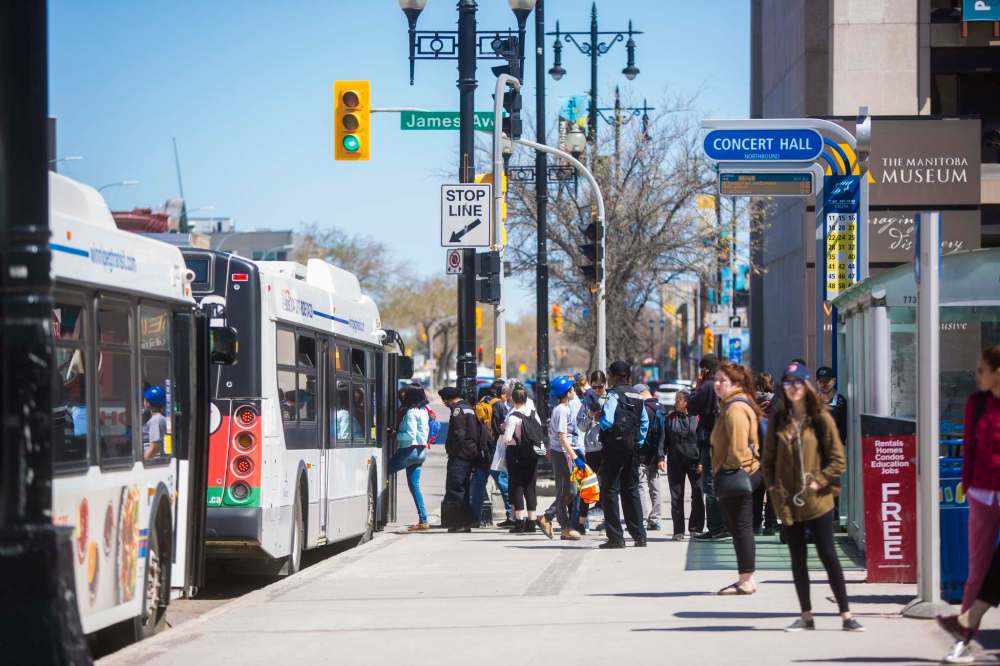
The Free Press met with Chaudhary and members of the union bargaining team late Wednesday, where details of the union’s most recent proposal was discussed.
The collective agreement between city hall and Local 1505 expired Jan. 12. Union members twice rejected settlement offers and are now in a legal strike position. Bus operators are declining voluntary overtime and, on two occasions, operators have refused to enforce fare collection.
Winnipeg Transit last week released data which showed, on average, 43 per cent of its buses are either late or early to a stop; during afternoon rush hour, 56 per cent of buses don’t show up on time; and on-time is a rarity in February.
“Everything that Transit is doing is leading to poor service, which angers riders, who take it out on the bus driver,” said John Callahan, an ATU international vice-president and past-president of Local 1505 and a member of the bargaining team. “Buses don’t show up on time, they take it out on the operators. The back door won’t open, they yell at the driver.
“Enough is enough. There is no point in spreading terrible service to all parts of the city. We need to improve what we have.”
Mayor Brian Bowman said Thursday he is concerned the two days of talks did not end with a tentative agreement.
“Transit is an invaluable service that keeps the city moving. We obviously value the work of our Transit operators,” Bowman said, but then repeated a phrase often used when discussing contract negotiations with any of the civic unions. “We want to ensure we ultimately reach a deal at the negotiating table that is fair to our employees as well as to taxpayers. We’re working diligently to try and effect that as quickly as possible.”
Michael Jack, the city’s chief corporate services officer, said a counter proposal was delivered to the union later in the day, adding it would be unrealistic for the union to expect the city to agree to all their proposals.
“We’ve discussed and considered every item, some of them a number of times,” Jack said. “They’ve all been discussed and provided a response.”
Chaudhary said the city’s latest proposal came after its meeting with the Free Press, adding however “we didn’t consider it a response because it doesn’t bring us any closer to a settlement.”
Jack and Chaudhary said each sides is trying to find new dates to resume discussions.
Chaudhary said while media reports have focused on the union’s rejection of the city’s proposal to use part-time drivers and impose a wage freeze in the first year of a four-year agreement, the bargaining team has been pushing non-monetary issues the union believes will improve service and reduce conflict.
He said while other civic unions accepted a wage freeze in the first year of their agreements, Transit’s situation doesn’t warrant that. “Transit ended 2018 with a $16-million surplus — how are our members expected to accept a wage freeze?”
Callahan said the union’s opposition to part-time drivers is part of the overall strategy to improve service.

“The use of part-time drivers hasn’t worked successfully at any transit authority in North America,” he said. “We have trouble keeping full-time drivers now. Hiring part-timers at lower wage rates will only result in a higher turnover, a waste of training dollars and a further deterioration of service.”
Callahan said the operator is the brunt of the public’s anger for policies and practices they have no control over.
“At any other workplace, negotiations would focus on wages and benefits, but these workplace policies are having a serious impact on operators,” the ATU official said. “No one calls the Transit office when they’re upset, they yell at the driver. Every little point of conflict leads to escalation that is taking it’s toll.
“This has to stop.”
aldo.santin@freepress.mb.ca
History
Updated on Thursday, July 4, 2019 5:37 PM CDT: Updates story to match print version.