

Transitway path weeds to be trimmed

Advertisement
Read this article for free:
or
Already have an account? Log in here »
To continue reading, please subscribe:

Digital Subscription
One year of digital access for only $205*
- Enjoy unlimited reading on winnipegfreepress.com
- Read the E-Edition, our digital replica newspaper
- Access News Break, our award-winning app
- Play interactive puzzles
*First annual payment billed as $205.00 + GST for one year. This annual subscription will automatically renew at $233.00 + GST every 52 weeks (10% off the regular annual price of $259.35). Offer available to new and qualified returning subscribers only. Cancel any time.
To continue reading, please subscribe:
Add Free Press access to your Brandon Sun subscription for only an additional
$1 for the first 4 weeks*
- Enjoy unlimited reading on winnipegfreepress.com
- Read the E-Edition, our digital replica newspaper
- Access News Break, our award-winning app
- Play interactive puzzles
*Your next Brandon Sun subscription payment will increase by $1.00 and you will be charged $17.95 plus GST for four weeks. After four weeks, your payment will increase to $24.95 plus GST every four weeks.
Read unlimited articles for free today:
or
Already have an account? Log in here »
Hey there, time traveller!
This article was published 06/07/2021 (1912 days ago), so information in it may no longer be current.
The city says it will cut back weedy grass foxtails growing alongside the walking path along the Southwest Transitway.
However, it asks Winnipeg residents to be patient with the rest of the weeds near the dedicated rapid bus roadway, as they help the natural grass grow underneath.
Jeff Malcovish regularly bikes and walks along the transitway and didn’t mince words when describing the look of tall, unkempt weeds and foxtails creeping into long stretches of the public path.
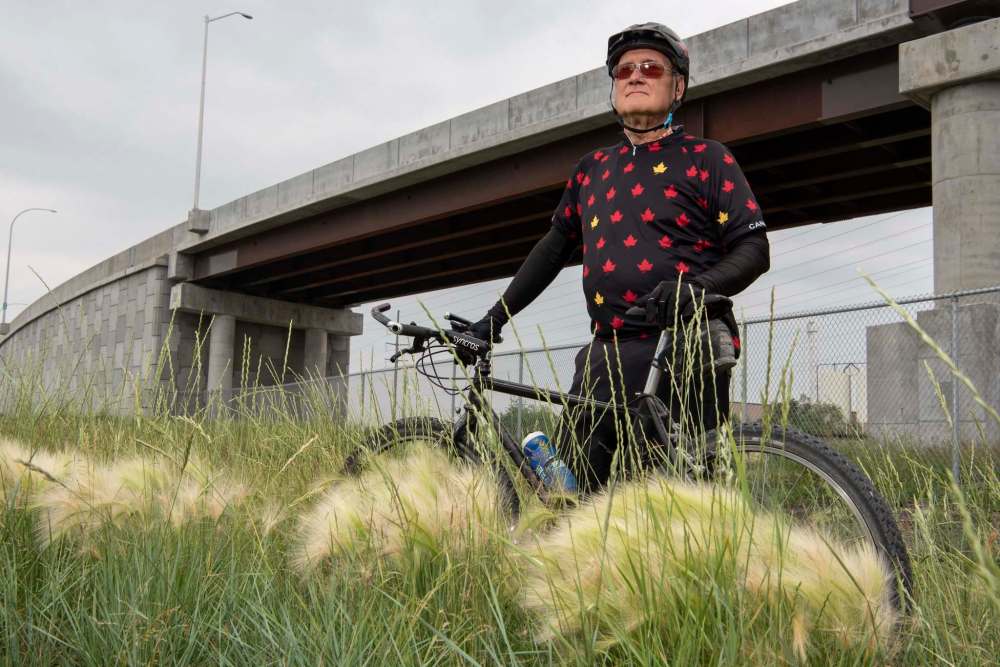
“I just think it’s basically ugly,” he said.
“Normally, the city would come jump all over you if you let your weeds and grass grow that tall, but they label it as sort of a nature corridor, as an excuse so now they don’t have to maintain it.”
It would be just an eyesore if the weeds weren’t potentially dangerous to pets, Malcovish said, as he worries for dogs being walked along the pathway. The sharp seeds of foxtails can penetrate skin, or enter the nose, eyes or ears and cause a serious, perhaps deadly, infection.
“It gets full of weeds, including foxtails, which are harmful to pets. And there are tons of people that go walking down the transitway with their pets,” Malcovish said Tuesday.
Last year, landscaping along the sides of the south Winnipeg transitway began. It’s now in the second year of a two-to-three-year process of establishing natural tall grass.
That process includes the existence of weeds, said Jesse Crowder, project manager for Winnipeg Transit.
“That is a tough process, it takes a couple years to establish… Obviously, that’s been a struggle so far with the drought and the extreme heat and the weather we’ve had, so we’re trying to be flexible there,” he said.
The weeds need to stick around for now because they help establish the grasses growing underneath, Crowder said, in part because of the lack of precipitation. The weeds protect the grass from the heat, and when it does rain, it helps keep the water close to the grass.
Once the grasses have been established, within the next year or so, it will be cut more often and more closely maintained, Crowder said.

“If we were to go out and cut everything down to nothing and leave just the little bit of grass growth that’s there, it would essentially die in the heat and the drought,” he said.
Crowder said the foxtails adjacent to the pathway will be cut back this week to ensure residents’ furry friends aren’t put in danger.
“We are going to try to take care of that,” he said.
malak.abas@freepress.mb.ca
Twitter: malakabas_
Malak Abas is a city reporter at the Free Press. Born and raised in Winnipeg’s North End, she led the campus paper at the University of Manitoba before joining the Free Press in 2020. Read more about Malak.
Every piece of reporting Malak produces is reviewed by an editing team before it is posted online or published in print — part of the Free Press‘s tradition, since 1872, of producing reliable independent journalism. Read more about Free Press’s history and mandate, and learn how our newsroom operates.
Our newsroom depends on a growing audience of readers to power our journalism. If you are not a paid reader, please consider becoming a subscriber.
Our newsroom depends on its audience of readers to power our journalism. Thank you for your support.
Malak Abas is a city reporter at the Free Press. Born and raised in Winnipeg’s North End, she led the campus paper at the University of Manitoba before joining the Free Press in 2020. Read more about Malak.
Every piece of reporting Malak produces is reviewed by an editing team before it is posted online or published in print — part of the Free Press‘s tradition, since 1872, of producing reliable independent journalism. Read more about Free Press’s history and mandate, and learn how our newsroom operates.
Our newsroom depends on a growing audience of readers to power our journalism. If you are not a paid reader, please consider becoming a subscriber.
Our newsroom depends on its audience of readers to power our journalism. Thank you for your support.
Advertisement Advertise With Us
Advertisement Advertise With Us
History
Updated on Tuesday, July 6, 2021 7:09 PM CDT: Fixes typo.