

Vaccine passport: that’s the ticket

Advertisement
Read this article for free:
or
Already have an account? Log in here »
To continue reading, please subscribe:
Monthly Digital Subscription
$1 per week for 24 weeks*
- Enjoy unlimited reading on winnipegfreepress.com
- Read the E-Edition, our digital replica newspaper
- Access News Break, our award-winning app
- Play interactive puzzles
*Billed as $4.00 plus GST every four weeks. After 24 weeks, price increases to the regular rate of $19.95 plus GST every four weeks. Offer available to new and qualified returning subscribers only. Cancel any time.
Monthly Digital Subscription
$4.99/week*
- Enjoy unlimited reading on winnipegfreepress.com
- Read the E-Edition, our digital replica newspaper
- Access News Break, our award-winning app
- Play interactive puzzles
*Billed as $19.95 plus GST every four weeks. Cancel any time.
To continue reading, please subscribe:
Add Free Press access to your Brandon Sun subscription for only an additional
$1 for the first 4 weeks*
*Your next subscription payment will increase by $1.00 and you will be charged $16.99 plus GST for four weeks. After four weeks, your payment will increase to $23.99 plus GST every four weeks.
Read unlimited articles for free today:
or
Already have an account? Log in here »
Hey there, time traveller!
This article was published 03/06/2021 (1742 days ago), so information in it may no longer be current.
For Manitobans who are outraged at the prospect of having to obtain a COVID-19 vaccination passport, I’ve got bad news.
Manitoba already has an online record showing whether you’ve received a COVID-19 vaccine through the Shared Health portal. The province also keeps a record of every vaccination you’ve received as a resident in Manitoba.
Given that, it makes you wonder why political leaders are reluctant to create a standard digital record for COVID-19 vaccinations so that we can regain all we have lost throughout the pandemic.
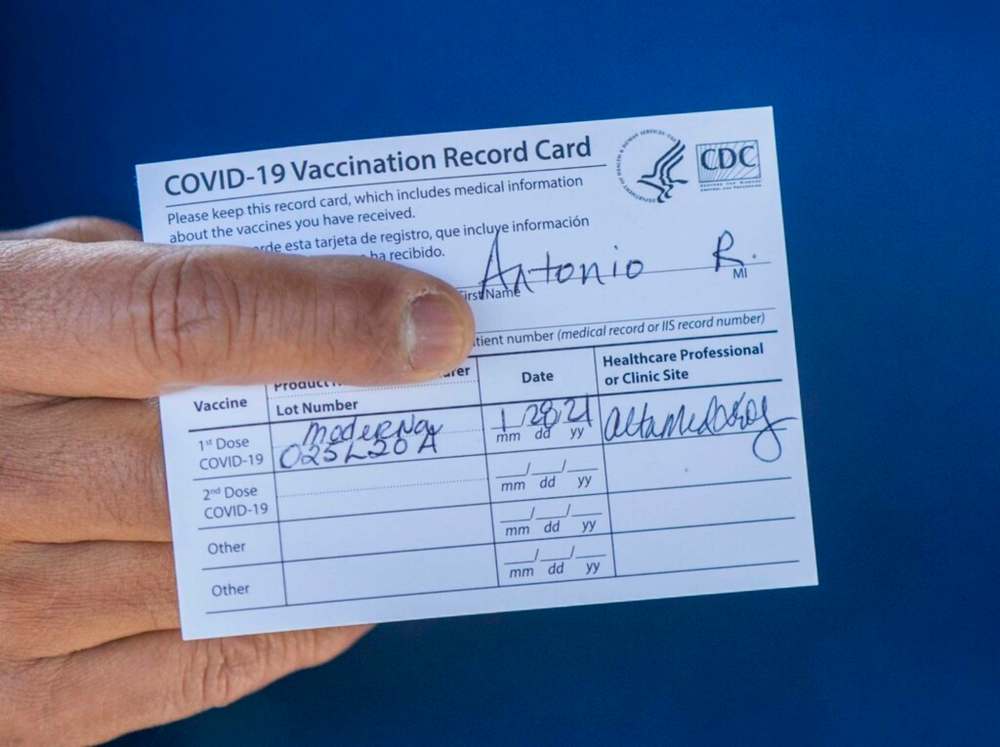
Make no mistake, a vaccine passport is the latest pandemic-related political hand grenade.
In February, Premier Brian Pallister pledged to create a vaccine passport so Manitobans could travel again. That is a smart idea; an increasing number of regions or countries have indicated proof of vaccinations or negative COVID-19 tests will be table stakes for the right to land.
However, more than two months later, a spokesman for the premier’s office would only say work continues on a vaccine passport and that potential uses for it “remain under discussion.”
In early May, federal Health Minister Patty Hadju talked about creating a national vaccine record that could be used for travel. Since then, nothing.
Not everyone is running scared. British Prime Minister Boris Johnson said he will raise the issue of an international vaccine passport at next week’s G7 summit, which he is hosting.
Why are people so afraid of this issue?
Privacy consultants argue a passport would be an unjust intrusion into personal medical information. Accessibility advocates suggest vaccine passports could discriminate against people who cannot take a vaccine for medical reasons or who do not have the means to register for and obtain a digital vaccination record.
Then there are the deluded libertarians, many of whom continue to portray getting vaccinated, a simple and selfless act, as an offence against their twisted interpretation of the term “civil liberties.”
It should first be noted that despite all the misdirection and equivocation, a solid majority of Canadians supports the idea of a standard vaccine passport.
An Angus Reid poll in late May showed 76 per cent of respondents support “mandatory vaccination proof” for travel outside Canada. Fifty-five per cent support using vaccine documents for access to public spaces or private businesses.
To help the naysayers and the nervous lawmakers sort out the fallacious assumptions, fear mongering and laissez-faire histrionics, I would like to note that for many decades, governments have been demanding proof of immunization for travel.
Starting in 1944, many international travellers had to obtain an International Certificate of Vaccination Against Smallpox. The program was discontinued in 1980, largely because the disease had been eradicated. Still, the certificate program was credited with convincing millions of people to get the vaccine — which ultimately helped stamp it out.
Today, the most common immunization demand is for yellow fever. Many South American, Central American and African countries, for example, require proof of yellow fever immunization if travelling from another high-risk country.
So, considering that the government already possesses our immunization records, the privacy issue is a red herring. Being asked to show that you have done everything humanly possible to stop the spread of COVID-19 is a reasonable demand within the context of a pandemic.
On the civil liberties front, it’s equally true that immunization records have been used, in one form or another, for many years to determine access to certain countries. Poll results show Canadians overwhelmingly believe that having to prove they have been vaccinated is a fair trade for the freedom to go anywhere in the world.
Offering people the option of producing proof of vaccination or a recent negative test result could also ease some of the libertarian flashpoints.
It’s also reasonably certain that demanding proof of immunization has epidemiological benefits; the more you demand people provide proof of vaccination, the more people ultimately get vaccinated.
There are some areas of concern.
People who genuinely cannot tolerate the vaccines need to be accommodated. We also need to find a way to ensure new Canadians, Indigenous people, the homeless and other socioeconomically challenged constituencies — the people who may have difficulty accessing a digital vaccine passport — are not unjustly prevented from doing things and going places.
Proof of vaccination must also be judiciously applied to non-travel activities to ensure people are not unfairly denied access to essential services. At the same time, we need to respect employers, business owners and facility operators who wish to make proof of vaccination part of their new normal.

Finally, efforts must be made to share vaccines with all parts of the world so we do not leave any country or region cut off from the rest of humanity.
Those are challenges that must be addressed, not valid reasons to avoid or delay introduction of a functional vaccine passport.
It’s reasonable given what we can get in exchange. It’s a proven incentive to get more people vaccinated. And it’s a fair reward for those people who stepped up and got the jab.
Time for leaders and lawmakers to embrace the passport or get off the pot.
dan.lett@freepress.mb.ca
Dan Lett is a columnist for the Free Press, providing opinion and commentary on politics in Winnipeg and beyond. Born and raised in Toronto, Dan joined the Free Press in 1986. Read more about Dan.
Dan’s columns are built on facts and reactions, but offer his personal views through arguments and analysis. The Free Press’ editing team reviews Dan’s columns before they are posted online or published in print — part of the our tradition, since 1872, of producing reliable independent journalism. Read more about Free Press’s history and mandate, and learn how our newsroom operates.
Our newsroom depends on a growing audience of readers to power our journalism. If you are not a paid reader, please consider becoming a subscriber.
Our newsroom depends on its audience of readers to power our journalism. Thank you for your support.
Dan Lett is a columnist for the Free Press, providing opinion and commentary on politics in Winnipeg and beyond. Born and raised in Toronto, Dan joined the Free Press in 1986. Read more about Dan.
Dan’s columns are built on facts and reactions, but offer his personal views through arguments and analysis. The Free Press’ editing team reviews Dan’s columns before they are posted online or published in print — part of the our tradition, since 1872, of producing reliable independent journalism. Read more about Free Press’s history and mandate, and learn how our newsroom operates.
Our newsroom depends on a growing audience of readers to power our journalism. If you are not a paid reader, please consider becoming a subscriber.
Our newsroom depends on its audience of readers to power our journalism. Thank you for your support.
Advertisement Advertise With Us
Advertisement Advertise With Us