

Winnipeg, Brandon opt in to whistleblower law
Advertisement
Read this article for free:
or
Already have an account? Log in here »
To continue reading, please subscribe:
Digital Subscription
One year of digital access for only $1.44 a week*
- Enjoy unlimited reading on winnipegfreepress.com
- Read the E-Edition, our digital replica newspaper
- Access News Break, our award-winning app
- Play interactive puzzles
*Billed as $5.77 plus GST every four weeks. After 52 weeks, price increases to the regular rate of $19.95 plus GST every four weeks. Offer available to new and qualified returning subscribers only. Cancel any time.
To continue reading, please subscribe:
Add Free Press access to your Brandon Sun subscription for only an additional
$1 for the first 4 weeks*
- Enjoy unlimited reading on winnipegfreepress.com
- Read the E-Edition, our digital replica newspaper
- Access News Break, our award-winning app
- Play interactive puzzles
*Your next Brandon Sun subscription payment will increase by $1.00 and you will be charged $17.95 plus GST for four weeks. After four weeks, your payment will increase to $24.95 plus GST every four weeks.
Read unlimited articles for free today:
or
Already have an account? Log in here »
Hey there, time traveller!
This article was published 30/11/2018 (2739 days ago), so information in it may no longer be current.
A new law to protect municipal employees who wish to expose serious wrongdoing in the workplace comes into effect today.
However, not all Manitoba local government employees will be covered, and some may never be because municipal councils must pass a resolution to be covered under the legislation.
Winnipeg and Brandon have been the first to do so, and their workers will immediately be protected.
Earlier this year, the legislative assembly passed amendments to the Public Interest Disclosure (Whistleblower Protection) Act to broaden protections to municipalities, but the legislation gives municipalities the flexibility to determine whether or not to be covered by its provisions.
The legislation also extends protections to school divisions and districts and enhances the investigative powers of the provincial ombudsman.
Finance Minister Scott Fielding, a former Winnipeg city councillor, invited all municipalities to participate.
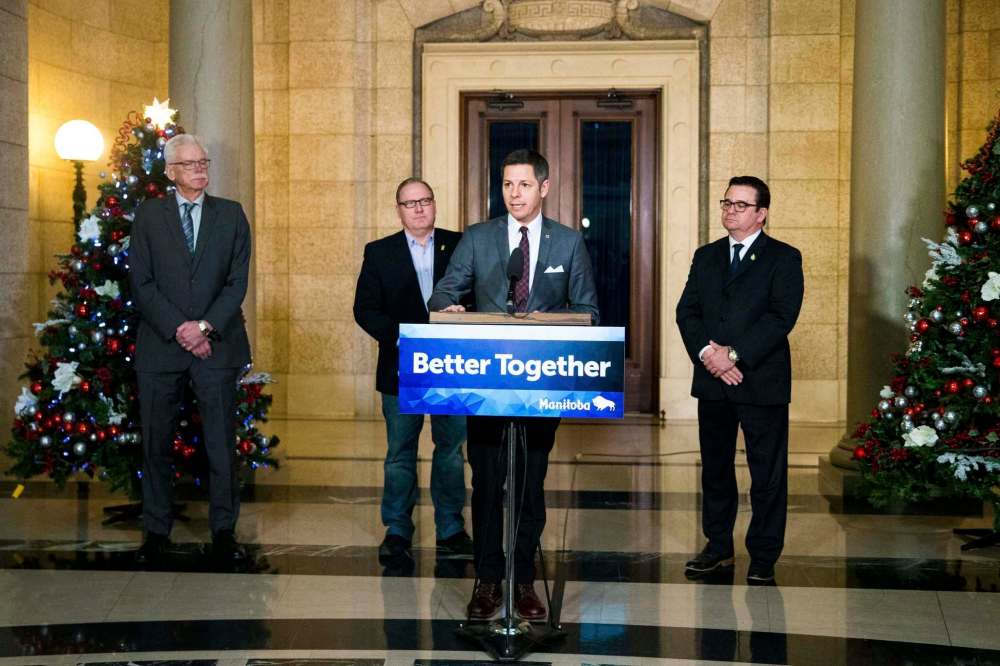
“It’s our duty to protect employees who step forward and speak up,” he said at a news conference Friday.
Mayor Brian Bowman welcomed the new protections for municipal employees, saying it will strengthen public accountability.
“I’ll say to our valued members of the public service that we absolutely want them to do the right thing, and we want them to feel safe and protected in doing their best to address concerns that they have in the workplace,” he said.
Bowman added that local taxpayers may have been better protected from some of the scandals that have rocked the city in the past had the legislation been in place earlier.
Ralph Groening, who was elected as president of the 137-member Association of Manitoba Municipalities this week, said he could not estimate how many municipalities will choose to be covered by the legislation.
“There are complexities to small communities, so that is the challenge and that’s why we requested flexibility (to opt in),” he said, noting that some local governments employ as few as three or four administrative staff.
Groening said he anticipated that other cities, such as Selkirk and Portage la Prairie, may be next to opt in.
The Manitoba Civil Service Commission and the provincial ombudsman’s office will provide guidance and education to municipalities about the new act.
The legislation authorizes the ombudsman to receive and investigate complaints of reprisals against employees and to make recommendations to address acts or threats of reprisals.

It also clarifies which disclosures are to be investigated by a designated officer of a municipality and which by the ombudsman. It also strengthens the investigative powers of designated officers. And it requires that an investigator take steps to protect the identity and procedural rights of all people involved in the investigation.
Further, it strengthens protection for whistleblowers by prohibiting disclosure of their identities in civil court proceedings or administrative tribunal hearings.
The amendments also ensure that a review of the act is conducted every five years.
The legislation was first brought in to protect provincial employees.
larry.kusch@freepress.mb.ca