

Workplace cannabis testing backed
A poll shows most Manitobans back employers' right to test for cannabis use
Advertisement
Read this article for free:
or
Already have an account? Log in here »
To continue reading, please subscribe:
Monthly Digital Subscription
$0 for the first 4 weeks*
- Enjoy unlimited reading on winnipegfreepress.com
- Read the E-Edition, our digital replica newspaper
- Access News Break, our award-winning app
- Play interactive puzzles
*No charge for 4 weeks then price increases to the regular rate of $19.00 plus GST every four weeks. Offer available to new and qualified returning subscribers only. Cancel any time.
Monthly Digital Subscription
$4.75/week*
- Enjoy unlimited reading on winnipegfreepress.com
- Read the E-Edition, our digital replica newspaper
- Access News Break, our award-winning app
- Play interactive puzzles
*Billed as $19 plus GST every four weeks. Cancel any time.
To continue reading, please subscribe:
Add Free Press access to your Brandon Sun subscription for only an additional
$1 for the first 4 weeks*
*Your next subscription payment will increase by $1.00 and you will be charged $16.99 plus GST for four weeks. After four weeks, your payment will increase to $23.99 plus GST every four weeks.
Read unlimited articles for free today:
or
Already have an account? Log in here »
Hey there, time traveller!
This article was published 08/01/2018 (2897 days ago), so information in it may no longer be current.
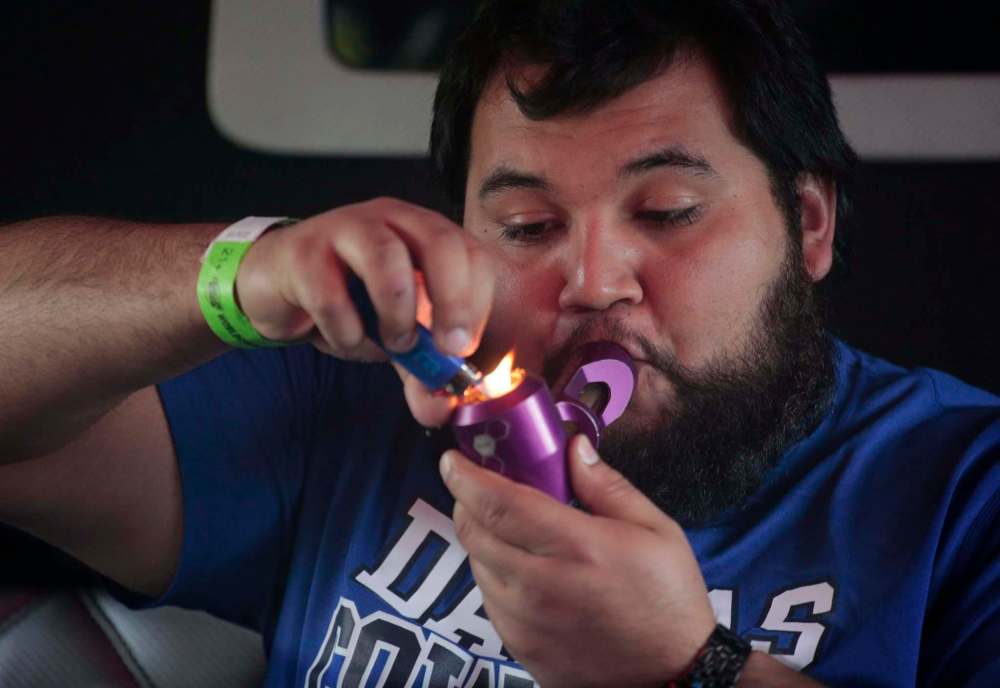
As Canada prepares to legalize marijuana this summer, workplace smoke breaks could take on a new meaning – much to employers’ chagrin.
A poll commissioned by the Free Press found an overwhelming majority of Manitobans agree that employers who suspect employees are using marijuana on the job should be able to insist on mandatory screening tests.
Probe Research found 73 per cent of 1,000 Manitobans surveyed in November and December agreed with administering workplace tests. Twenty-four per cent disagreed with the idea, and four per cent were unsure.
Mary Agnes Welch, a Probe Research associate, said the survey confirmed Manitobans have “fairly intense” opinions on pot.
“I’m not surprised that people think there ought to be some discretion for employers to do workplace testing in some way,” she said. “I do think, however, that by this time next year, a lot of these fears… will be kind of allayed. This will become, in a few years, just like alcohol.”
Joel Gervais, an addictions specialist with Vital Life, a Winnipeg workplace health solutions organization, alcohol is “still the No. 1 drug of choice and still, in my opinion, the biggest safety risk that we have in the workplace.”
Last year, Gervais was busy advising workplaces about how to revamp their drug policies to include rules about recreational marijuana use.
He said many Canadians don’t realize random drug testing is illegal unless a person’s job is safety-sensitive, such as working with heavy machinery, working in the construction industry or with the airlines. But Gervais thinks the “safety-sensitive” defence should be expanded.
“As a rule, we’ve always looked at safety-sensitive as: can you do physical harm?” he said. “But what about the accountant who’s handling billions of dollars on a day-to-day basis who’s coming in stoned? Peoples’ lives can be ruined.”
Human resources departments are scrambling to provide directives for their companies, but government regulations about marijuana are still hazy, said Nish Verma, chairman of Chartered Professionals in Human Resources Manitoba.
Verma and his colleagues wonder how the province and police will measure impairment and whether recognized levels of impairment will be uniform across the country. If not, national companies will need to customize workplace drug policies for each province, Verma said.
THC, the main ingredient in cannabis, stays in the system far longer than alcohol or other drugs – up to 90 days for some heavy users, Gervais said – because it’s stored in fat cells. So how can an employer prove an employee is using pot on the job when they may test positive after ingesting the drug months earlier?
Verma said workplace drug policies will have to “evolve as the environment evolves.”
“We need to balance public opinion, treat employees fairly and at the same time, keep them safe,” he said.
In rewriting drug policies, Steven Stairs hopes employers will carefully differentiate between medical and recreational cannabis users.
Stairs, a medical marijuana user, said he’s had a tough time finding steady work since he left his full-time job at a call centre. There, he butted heads with management over his cannabis use.
Stairs, who is legally blind, said he uses marijuana to relieve anxiety and ease severe eye pain. “There are some days where if I don’t have cannabis in me, chances are I’m not going outside,” he said.
He believes workplace drug tests should be done for certain jobs, such as trucking or snow-plowing. But the methods of testing could put some people off.
“Does it surprise me that 73 per cent of people think that drug testing should be allowed? Not really. I think that number would vary drastically from positive to negative depending on the methods of testing,” Stairs said.
“For example, a simple saliva test to prove whether or not you’re high might be something most people would be OK with. I don’t know if 73 per cent of people would be OK with blood testing.”
Whether it’s urine, saliva or blood tests, all methods can infringe on an employee’s right to privacy if mishandled, warned Tony Marques, a labour lawyer and partner with Myers Weinberg in Winnipeg.
“Part of the problem is that a lot of these tests can actually collect a lot more information than what an employer might actually legitimately be entitled to,” Marques said. “At the end of the day, they can’t force you to do (a drug test), but they, theoretically, could terminate your employment if you refuse.”
A recent Health Canada survey of 2,650 cannabis users found about 79 per cent didn’t consume the drug at or before work.
Gervais said he doesn’t expect a spike in workplace marijuana use post-legalization, though employers are right to be prepared.

“The reality is the people who are using (cannabis) are going to continue to use. And the people who aren’t using, yeah, they might try it,” he said. “Most of them will have a negative experience and will never do it again.”
“From an employer’s standpoint, all I would say is if you don’t have a drug policy, get one,” Gervais added. “And if you do have one, now’s the time to review it.”
jessica.botelho@freepress.mb.ca
Twitter: @_jessbu
History
Updated on Monday, January 8, 2018 6:29 AM CST: Adds photo