

Zoo’s polar bear died of trauma, vet says
Advertisement
Read this article for free:
or
Already have an account? Log in here »
To continue reading, please subscribe:
Monthly Digital Subscription
$1 per week for 24 weeks*
- Enjoy unlimited reading on winnipegfreepress.com
- Read the E-Edition, our digital replica newspaper
- Access News Break, our award-winning app
- Play interactive puzzles
*Billed as $4.00 plus GST every four weeks. After 24 weeks, price increases to the regular rate of $19.95 plus GST every four weeks. Offer available to new and qualified returning subscribers only. Cancel any time.
Monthly Digital Subscription
$4.99/week*
- Enjoy unlimited reading on winnipegfreepress.com
- Read the E-Edition, our digital replica newspaper
- Access News Break, our award-winning app
- Play interactive puzzles
*Billed as $19.95 plus GST every four weeks. Cancel any time.
To continue reading, please subscribe:
Add Free Press access to your Brandon Sun subscription for only an additional
$1 for the first 4 weeks*
*Your next subscription payment will increase by $1.00 and you will be charged $16.99 plus GST for four weeks. After four weeks, your payment will increase to $23.99 plus GST every four weeks.
Read unlimited articles for free today:
or
Already have an account? Log in here »
Hey there, time traveller!
This article was published 31/07/2017 (3154 days ago), so information in it may no longer be current.
Trauma likely caused the death of Eli, the nearly three-year-old male polar bear, who died July 15 at the Assiniboine Park Zoo.
Dr. Chris Enright said Monday that a microscopic analysis of tissue, called a histopathology, that was performed on samples collected during the polar bear’s necropsy (animal autopsy) showed nothing unusual.
Eli, who lived at Winnipeg’s zoo since November 2015, died after internal swelling of the tissues in his throat and neck interfered with his breathing.
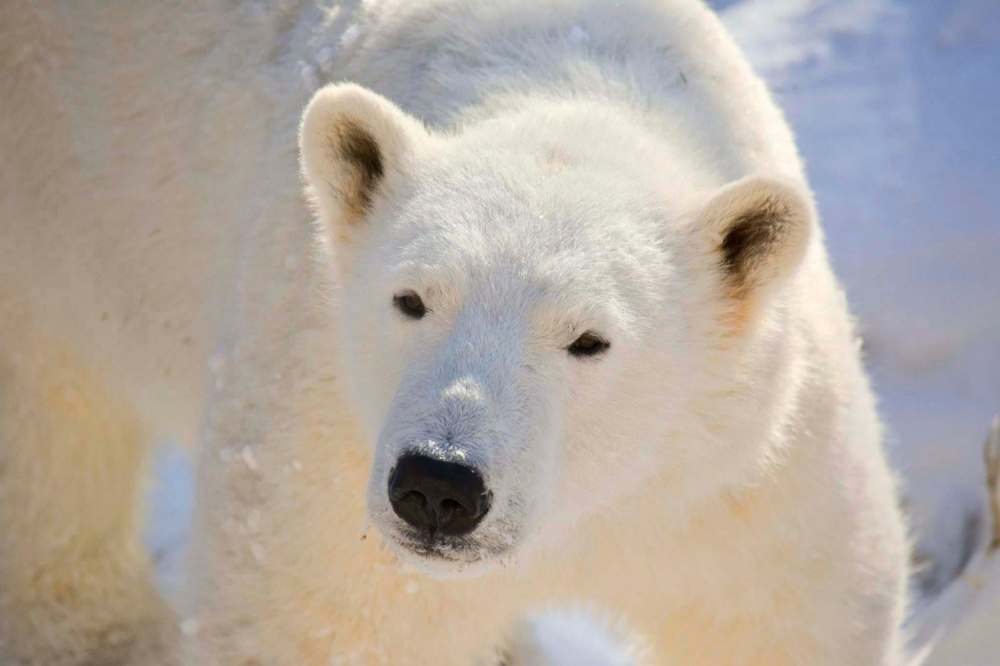
“Right now, our main possibility is trauma of some sort. We’ve spent some time reviewing (video) footage from the days leading up to his passing. We’ve looked at camera angles where we see the bears most commonly and there’s nothing jumping out in those,” said Enright, the zoo’s head veterinarian.
“It didn’t look like an allergic reaction or something like that, under the microscope, as a potential cause of the swelling.”
The bear died shortly after he had been anesthetized so veterinary staff could try to figure out what had caused a sudden change in his behaviour and lack of appetite that began July 14.
The root cause of the trauma remains a mystery.
Enright said his belief, at this point, is Eli must have been involved in a mishap of some yet unknown nature.
Eli did not have a broken neck or spine injury. The polar bear enclosure is inspected by zoo staff on foot daily and there has been no indication of any dangerous or suspicious areas, no toxins, no foreign objects or substances, Enright said.
“It’s a little puzzling. Theories, that’s kind of all we have at this point,” Enright said.
“Whether it was a slip and fall, one of the areas we did look at was where there were rocks. Was there a possibility of falling and catching his chin on a rock or something like that? So far, that hasn’t been supported. There’s nothing in the footage to show an incident like that. An incident with another bear could cause it. When they play with each other, they definitely do push with their paws quite a bit. Again, we don’t have any footage to support it but it’s on our list of possibilities.”
Enright said the investigation is continuing.
“Right now, we’re reviewing the remainder of the camera footage. We have about three days of footage saved leading up to the incident (when Eli’s behaviour changed). We’re nearing the conclusion based on the information, mostly pointing in that one direction (trauma),” he said.
Enright said dealing with the loss of Eli has been made more difficult for all zoo staff in the absence of a definitive answer.
“It’s a challenge,” he said. “We definitely are keeping a close eye on the exhibit, on the other bears, trying to see if there’s steps that can be taken in light of this. But without the smoking gun (the cause of the trauma), we’re just looking everything we can right now.”
Eli weighed 318 kilograms but would still have been growing, as adult male polar bears usually weigh in the range of 400-600 kg.

Eli came to the zoo with his brother York from Churchill after their mother was killed Oct. 23, 2015. A staff member from the Churchill Northern Studies Centre had fired a 12-gauge cracker shell — a noise-making device fired through a shotgun — toward the bear to try to scare her away when she was hanging around the building.
The shell was accidentally fired too close to her, exploded and killed her. The next morning, centre staff spotted two cubs with blood on their faces and called Manitoba Conservation.
The cubs were brought to Winnipeg zoo a few days later because they would not have survived in the wild on their own.
There are nine polar bears remaining at the zoo, including males Storm, Blizzard, York and Siku along with females Aurora, Kaska, Star, Nanuq and Juno.
ashley.prest@freepress.mb.ca