
Artificial Intelligence
Please review each article prior to use: grade-level applicability and curricular alignment might not be obvious from the headline alone.

Meta settlement should be first of many
4 minute read Preview Friday, Aug. 28, 2026
Winnipeg police body cams to feature AI translator
4 minute read Preview Wednesday, Aug. 26, 2026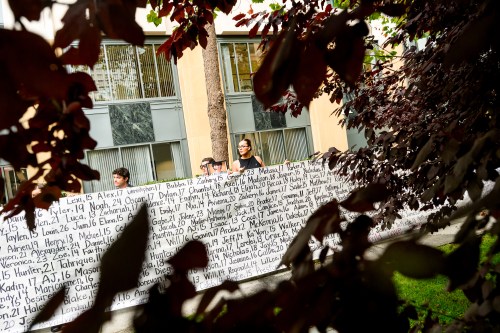
Meta reaches landmark $18 billion settlement with states in trial over teen social media addiction
7 minute read Preview Thursday, Sep. 17, 2026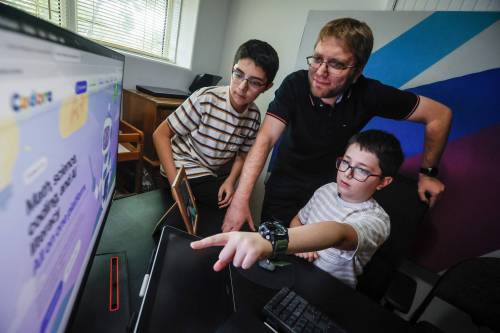
Software engineer who built lessons on AI for kids was ‘terrified’ into action
5 minute read Preview Tuesday, Aug. 25, 2026
AI literacy course mandatory at U of W Collegiate
5 minute read Preview Tuesday, Aug. 25, 2026Private governance or public good
5 minute read Friday, Aug. 21, 2026The Manitoba government recently held public forums to discuss regulations for Bill 51, the Public Sector Artificial Intelligence and Cybersecurity Governance Act. I was able to participate in the meeting in Brandon and there was also a session in Winnipeg.
I was a bit fired up, ready to rail about data centres and phone terms and conditions and generally give it to big tech. The discussion, however, was focused on what the public sector responses should be regarding cybersecurity, data and privacy protections, and AI usage in government.
With all the recent attention on social media bans, the harms of AI, misinformation and the like, I was somewhat disappointed that these would not be tackled directly in this meeting. Those issues may be discussed at future forums.
At this event, as focus groups developed responses, the discussion between private companies and public governance kept getting mixed in, pointing out the reliance of government services on private companies in running their digital operations. As government operations become more dependent on digital infrastructure and towards AI agency and control, rethinking how technology is implemented may be crucial to our democracy.

Human cost of AI bubble outweighs tech’s potential
4 minute read Preview Saturday, Aug. 15, 2026Meeting shines spotlight on internet safety
5 minute read Thursday, Aug. 13, 2026Concerns about status-quo literacy curriculum and website terms-of-service were repeatedly raised at a public consultation on how the provincial government can better protect internet users.
Roughly 50 people gathered in Winnipeg to weigh-in on how local governments should regulate personal data collection and artificial intelligence on Wednesday.
“The average person that selects ‘cookies’ has no idea what that means,” said Alan Campbell, a father of two and longtime school trustee who attended the evening event at St. Vital’s Norberry-Glenlee Community Centre.
Manitoba’s innovation and new technology department has hired KPMG to collect feedback and compile a report on recommendations for future AI use and cybersecurity incident reporting in the public sector.
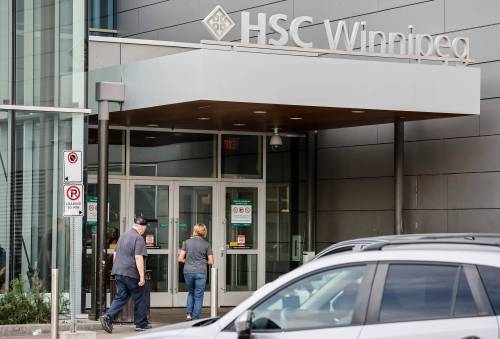
HSC nurses concerned info hacked in cyberattack
3 minute read Preview Wednesday, Aug. 12, 2026‘Artificial intelligence’ based on large language models is shaping up to be the most efficient destroyer of value since the South Sea Bubble. After “the Crash”, which is inevitably coming, some specific functions of AI will eventually turn out to be genuinely revenue-generating, and a lot of jobs will duly disappear. But the biggest winner (and potentially biggest loser) is medical science.
Dr. Brian Hie, a chemical engineer at Stanford University in California, has just revealed that his team has made the first viruses designed by artificial intelligence. They are ‘bacteriophages’, viruses that only infect bacteria and are widely used to treat people with infections that resist other treatments.
However, natural bacteriophages sometimes fail, so Dr. Hie used generative AI to design new ones that might do the job. The AI generated thousands of designs for new genomes that more or less fit the bill, and he chose around 300 of them to build in the lab. It’s hard work, not magic, but he ended up with 16 ‘novel’ bacteriophages that might work.
He applied them to petri dishes containing two harmful strains of E. coli, a common bacteria that lives in the human gut, and they killed the bacteria off. It’s still early days, but if it is truly becoming possible to tailor-make bacteriophages that target specific bacteria, then we may be getting a major new weapon in the struggle against antibiotic resistance.