Echo chambers and conspiracy theories

Please review each article prior to use: grade-level applicability and curricular alignment might not be obvious from the headline alone.

Washington Post cuts a third of its staff in a blow to a legendary news brand

David Bauder, The Associated Press 7 minute read Preview

Washington Post cuts a third of its staff in a blow to a legendary news brand

David Bauder, The Associated Press 7 minute read Thursday, Feb. 5, 2026

The Washington Post laid off one-third of its staff Wednesday, eliminating its sports section, several foreign bureaus and its books coverage in a widespread purge that represented a brutal blow to journalism and one of its most legendary brands.

The Post's executive editor, Matt Murray, called the move painful but necessary to put the outlet on stronger footing and to weather changes in technology and user habits. “We can't be everything to everyone,” Murray said in a note to staff members.

He outlined the changes in a companywide online meeting, and staff members then began getting emails with one of two subject lines — telling them their role was or was not eliminated.

Rumors of layoffs had circulated for weeks, ever since word leaked that sports reporters who had expected to travel to Italy for the Winter Olympics would not be going. But when official word came down, the size and scale of the cuts were shocking, affecting virtually every department in the newsroom.

Read
Thursday, Feb. 5, 2026

Attention-grabbing screens demean us, bit by bit

Melissa Martin 8 minute read Preview

Attention-grabbing screens demean us, bit by bit

Melissa Martin 8 minute read Saturday, Jan. 3, 2026

The first time I read Oryx and Crake, Canadian author Margaret Atwood’s haunting dystopic novel, I couldn’t put it down. I devoured it in just days, engrossed by the fictional world Atwood wove from the most discomfiting new threads of our own.

Over the years, I returned to the book many times, always finding new depth in its pages. Each time, I finished it at the same brisk pace. I was a fast reader as a child, and for most of my life, that didn’t change.

Until now. In November, as part of an effort to calm my restless mind, I put Oryx and Crake on my nightstand, and made a pledge to myself to read a little bit every night. This time, it’s been over two months, and I’ve made it through only 92 pages.

It would be easy to say I’ve been too busy, but that would be a lie. I’ve had time to read. The problem is now, unlike when the book came out in 2003, I struggle to read more than a page without checking my phone quickly; and checking it once means falling into the chasm of raw content the internet has become.

Read
Saturday, Jan. 3, 2026

Open AI, Microsoft face lawsuit over ChatGPT’s alleged role in Connecticut murder-suicide

Dave Collins, Matt O'brien And Barbara Ortutay, The Associated Press 6 minute read Preview

Open AI, Microsoft face lawsuit over ChatGPT’s alleged role in Connecticut murder-suicide

Dave Collins, Matt O'brien And Barbara Ortutay, The Associated Press 6 minute read Saturday, Dec. 13, 2025

SAN FRANCISCO (AP) — The heirs of an 83-year-old Connecticut woman are suing ChatGPT maker OpenAI and its business partner Microsoft for wrongful death, alleging that the artificial intelligence chatbot intensified her son's “paranoid delusions” and helped direct them at his mother before he killed her.

Police said Stein-Erik Soelberg, 56, a former tech industry worker, fatally beat and strangled his mother, Suzanne Adams, and killed himself in early August at the home where they both lived in Greenwich, Connecticut.

The lawsuit filed by Adams' estate on Thursday in California Superior Court in San Francisco alleges OpenAI “designed and distributed a defective product that validated a user’s paranoid delusions about his own mother.” It is one of a growing number of wrongful death legal actions against AI chatbot makers across the country.

“Throughout these conversations, ChatGPT reinforced a single, dangerous message: Stein-Erik could trust no one in his life — except ChatGPT itself," the lawsuit says. “It fostered his emotional dependence while systematically painting the people around him as enemies. It told him his mother was surveilling him. It told him delivery drivers, retail employees, police officers, and even friends were agents working against him. It told him that names on soda cans were threats from his ‘adversary circle.’”

Read
Saturday, Dec. 13, 2025
No Subscription Required

Child advocates urge government to bring back online harms legislation

Anja Karadeglija, The Canadian Press 4 minute read Preview
No Subscription Required

Child advocates urge government to bring back online harms legislation

Anja Karadeglija, The Canadian Press 4 minute read Thursday, Dec. 4, 2025

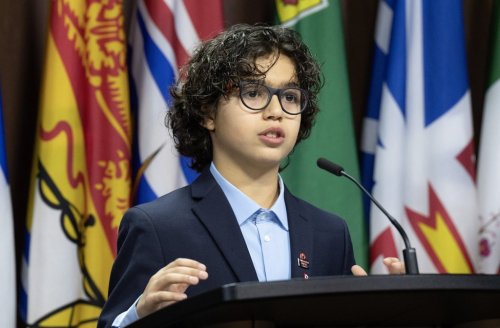
OTTAWA - The dangers children face online constitute a national emergency, a coalition of child advocates and medical organizations said Thursday as they called for the federal government to take action.

"Unlike every other industry that affects children, from cars to pharmaceuticals to toys to food safety, the tech industry has been allowed to self-regulate with tragic consequences," said Andrea Chrysanthou, chair of the board for Children First Canada, at a press conference on Parliament Hill.

The advocates say children are being exploited, extorted, bullied — and in some cases, kids have died as a result of online harms.

Dr. Margot Burnell, president of the Canadian Medical Association, said doctors see the negative health impacts of social media use firsthand.

Read
Thursday, Dec. 4, 2025
No Subscription Required

New podcast seeks to end polarization between Jews, Muslims

Sharon Chisvin 5 minute read Preview
No Subscription Required

New podcast seeks to end polarization between Jews, Muslims

Sharon Chisvin 5 minute read Saturday, Nov. 15, 2025

In the last two years, anecdotal evidence, surveys, police reports, rallies and counter- rallies have all indicated that the acrimony and distrust between the Canadian Jewish and Canadian Muslim communities has reached an all-time high.

In spite of this, a number of organizations and individuals across the country have been attempting to bridge the deep political divide between the two communities by encouraging respectful dialogue, compassionate listening and a search for common ground.

Yafa Sakkejha and Avi Finegold are two of those individuals.

Last month, Sakkejha, a Muslim Torontonian entrepreneur of Palestinian heritage, and Finegold, a Jewish Montrealer and rabbi, launched a new limited series podcast. Appropriately entitled In Good Faith, the podcast features interviews and discussions with representatives of the Muslim and Jewish communities about Israel, Palestine, the war in Gaza, and the challenges and concerns of their respective minority communities here in Canada.

Read
Saturday, Nov. 15, 2025
No Subscription Required

Influencers have more reach on 5 major platforms than news media, politicians: report

Anja Karadeglija, The Canadian Press 5 minute read Preview
No Subscription Required

Influencers have more reach on 5 major platforms than news media, politicians: report

Anja Karadeglija, The Canadian Press 5 minute read Friday, Nov. 14, 2025

OTTAWA - More than two-thirds of younger Canadians engage with political content from influencers — and influencers have significantly more reach on five major social media platforms than news media outlets or politicians, a new study indicates.

A significant portion of the political content Canadians see on the major platforms "comes directly from influencers," says the report from the McGill University and University of Toronto-led Media Ecosystem Observatory.

The report focused on posts from individuals and institutions on X, Instagram, TikTok, YouTube and Bluesky. It did not look at or compare reach on websites, other online platforms or traditional platforms.

The researchers say they identified 1,097 influencers and collected 4.1 million of their posts from January 2024 to July 2025 on five social media platforms. Over that time period, politicians were responsible for 1.1 million posts while media outlets accounted for 2.8 million.

Read
Friday, Nov. 14, 2025
No Subscription Required

Winnipeg students develop critical aptitude essential for navigating media landscape

Melissa Martin 14 minute read Preview
No Subscription Required

Winnipeg students develop critical aptitude essential for navigating media landscape

Melissa Martin 14 minute read Friday, Oct. 31, 2025

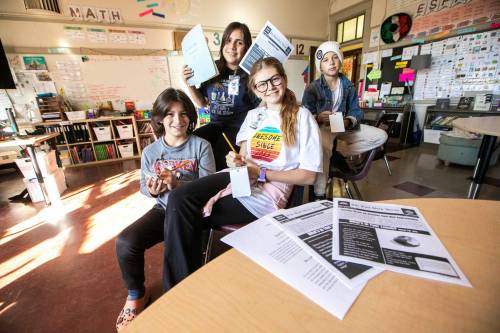
One day in the fall of 2024, two of Lily Godinez Goodman’s Grade 5 students came to her with a question: Why didn’t their Earl Grey School have a newspaper, they wondered — and if they started one, would she serve as editor-in-chief?

Read
Friday, Oct. 31, 2025
No Subscription Required

Advocacy in the age of Wi-Fi

Bella Luna Zuniga 5 minute read Thursday, Oct. 30, 2025

When the internet first arrived in the mid-1990s, it screeched. Literally.

It screamed its way into our homes through the telephone lines, a metallic cry that sounded like the future forcing its way through. We waited through the static, convinced that life was about to get easier. People said it would save us time, let us work from home and give us more hours with our families.

No one mentioned that it would also move into our bedrooms, our pockets and our dreams. No one could have imagined that it would change how we fight, how we march, how we plead for justice. That the fight for justice itself would become a digital labyrinth where truth moves slowly and attention moves fast.

Back then, when a heroine from a popular early-2000s television show was dumped with nothing but a handwritten note, it became a cultural tragedy. There was nothing noble about writing your cowardice on a Post-it. A few years later, a company fired hundreds by email and it made national news. Today, we “quietly quit” through apps without blinking, edit our grief into reels, add the music the app suggests and call it closure.

In praise of messy, unruly free speech

Patricia Dawn Robertson 5 minute read Preview

In praise of messy, unruly free speech

Patricia Dawn Robertson 5 minute read Friday, Sep. 26, 2025

There’s a lot of obnoxious and hypocritical talk about free speech circulating online, in editorial pages and at the family dinner table.

Read
Friday, Sep. 26, 2025
No Subscription Required

Algorithms of hate and the digital divide

David Nutbean 5 minute read Friday, Sep. 26, 2025

If recent events are any indication, it has become clear that the current use of technology has driven a wedge between people like never before.

The polarization of ideas, perspectives, ideologies, politics, identities, cultures, and other differences that are expected and should be celebrated in diverse and dynamic societies has resulted in an undercurrent of fear of the other, fuelled by media that reinforce our own beliefs and disavow others, the consequences of which are felt by a generation who more often is fed by and fed to an algorithm.

Imagine you are watching television and have a wide selection of channels to choose from: sports, news, cooking, mystery, sci-fi, the usual variety of channels. You decide to watch the golf channel for a while because you like golf. When you are done you go to the channel guide and discover that all your channels have changed to golf channels. Weird, but I like golf.

You go to the library. It has a great selection of thousands of books from all genres. You like mystery novels and pick one off the shelf to borrow. As you look up after reading the back cover, all the books in the library have changed to mystery novels. Mysterious, indeed.