The Winnipeg Free Press would like to show you notifications for breaking news and noteworthy local journalism.
No Thanks
Allow
Notification Settings
This browser doesn't support push notifications at the moment. Check browsers features, update your browser or try to use one from the list of recommended to manage your notifications settings:
Firefox (27+)
Google Chrome (30+)
Safari ( MacOS 13+ with browser 16.1+ and iOS 16.4+ ) / Note make sure Push API support enabled under Settings > Safari > Advanced > Experimental Features
Microsoft Edge
If you wish to manage your notification settings from this browser you will need to update your browser's settings for this site. Just click button below and allow notifications for this site
Note Safari 16.4+ working on iOS devices also need this site app to be installed at device's Home Screen for Push Notifications to work
Notifications are blocked for this site. If you wish to manage your notification settings from this browser you will need to update your browser's settings. Usually you'd need to click on site options icon to the left of address bar and change notifications preferences/permissions from there
*First annual payment billed as $205.00 + GST for one year. This annual subscription will automatically renew at $233.00 + GST every 52 weeks (10% off the regular annual price of $259.35). Offer available to new and qualified returning subscribers only. Cancel any time.
To continue reading, please subscribe:
Add Free Press access to your Brandon Sun subscription for only an additional
*Your next Brandon Sun subscription payment will increase by $1.00 and you will be charged $17.95 plus GST for four weeks. After four weeks, your payment will increase to $24.95 plus GST every four weeks.
Hey there, time traveller!
This article was published 20/06/2014 (4467 days ago), so information in it may no longer be current.
Carol Sanders / Winnipeg Free Press
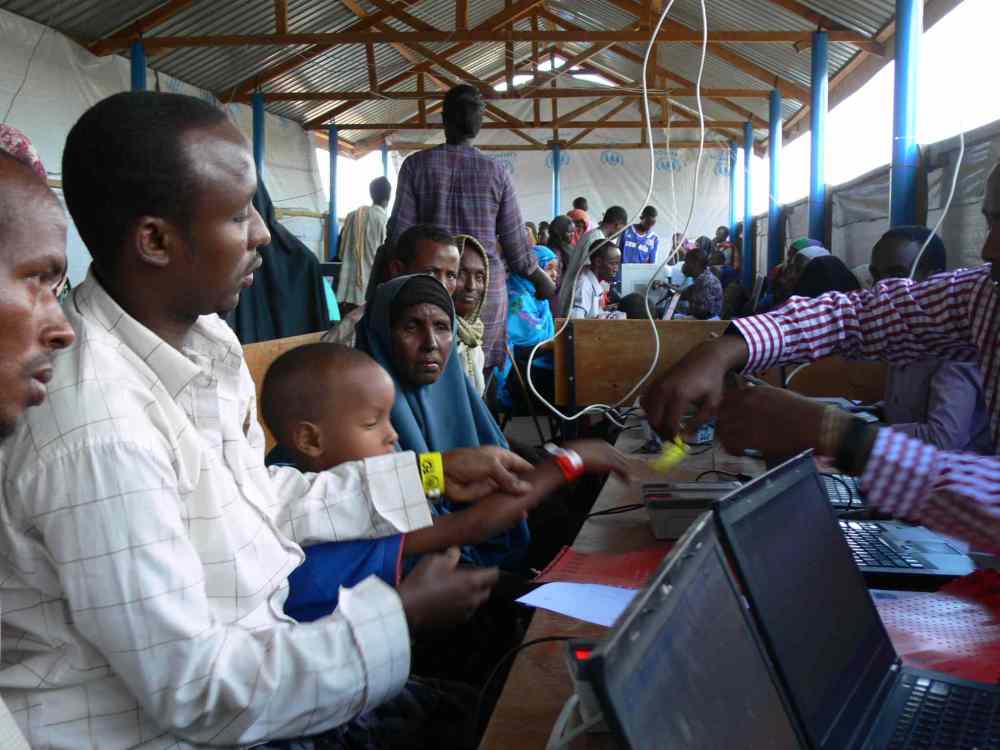
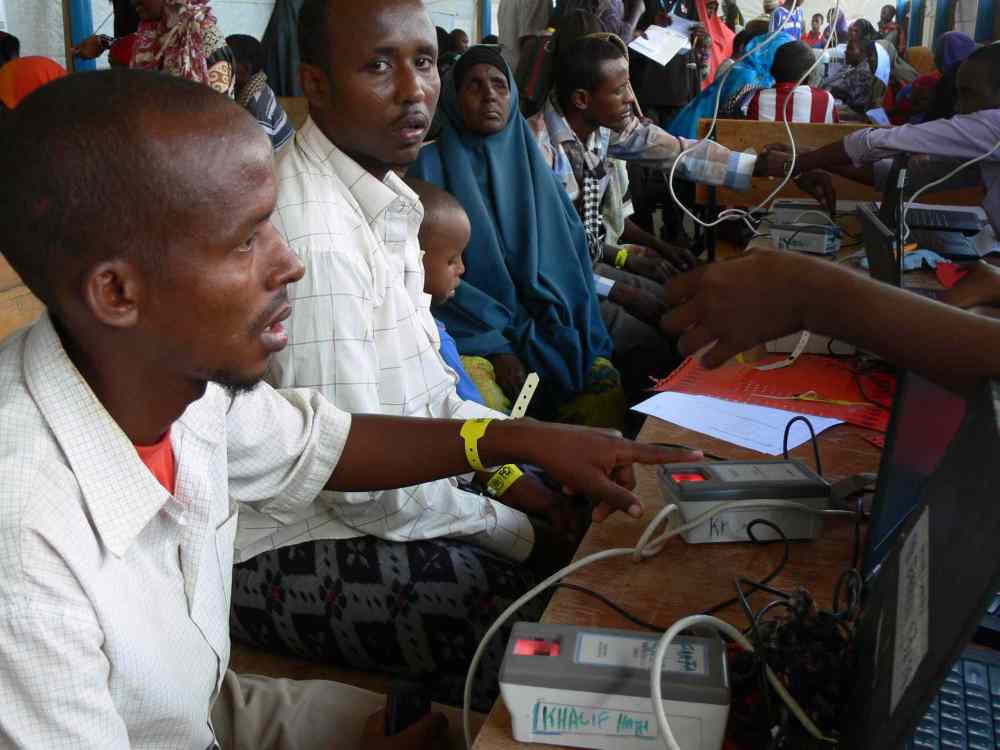
The UNHCR uses biometric imaging to register new refugees at Ifo 2 camp in Dadaab. The electronic system ensures the identity of the refugees, and has seen the number of refugees receiving services in Dadaab reduced from more than 400,000 to just over 357,000.Carol Sanders / Winnipeg Free Press
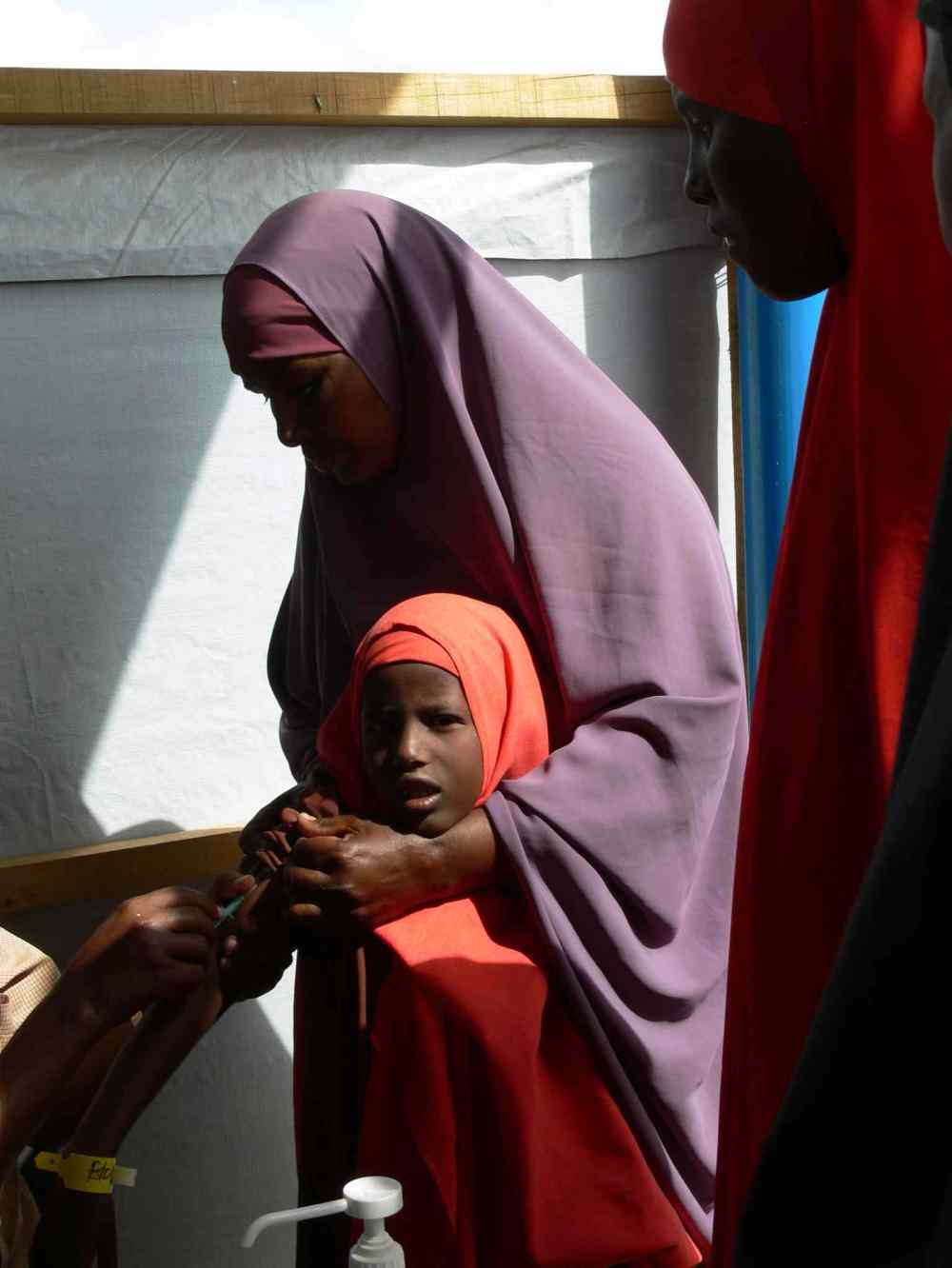
Children are immunized as one of the first steps in the registration process for refugees. Over two days in late May, more than 800 new refugees were registered at the UNHCR registration centre at Ifo 2 camp in Dadaab.Carol Sanders / Winnipeg Free Press
The UNHCR uses biometric imaging to register new refugees at Ifo 2 camp in Dadaab. The electronic system ensures the identity of the refugees, and has seen the number of refugees receiving services in Dadaab reduced from more than 400,000 to just over 357,000.Carol Sanders / Winnipeg Free Press
The UNHCR uses biometric imaging to register new refugees at Ifo 2 camp in Dadaab. The electronic system ensures the identity of the refugees, and has seen the number of refugees receiving services in Dadaab reduced from more than 400,000 to just over 357,000.Carol Sanders / Winnipeg Free Press
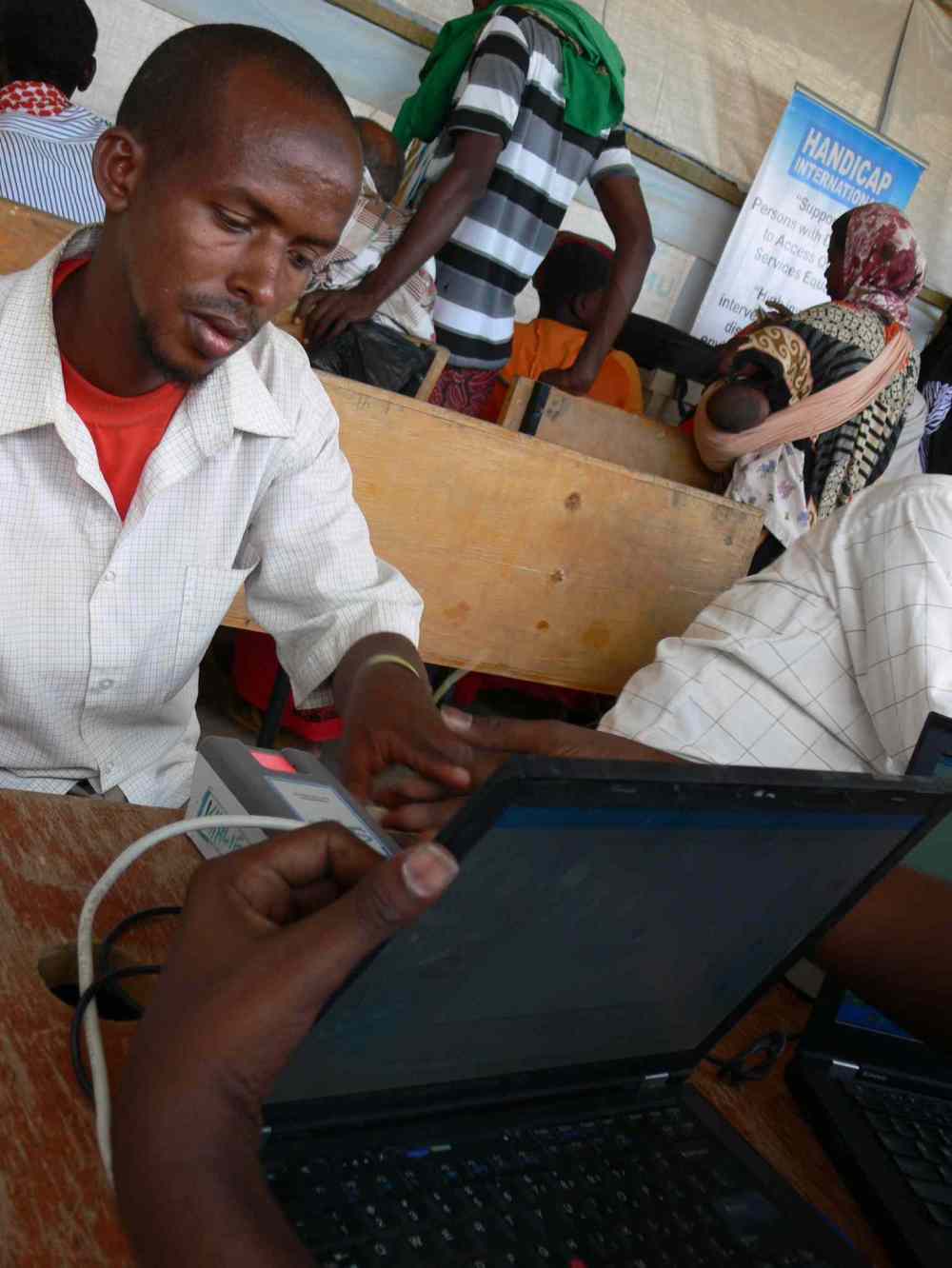
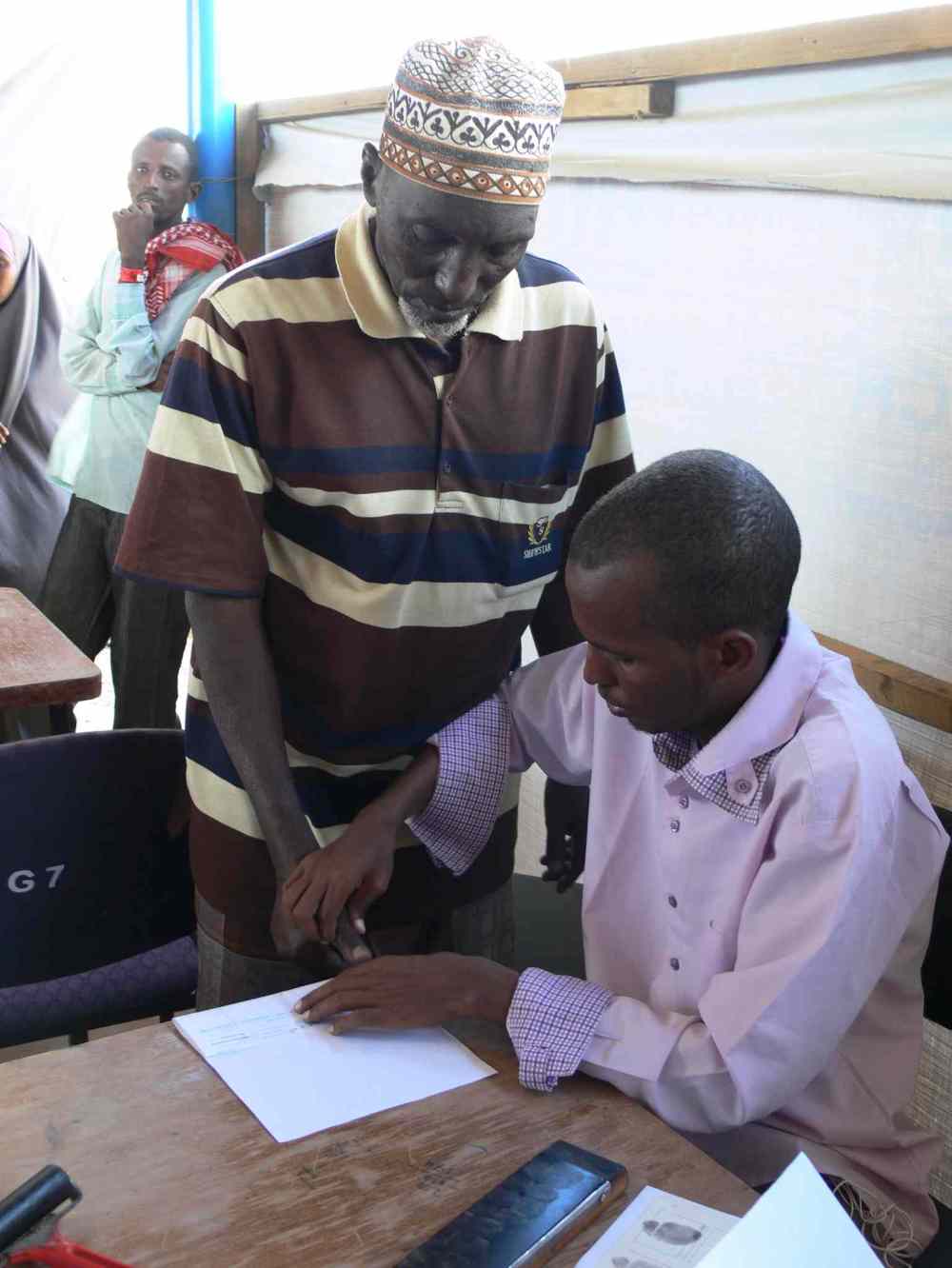
Refugees registering at Ifo 2 camp in Dadaab are finger printed the old-fashioned way during security screening. The Kenyan government requires the finger prints for security reasons.Carol Sanders / Winnipeg Free Press
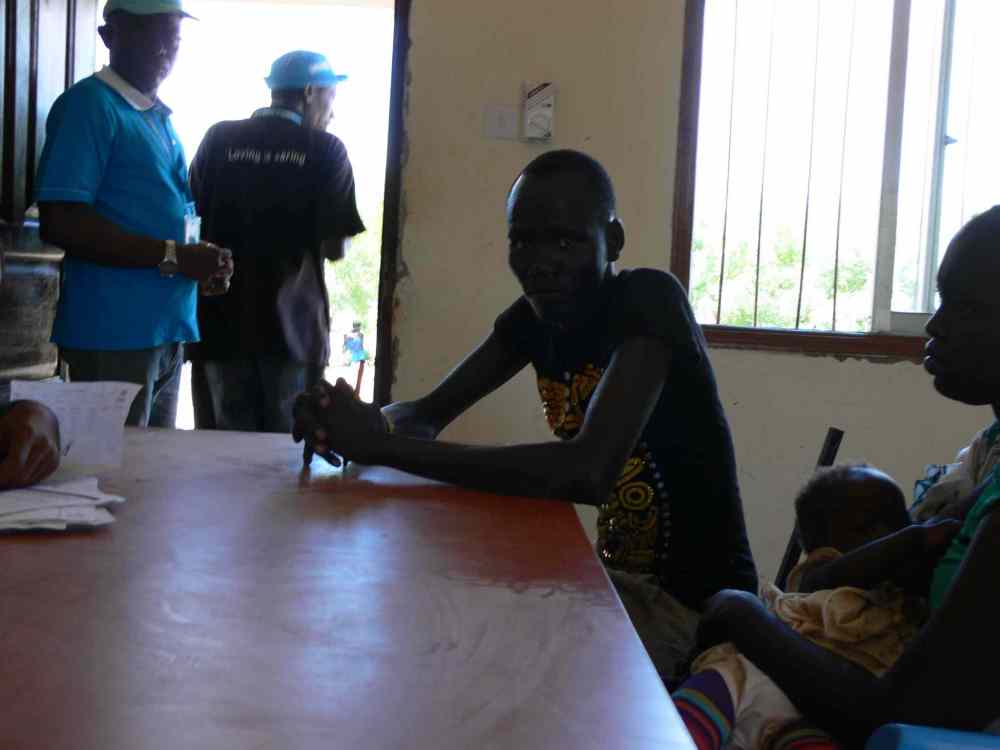
Refugees registering at the Ifo 2 camp are interviewed by UNHCR staff. The Kenyan government lifted a ban on the registering of new refugees at Dadaab and in late May more than 800 refugees registered over two days.Carol Sanders / Winnipeg Free Press
Refugees registering at the Ifo 2 camp are interviewed by UNHCR staff. The Kenyan government lifted a ban on the registering of new refugees at Dadaab and in late May more than 800 refugees registered over two days.Carol Sanders / Winnipeg Free Press
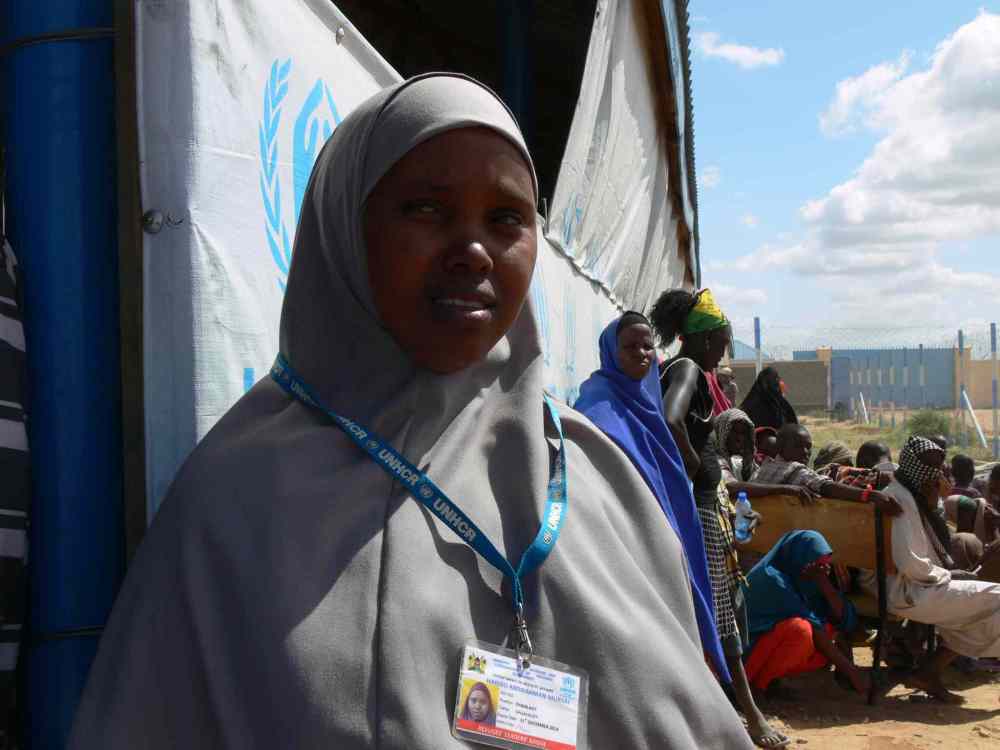
Twenty-nine-year-old Habibo Abdirahman Mirsal is the elected chairwoman of Dagahaley camp at Dadaab. The married mother of eight children arrived at the refugee camp as a little girl. Now, women in the camp come to her for help. Often, they're victims of violence and she takes them to the hospital and police.Carol Sanders / Winnipeg Free Press
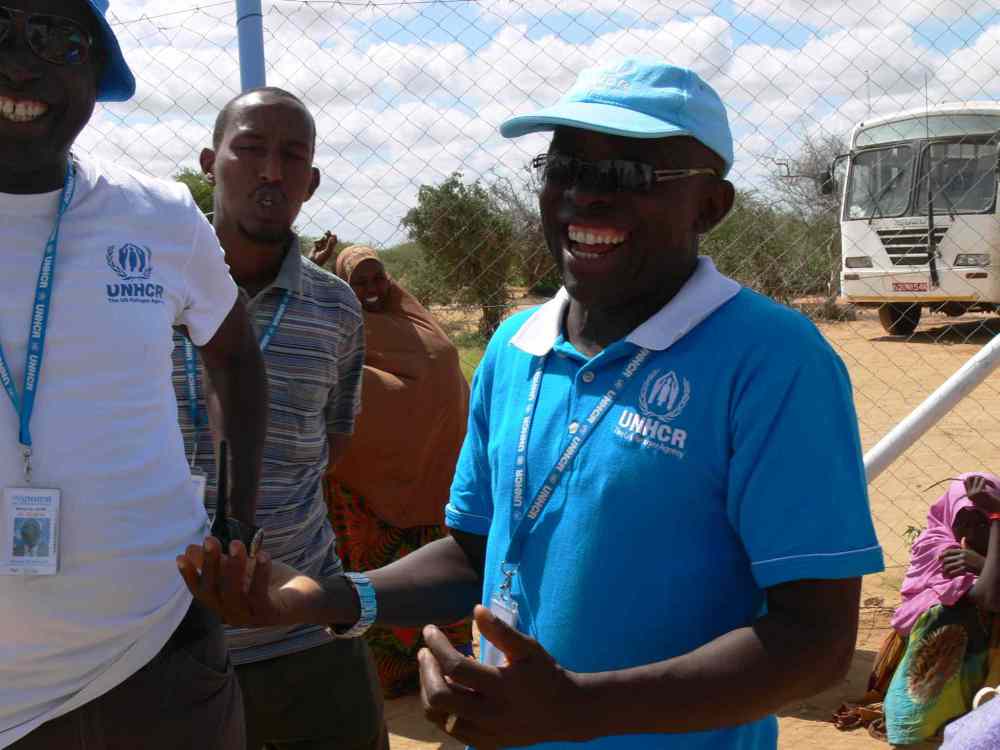
UNHCR staff at the registration centre at Ifo 2 refugee camp in Dadaab. The staff are smiling because refugees who've lived at the camp for months are finally being registered after the Kenyan government lifted the ban on new refugee registrations.Carol Sanders / Winnipeg Free Press
Women and children wait to register at Ifo 2 refugee camp in Dadaab.Carol Sanders / Winnipeg Free Press
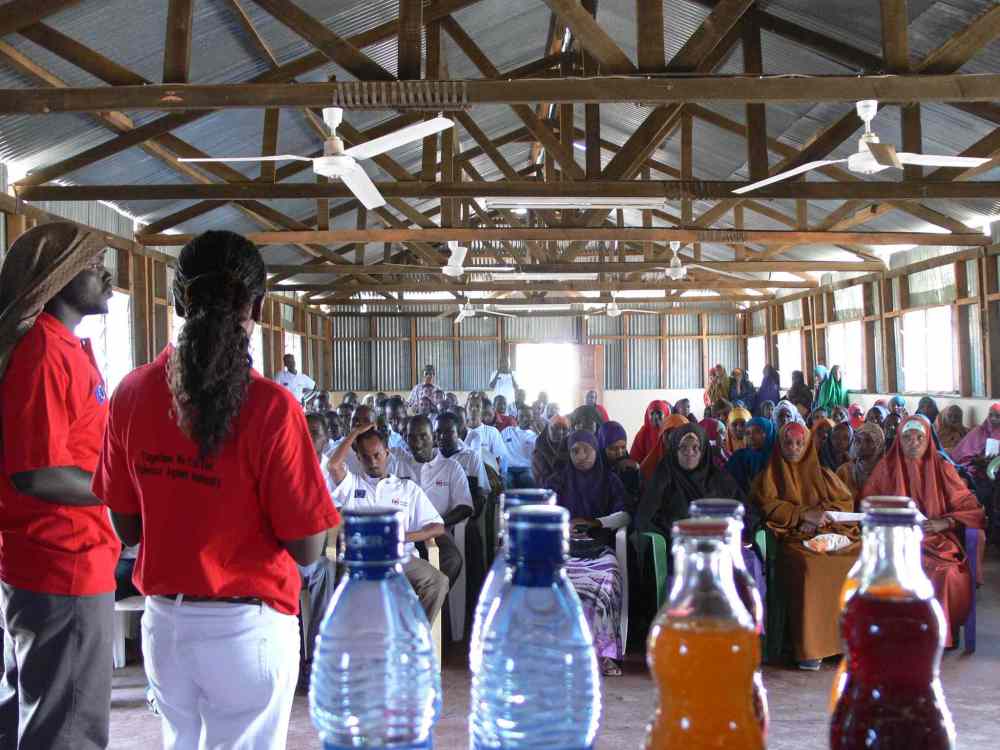
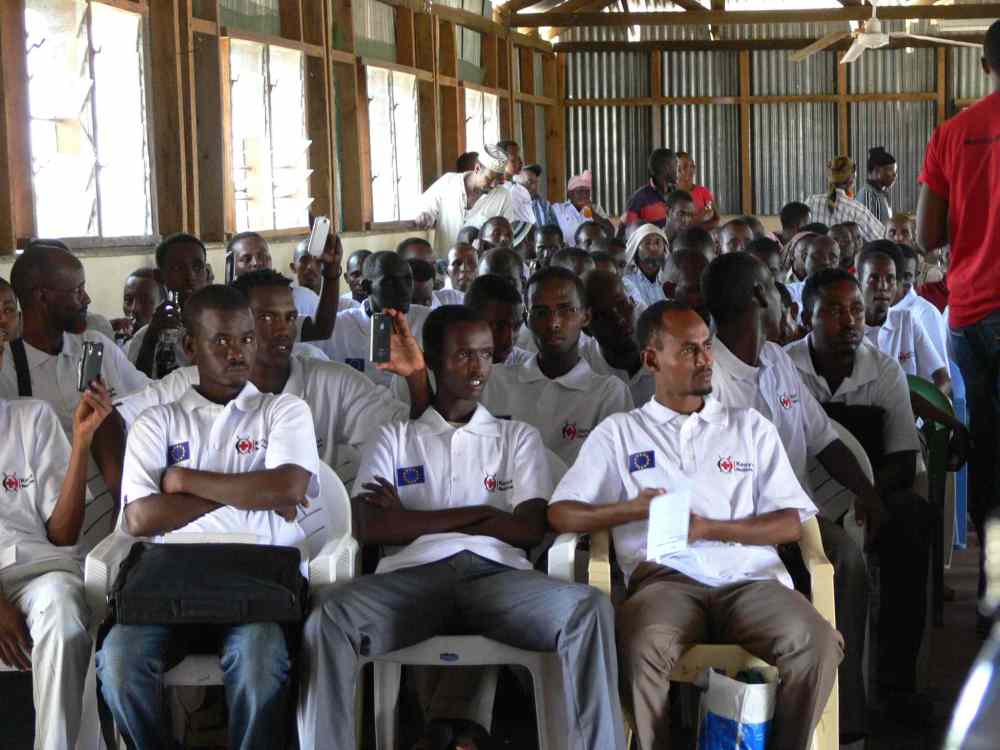
Graduation day for 60 graduates of the 20-week reproductive and preventive health program put on by the Kenyan Red Cross. The men and women who are refugees will work in their communities to promote health care.Carol Sanders / Winnipeg Free Press
Graduation day for 60 students in the 20-week reproductive and preventive health program put on by the Kenyan Red Cross. The men and women who are refugees will work in their communities to promote health care. The men completed the 'champions for reproductive health' program.Carol Sanders / Winnipeg Free Press
One of the solar-powered street lights paid for by the government of Canada at Ifo 2 refugee camp. The street lights are helping the security situation at the refugee camps in Dadaab.Carol Sanders / Winnipeg Free Press
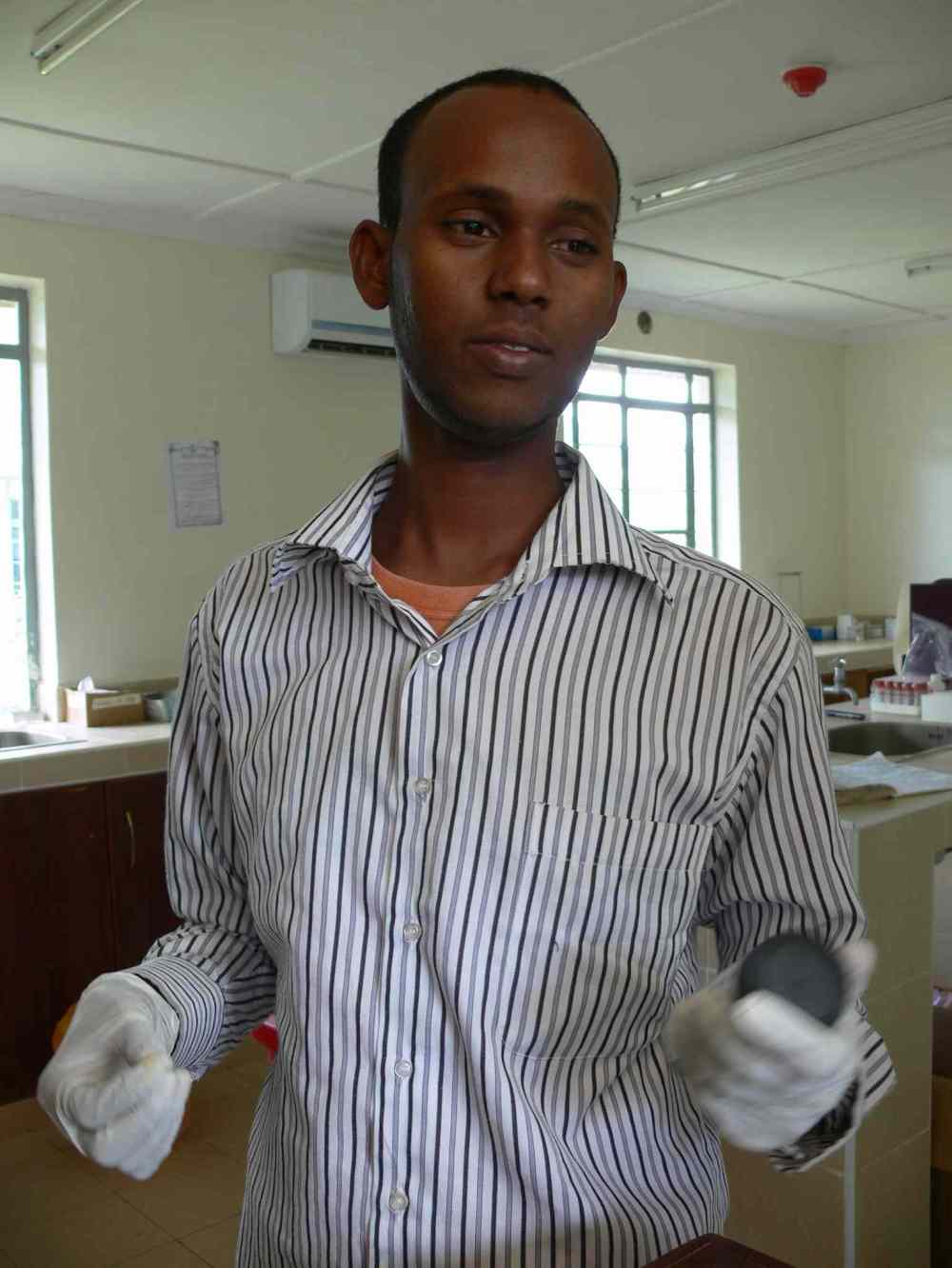
Abdi Noor Yussuf, a refugee, works as a lab assistant at the Kenyan Red Cross hospital in Ifo 2 refugee camp at Dadaab. He dreams of attending college or university to become a fully-fledged lab technician.Carol Sanders / Winnipeg Free Press
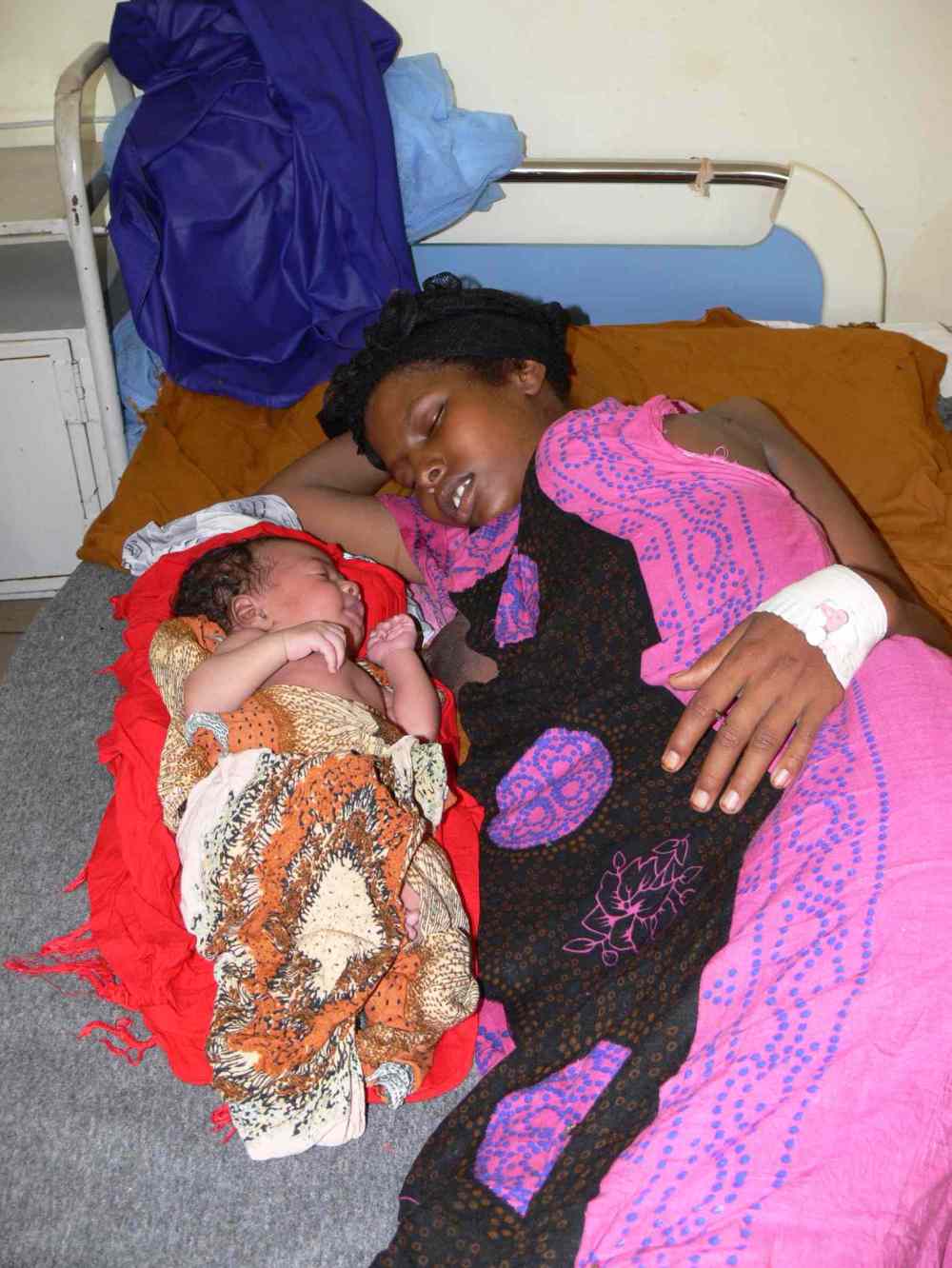
A new mom who came to the hospital at Ifo 2 refugee camp rests with her healthy newborn 24 hours after arriving at the hospital in labour with with pre-eclampsia - dangerously high blood pressure.