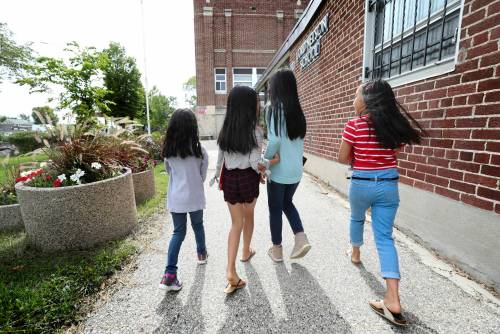
Doc delves into dire straits of flood evacuees
Advertisement
Read this article for free:
or
Already have an account? Log in here »
To continue reading, please subscribe:

Digital Subscription
One year of digital access for only $205*
- Enjoy unlimited reading on winnipegfreepress.com
- Read the E-Edition, our digital replica newspaper
- Access News Break, our award-winning app
- Play interactive puzzles
*First annual payment billed as $205.00 + GST for one year. This annual subscription will automatically renew at $233.00 + GST every 52 weeks (10% off the regular annual price of $259.35). Offer available to new and qualified returning subscribers only. Cancel any time.
To continue reading, please subscribe:
Add Free Press access to your Brandon Sun subscription for only an additional
$1 for the first 4 weeks*
- Enjoy unlimited reading on winnipegfreepress.com
- Read the E-Edition, our digital replica newspaper
- Access News Break, our award-winning app
- Play interactive puzzles
*Your next Brandon Sun subscription payment will increase by $1.00 and you will be charged $17.95 plus GST for four weeks. After four weeks, your payment will increase to $24.95 plus GST every four weeks.
Read unlimited articles for free today:
or
Already have an account? Log in here »
Hey there, time traveller!
This article was published 16/08/2014 (4406 days ago), so information in it may no longer be current.
It isn’t an easy story to watch; clearly, it has been a far, far more difficult one to live.
The new locally produced documentary Treading Water: Plight of the Manitoba First Nation Flood Evacuees is the straightforward telling of an intensely frustrating tale. The film, which airs Saturday, Aug. 23, at 7 p.m. on CBC, showcases the raw emotions and beyond-exhausted patience of a group of displaced Manitobans who just want to go home.
Among the most telling moments in the film is the introduction, by many-times-relocated Lake St. Martin resident Vicky O’Meara, of her youngest child, Julia. When Treading Water’s camera crew captured the moment, in April 2013, the little girl was two years-old; she was born just after the 2011 flood that forced residents to evacuate the Lake St. Martin, Little Saskatchewan, Dauphin River and Pinaymootang First Nation communities and, as such, she has never had a real home.
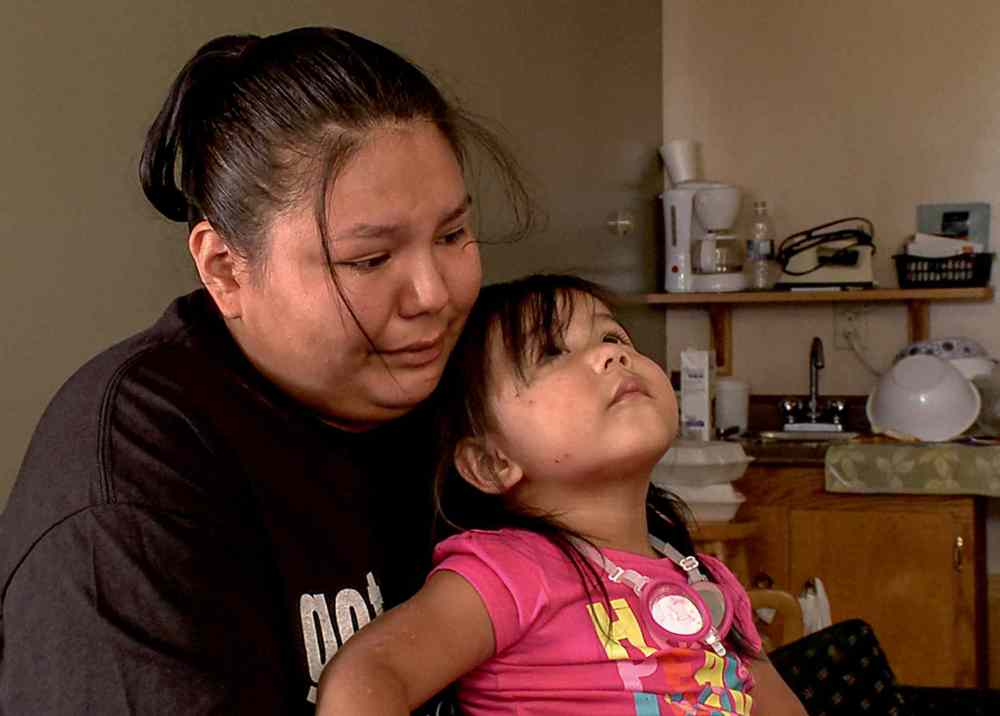
“We’ve lost a lot more than just houses,” says two-year-old Julia’s grandmother, Edee O’Meara. “Our family structures are being broken down; our community structure is broken down. You take somebody’s home, you bring devastation to their lives. You take their roots. You take their grounding.”
The story explored in the film begins in the spring of 2011, with the once-in-350-years flood that laid waste to much of rural southern Manitoba, but Treading Water takes a few minutes to provide — using rudimentary but effectively drawn animation — some simple background facts about the water-management strategies that set the stage for what occurred.
Created in the late 1960s to protect larger centres in the southern half of the province, the Portage Diversion regulates water levels on the Assiniboine River by redirecting some of its flow into Lake Manitoba.
The Fairford Dam, built in 1961, is used to regulate Lake Manitoba’s level by allowing excess water to flow into Lake St. Martin.
In 2011, with flood waters along the Assiniboine at historic highs, the Portage Diversion was expanded by 56 per cent and the Fairford Dam was opened wide, with the end result being a sudden rise of nearly a metre in the level of Lake St. Martin.
Numerous First Nations communities were ordered to clear out, and most residents obeyed, thinking they’d be out of their homes for a few weeks at most. Years later, as documented by brother/sister Franco-Métis filmmakers Jérémie and Janelle Wookey, a couple of thousand still had no idea when — or even if — they would be able to return to their communities.
“It wasn’t everything,” says a tearful Vicky O’Meara, “but it was a home. We were all together.”
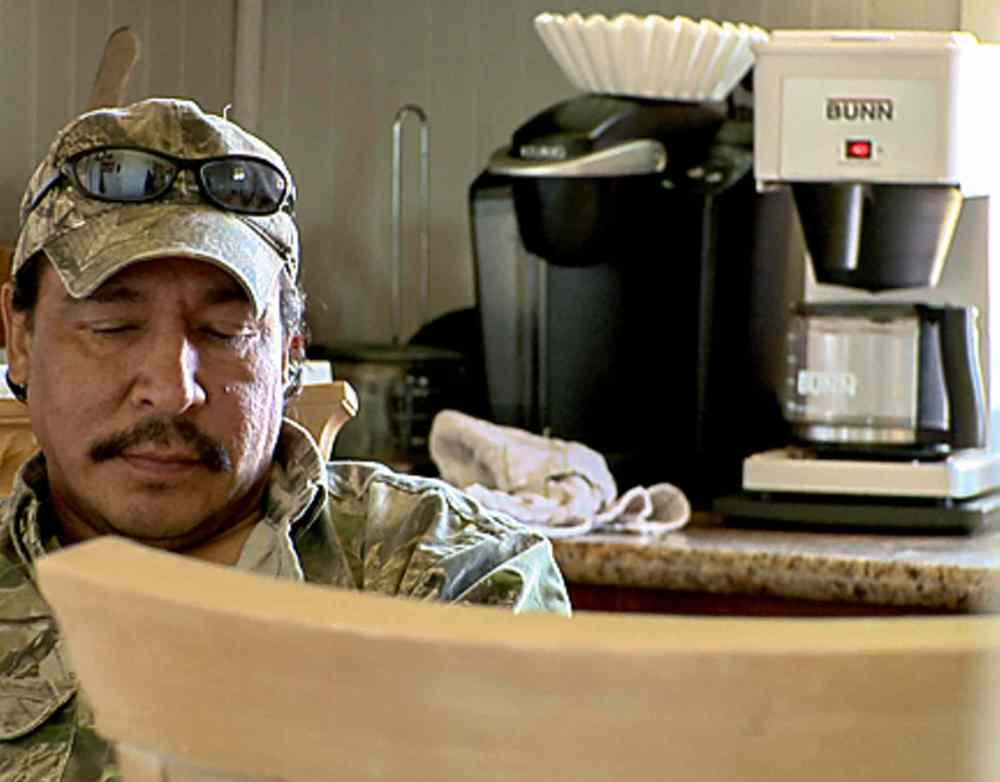
The film, which was co-produced by Wookey Films and Winnipeg-based Nºman Films, takes a largely chronological look at the plight of the evacuees, following its subjects from place to place as residential arrangements change as various levels of government — federal, provincial and First Nations — posture, promise and attempt to score political points while accomplishing basically nothing that materially improves the lot of the Lake St. Martin evacuees.
“It’s bullshit, all,” says hunting and trapping guide Clint Beardy, one of the residents who refused to leave his community. “It’s a mess; it’s all political. There’s a lot that could be done that isn’t being done.”
A significant segment of the film is devoted to the rancorous relationship between Misty Lake Lodge, the Gimli-area hotel that housed many evacuees for an extended period, and the Manitoba Association of Native Fire Fighters (MANFF), which was tasked with overseeing evacuee assistance and eventually faced accusations that money it received had not been spent on assisting displaced residents as contracted.
“I’m so disgusted with them,” Evee O’Meara seethes in the film. “Really, they’ve set us back about 50 years as First Nations people who are trying to become empowered, trying to clean up our communities.”
Former provincial Liberal leader Jon Gerrard figures prominently in Treading Water, offering several passages of rather succinct analysis of the way evacuee-related issues have been handled (or, perhaps, mishandled).

Treading Water follows the evacuees’ story until as recently as last April, when 2,000 were still living in hotels and other temporary housing. Last month, a tentative deal was struck for construction of a new townsite that could allow Lake St. Martin residents to return home. A community-wide vote on the agreement is expected this fall.
For all the political discussion and finger-pointing that Treading Water includes, it’s ultimately a film about people who’d just like, someday soon, to sleep in their own beds.
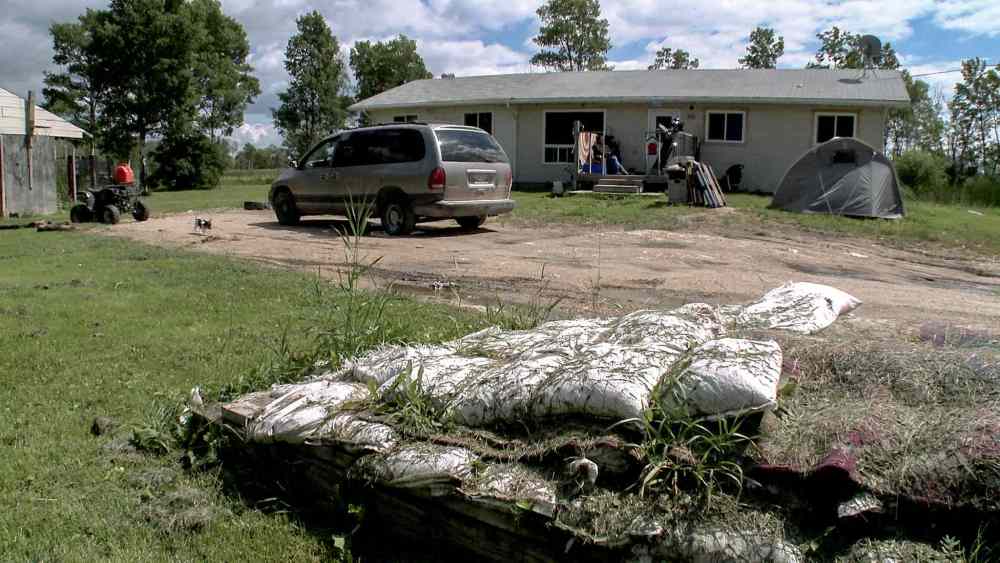
“These people have every right to feel mistreated,” says local journalist Wab Kinew, “because they have been. They didn’t build the Fairford Dam; they didn’t build the Portage Diversion. And yet it’s cost them years of their lives, and their homes. That’s messed up.”
brad.oswald@freepress.mb.ca
Twitter: @BradOswald