

Here a psycho, there a psycho…
Depraved characters who look, sound normal live and walk among us, documentary says

Advertisement
Read this article for free:
or
Already have an account? Log in here »
To continue reading, please subscribe:
Monthly Digital Subscription
$0 for the first 4 weeks*
- Enjoy unlimited reading on winnipegfreepress.com
- Read the E-Edition, our digital replica newspaper
- Access News Break, our award-winning app
- Play interactive puzzles
*No charge for 4 weeks then price increases to the regular rate of $19.95 plus GST every four weeks. Offer available to new and qualified returning subscribers only. Cancel any time.
Monthly Digital Subscription
$4.99/week*
- Enjoy unlimited reading on winnipegfreepress.com
- Read the E-Edition, our digital replica newspaper
- Access News Break, our award-winning app
- Play interactive puzzles
*Billed as $19.95 plus GST every four weeks. Cancel any time.
To continue reading, please subscribe:
Add Free Press access to your Brandon Sun subscription for only an additional
$1 for the first 4 weeks*
*Your next subscription payment will increase by $1.00 and you will be charged $16.99 plus GST for four weeks. After four weeks, your payment will increase to $23.99 plus GST every four weeks.
Read unlimited articles for free today:
or
Already have an account? Log in here »
Hey there, time traveller!
This article was published 27/11/2014 (4059 days ago), so information in it may no longer be current.
The term “psychopath” tends to conjure up a specific set of images — pop-culture creations like Psycho’s Norman Bates or Silence of the Lambs’ Hannibal Lecter, or real-life serial killers such as Clifford Olsen, Paul Bernardo or Jeffrey Dahmer.
But the reality is that those monstrous characters represent only the extreme end of the personality disorder covered by that word, and that it’s very likely that you know someone who could rightly be described as a psychopath.
Local filmmaker Jeremy Torrie examines the broader scope of psychopathy with a fascinating hour-long documentary called The Psychopath Next Door, which airs Nov. 27 on CBC’s Doc Zone.
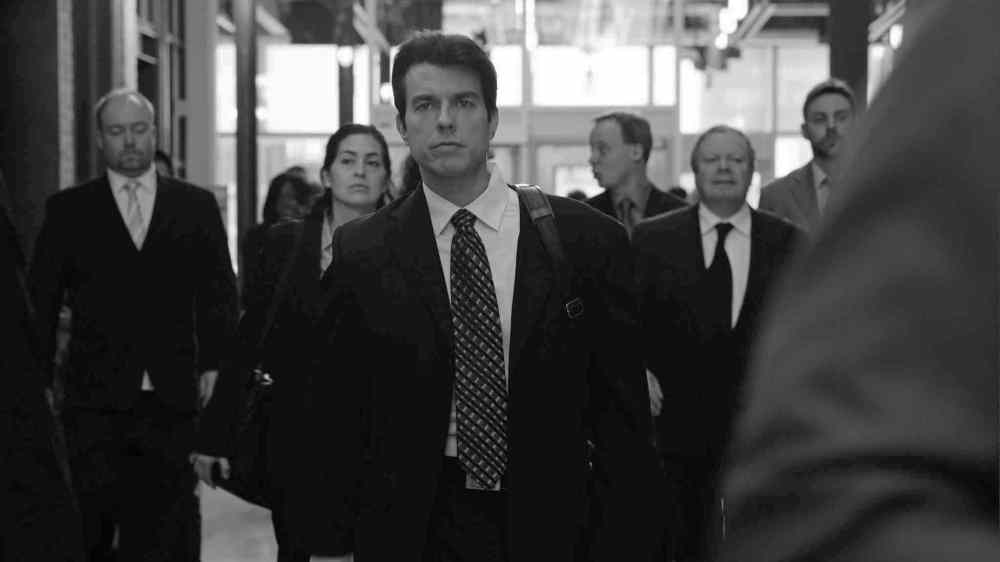
“You’re going to run into one of these individuals sometime in your life, more than once,” University of British Columbia forensic psychologist Dr. Robert Hare says in the film. “And the encounter could either be exhilirating, thrilling (and) exciting, or devastating. More likely the latter.
“Most of these psychopaths are living right next to us, living a reasonably normal life but creating some sort of distress — psychological or environmental or financial — for others around them.”
Hare, who’s apparently known in scientific circles as “the godfather of psychopathy” for, among other things, having developed a 20-point checklist for identifying psychopaths, notes that the main attribute that separates them from the rest of the population is a total disregard for the distinction between right and wrong.
Hare and other researchers in the film also point out how difficult it is for ordinary folks to identify the psychopaths among us, because they tend to act very much like normal people — they don’t feel emotion, but they act like they do, and while they know the difference between right and wrong, they ignore it because they lack any sense of remorse or empathy and seek out opportunities to prey on friends, family members and co-workers.
It’s estimated that up to two per cent of the adult male population fits the profile set out in Hare’s checklist, meaning there are 300,000 or more highly functioning psychopaths in this country’s population.
It’s no surprise then, that several social scientists, including British professor and author Clive Boddy, have concluded that psychopathic behaviour was directly responsible for the twisted stock-market trading that led to the global financial crisis.
“You ask yourself, what kind of people would sell a product that they don’t understand and can’t properly price?” says Boddy. “You’d have to be without conscience, wouldn’t you, to sell that kind of thing.”
Boddy adds that he knew the crash was coming, largely because he’d begun to hear, in the years leading up to the financial meltdown, that some executives in the banking industry were actually using Hare’s psychopathy checklist as a guideline for hiring new employees.
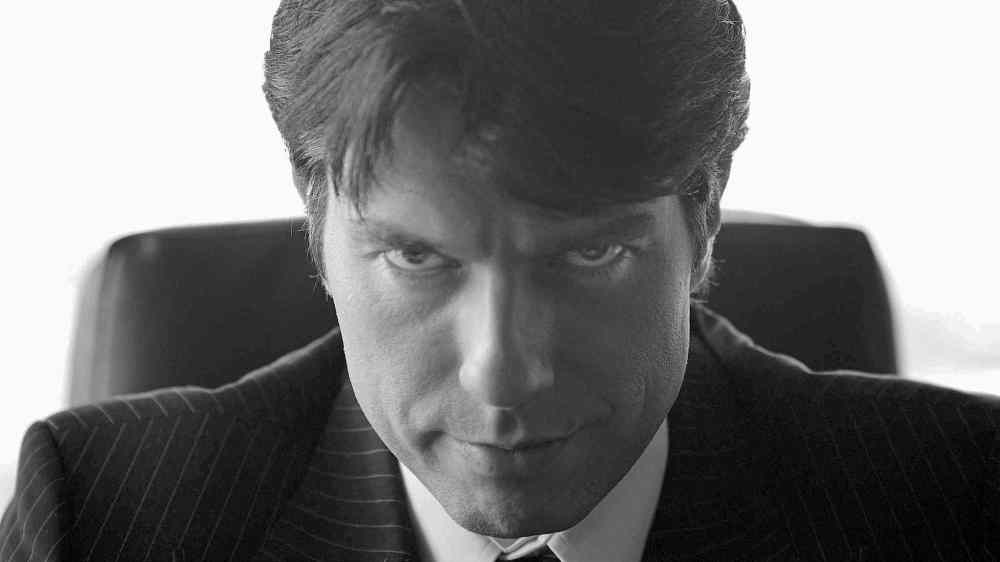
“Presumably, that was because they thought those new employees would be cutthroat and ruthless with their competitors,” he says. “The danger, of course, is that they are cutthroat and ruthless toward the bank that employs them, as well.”

To illustrate what the scientists are explaining, Torrie builds an ongoing dramatization of a psychopath’s workplace behaviour into the film; local actor Geoff Banjavich brings an effective combination of charm and creepiness to his portrayal of this conscience-less co-worker.
The Psychopath Next Door also delves deep into the realm of brain physiology in an attempt to explain what makes these individuals think and act the way they do. According to the theory of “epigenetics,” there’s no easy answer to the inevitable nature-vs.-nurture question, as a combination of genetic and environmental factors must combine in just the right way to produce psychopathic behaviour.
And while those elements and that behaviour might produce the next Ted Bundy, they’re much more likely to create a “successful” psychopath who rises to the top of his field in finance, medicine, law or the media.
Or, perhaps, in the office next to yours.
brad.oswald@freepress.mb.ca Twitter: @BradOswald
Our newsroom depends on a growing audience of readers to power our journalism. If you are not a paid reader, please consider becoming a subscriber.
Our newsroom depends on its audience of readers to power our journalism. Thank you for your support.
TV REVIEW
The Psychopath Next Door
óè Written and directed by Jeremy Torrie
óè Thursday, Nov. 27, at 9 p.m.
óè CBC
óè 3 1/2 stars out of 5
Our newsroom depends on a growing audience of readers to power our journalism. If you are not a paid reader, please consider becoming a subscriber.
Our newsroom depends on its audience of readers to power our journalism. Thank you for your support.
Advertisement Advertise With Us
Advertisement Advertise With Us