

Reconciling a legacy of suspicion
Advertisement
Read this article for free:
or
Already have an account? Log in here »
To continue reading, please subscribe:

Digital Subscription
One year of digital access for only $205*
- Enjoy unlimited reading on winnipegfreepress.com
- Read the E-Edition, our digital replica newspaper
- Access News Break, our award-winning app
- Play interactive puzzles
*First annual payment billed as $205.00 + GST for one year. This annual subscription will automatically renew at $233.00 + GST every 52 weeks (10% off the regular annual price of $259.35). Offer available to new and qualified returning subscribers only. Cancel any time.
To continue reading, please subscribe:
Add Free Press access to your Brandon Sun subscription for only an additional
$1 for the first 4 weeks*
- Enjoy unlimited reading on winnipegfreepress.com
- Read the E-Edition, our digital replica newspaper
- Access News Break, our award-winning app
- Play interactive puzzles
*Your next Brandon Sun subscription payment will increase by $1.00 and you will be charged $17.95 plus GST for four weeks. After four weeks, your payment will increase to $24.95 plus GST every four weeks.
Read unlimited articles for free today:
or
Already have an account? Log in here »
Hey there, time traveller!
This article was published 16/06/2010 (5912 days ago), so information in it may no longer be current.
School children have painted rocks in preparation for the launch at The Forks today of the first of a series of national events to bring survivors of Indian residential schools and other Canadians together.
The rocks will be handed to those who give testimony to the Truth and Reconciliation Commission, which will gather their statements, one of the activities in this event that runs through to Saturday. The rocks are intended to give "strength, guidance and energy" to former students who may be disclosing their experiences for the first time.
Their statements will form the backbone of the commission’s archives, underpinning the documenting of the truth of the now-defunct schools that began opening in late 1800s.
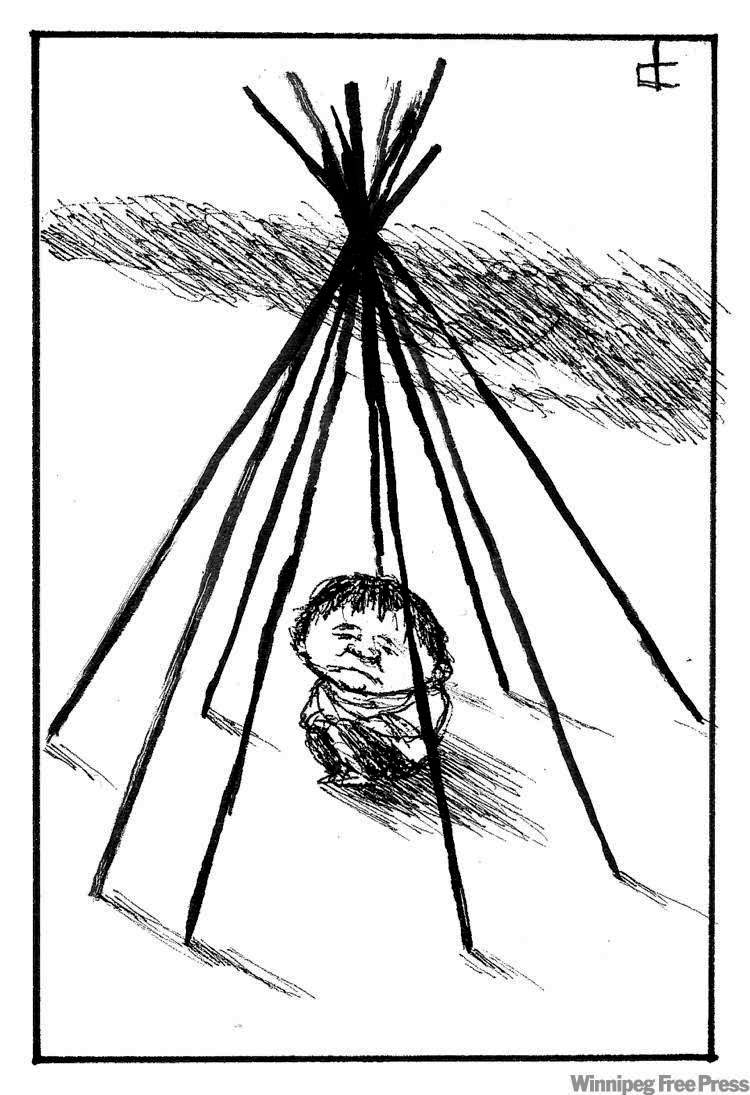
The other, perhaps more ambitious task is to bring Canadians together to start understanding the lasting impact of the residential schools on First Nations, Inuit and Métis and the country and on the tumultuous relations between them.
In hearing those stories, it is the hope of the commission, first appointed two years ago in a settlement struck by the aboriginal leadership, federal government and the four churches who ran the schools, that the children and grandchildren of former students begin to make sense of their own families’ stories — parents struggling with addictions, mental illness, unemployment or an inability to nurture their own children. Having grown up in an institution, they missed the lessons of parenting in their own homes.
As part of the broader reconciliation, Canadians are asked to head to The Forks to take in the events, some staged by the Catholic, Anglican, Presbyterian and United churches, and celebrations that include Canadian singers, authors, artists and playwrights.
Commission staff stressed Tuesday that former staff of the schools are expressly invited. It is a recognition that, while the policy of assimilation through education was wrong and destructive, many of the people who worked at the schools were well-intentioned and caring.
The failed attempt to "take the Indian" out of the child was the product of a 19th-century establishment mentality that believed progress for native people could only be accomplished by eradicating their language and culture through assimilation. Initially, this involved half days in class, and half days in occupational activities, such as farming or domestic duties. Compounding the damage done was the fact the schools, some poorly constructed, ran headlong into disease and deprivation that killed students, who were sometimes buried in unmarked graves.

The physical, emotional and sexual abuses inflicted upon many students have become, for many, the brutish hallmark of the schools, a scar that has seared generations of native children. Yet, more broadly, all of Canada suffers from the legacy of Indian residential schools because of the social dysfunction and the disease that disproportionately affect native people.
On many reserves, especially in Manitoba, a deep-seated suspicion among parents of schools and their authorities contributes to dismal graduation rates of their children, even as native leaders trumpet education as the key to a healthier future. Reconciling this legacy is key to unravelling that suspicion, and unlocking the potential of Canada’s original people.
Related Articles
A delicate balancing act begins
Advertisement Advertise With Us
Advertisement Advertise With Us