

No-fly zone doable
Advertisement
Read this article for free:
or
Already have an account? Log in here »
To continue reading, please subscribe:

Digital Subscription
One year of digital access for only $205*
- Enjoy unlimited reading on winnipegfreepress.com
- Read the E-Edition, our digital replica newspaper
- Access News Break, our award-winning app
- Play interactive puzzles
*First annual payment billed as $205.00 + GST for one year. This annual subscription will automatically renew at $233.00 + GST every 52 weeks (10% off the regular annual price of $259.35). Offer available to new and qualified returning subscribers only. Cancel any time.
To continue reading, please subscribe:
Add Free Press access to your Brandon Sun subscription for only an additional
$1 for the first 4 weeks*
- Enjoy unlimited reading on winnipegfreepress.com
- Read the E-Edition, our digital replica newspaper
- Access News Break, our award-winning app
- Play interactive puzzles
*Your next Brandon Sun subscription payment will increase by $1.00 and you will be charged $17.95 plus GST for four weeks. After four weeks, your payment will increase to $24.95 plus GST every four weeks.
Read unlimited articles for free today:
or
Already have an account? Log in here »
Hey there, time traveller!
This article was published 09/03/2011 (5650 days ago), so information in it may no longer be current.
As Libyan rebels, until recently rolling towards Tripoli, now reel under a fierce counter-attack by the military forces of dictator Moammar Gadhafi, the world wonders what to do. It can sit back and do nothing other than shout encouragement to the revolutionaries from the sidelines, which is mostly what it is has done up until now — some nations have given humanitarian aid to the insurgents, a few have sent military aid and moral support to Col. Gadhafi.
Or the United Nations or NATO or the Arab League could launch a military intervention on the ground in Libya, forcing Col. Gadhafi to quit the country, and supervise a peaceful transition to a democratic system. That is the least likely scenario. Any proposed UN action in Libya would be vetoed by Russia and China; NATO is deeply divided over how to respond; and the Arabs are all too conscious that revolution is knocking on their doors, too — they won’t interfere in each other’s business.
A third option is to arm the newly formed revolutionary council, whose forces are badly outgunned by Col. Gadhafi’s military. As sensible as that might seem, Western governments hold back because, aside from the fact that the rebels oppose the dictatorship, the face of the revolution itself is still unclear. As White House spokesman Jay Carney said in downplaying that idea: “We do not need to get ahead of ourselves in terms of the options we are pursuing.”
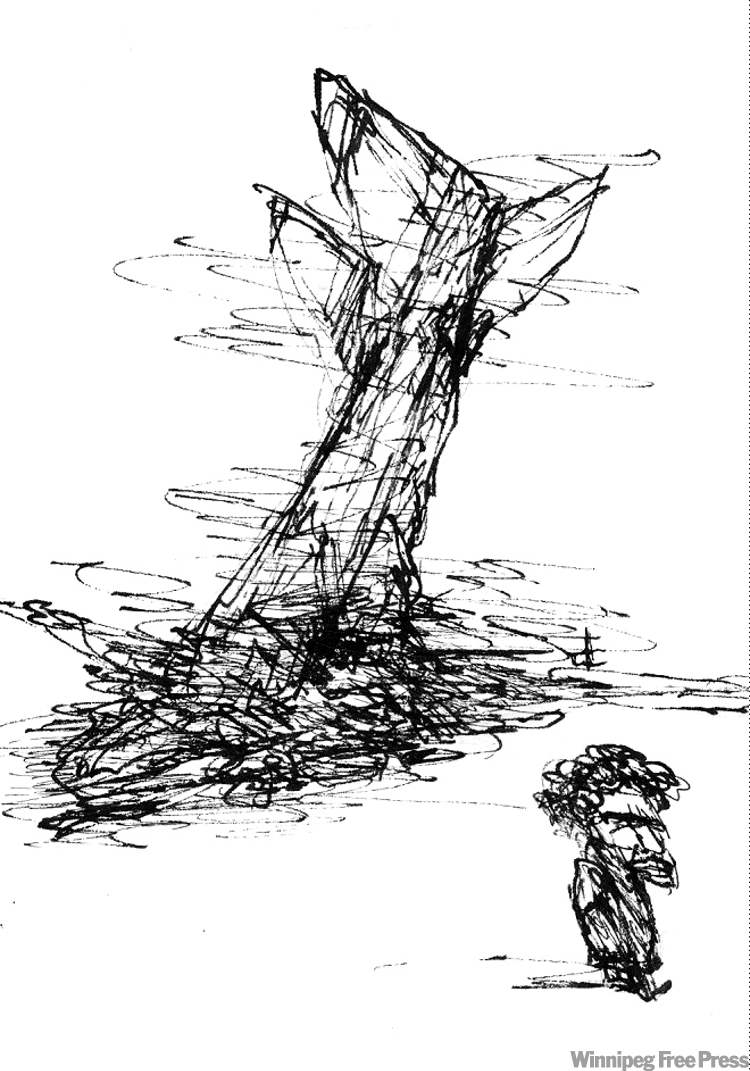
The final choice, and one that paradoxically has the strongest support and the strongest opposition, is to declare a “no-fly zone” over Libya. The arguments in favour of this are most persuasively that it would be an unmistakable statement of international support for the revolution that Col. Gadhafi could not ignore. It would ground the Libyan air force that has in recent days been a devastating psychological as well as tactical weapon in the government counter-attack. And it can be implemented without UN consent or the even the united approval of NATO. In short, it is doable and effective.
The arguments against it are several: the Libyan air force is basically grounded anyway, with most of its estimated 500 planes not functional and the loyalty of its pilots in doubt; a no-fly zone would be largely ineffective against Libya’s helicopters, which are being used to devastating effect; implementing a no-fly zone normally requires an act of war — the destruction, in this case, of Libya’s runways and anti-aircraft defences.

Canada’s Chief of Defence Staff Gen. Walter Natynczyk described it as “a major military operation.” The Canadian government has been largely silent about it and the United States and other NATO hawks on the Libyan issue have been coy, raising the issue but then seemingly dismissing it unless they can be assured it will not lead to military intervention on the ground, something no general has yet promised them.
Under these circumstances, the odds of a no-fly zone being declared over Libya seem slim. Yet under these circumstances, such a declaration still seems the best and most effective way of aiding the revolution. There is a real chance for democracy in Libya, and thousands of Libyans have died in its pursuit. If the West does nothing, then Carney’s prophecy will be self-fulfilling: If we don’t at least stay apace of events, we will be so far behind them that the next diplomatic mission to Tripoli may well be to pay respects to a rejuvenated Col. Gadhafi.