

When Fido escapes
Advertisement
Read this article for free:
or
Already have an account? Log in here »
To continue reading, please subscribe:

Digital Subscription
One year of digital access for only $205*
- Enjoy unlimited reading on winnipegfreepress.com
- Read the E-Edition, our digital replica newspaper
- Access News Break, our award-winning app
- Play interactive puzzles
*First annual payment billed as $205.00 + GST for one year. This annual subscription will automatically renew at $233.00 + GST every 52 weeks (10% off the regular annual price of $259.35). Offer available to new and qualified returning subscribers only. Cancel any time.
To continue reading, please subscribe:
Add Free Press access to your Brandon Sun subscription for only an additional
$1 for the first 4 weeks*
- Enjoy unlimited reading on winnipegfreepress.com
- Read the E-Edition, our digital replica newspaper
- Access News Break, our award-winning app
- Play interactive puzzles
*Your next Brandon Sun subscription payment will increase by $1.00 and you will be charged $17.95 plus GST for four weeks. After four weeks, your payment will increase to $24.95 plus GST every four weeks.
Read unlimited articles for free today:
or
Already have an account? Log in here »
Hey there, time traveller!
This article was published 29/08/2011 (5514 days ago), so information in it may no longer be current.
Most dog owners in Winnipeg don’t have a licence for their pets. They’re either too lazy, too cheap or too irresponsible to buy one. Others refuse to get a permit because they say their animals never escape — can’t escape, in fact — but the animal services agency knows this breed of scofflaw too well.
They meet them when they come to pick up their lost and frightened pets.
On Thursday, the agency will begin a program of active enforcement that is long overdue. Officers will be handing out bylaw infraction notices to anyone caught without a licence for their dog. The fine is $250, plus court costs.
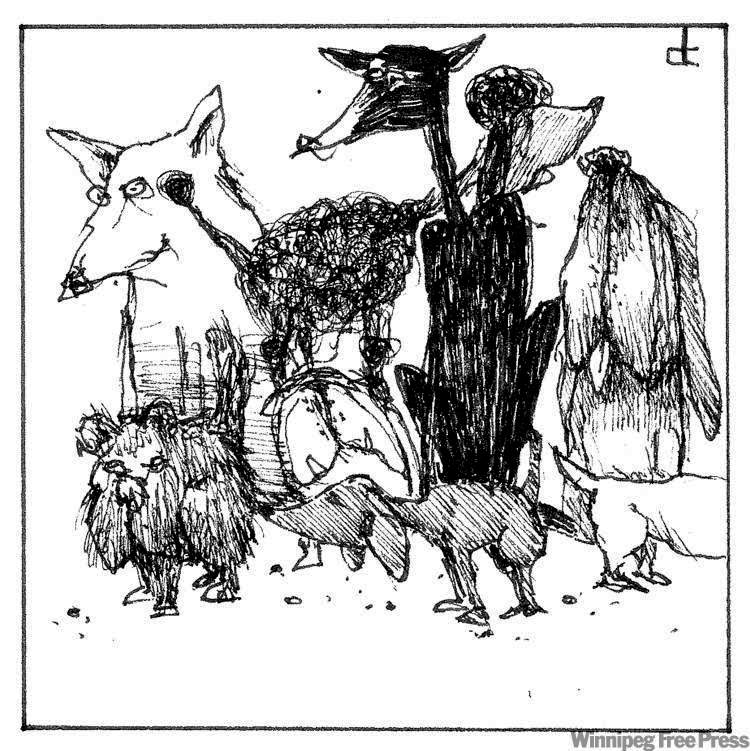
The city has relied on passive appeals in the past to convince dog owners to buy a licence, but it had limited impact.
No one knows for sure how many dogs are in Winnipeg, but the best guesstimate is about 100,000. Of those, only 31,000 were licensed in 2009, but the number has inched up to 45,000 over the last two years as a result of public awareness campaigns and the introduction of new and easier ways to acquire licences.
The City of Calgary has had an active enforcement program for years, resulting in a 90 per cent compliance rate.
In Winnipeg, more dog owners have been rushing to buy licences since the crackdown was announced, but there’s still a high degree of defiance.
Some owners question why they need a licence when their dog is already tattooed, chipped or identified in some other way. They wonder what they are getting for a $27 licence, the price of a large bag of dog food.
First, their animal gets a free ride home if it is picked up. As well, the finder of a lost dog can be put in touch with the owner 24 hours a day, seven days a week through 311, which means owners can be reunited with their pets without the city actually picking up the animal. The city also uses Facebook and the PetFind website to help owners locate their animals when they get loose.
Second, a licence fee is a way of supporting the work of the animal services agency and its many programs that are designed to avoid the slaughter of unclaimed dogs.
Dog owners should also be supporting the maintenance of off-leash parks, much the way the public supports swimming pools by paying a user fee. Without that revenue, everyone would be paying more for the service.
A dog might have a tattoo that identifies its owner, but the city is still entitled to be compensated for the bureaucracy that helps ensure runaway dogs are returned.
Finally, a licence is part of responsible pet ownership. If you love your animal, get a licence.
Some dog owners claim it is discriminatory to demand a fee for canines, but not for cats. The city recognizes the apparent unfairness of the matter and it is considering a licensing program for felines in the future, but the absence of a specific cat licensing bylaw today does not provide cover for irresponsible dog owners.
It should also be recognized that loose dogs are more of a threat and neighbourhood nuisance than cats. For example, the city receives five times as many complaints about dogs running at large (2,699 in 2009) as cats (just 615).
In total, the city responded to more than 10,000 calls about dogs in 2009 and had to impound nearly 1,500. Of those, 824 were returned to their owners, while the rest were adopted, sent to other rescue shelters or destroyed because their owners didn’t give a damn.

A licence can’t make people care, but it does help to fund programs for those who do.
A higher degree of compliance with the licensing bylaw could result in another $1 million in revenue to help hold the line on civic and provincial grants of $1.75 million needed to support the work of animal services.
Every homeowner already supports the agency through realty taxes and it is only basic fairness that dog owners should pay a little extra.
A dog licence might seem like a cash grab until the service is required.
Then it will seem like a bargain.
Related Articles
Winnipeggers license an estimated 10% of city's cats
Advertisement Advertise With Us
Advertisement Advertise With Us