

Divided Manitoba unhealthy
Advertisement
Read this article for free:
or
Already have an account? Log in here »
To continue reading, please subscribe:
Digital Subscription
One year of digital access for only $1.44 a week*
- Enjoy unlimited reading on winnipegfreepress.com
- Read the E-Edition, our digital replica newspaper
- Access News Break, our award-winning app
- Play interactive puzzles
*Billed as $5.77 plus GST every four weeks. After 52 weeks, price increases to the regular rate of $19.95 plus GST every four weeks. Offer available to new and qualified returning subscribers only. Cancel any time.
To continue reading, please subscribe:
Add Free Press access to your Brandon Sun subscription for only an additional
$1 for the first 4 weeks*
- Enjoy unlimited reading on winnipegfreepress.com
- Read the E-Edition, our digital replica newspaper
- Access News Break, our award-winning app
- Play interactive puzzles
*Your next Brandon Sun subscription payment will increase by $1.00 and you will be charged $17.95 plus GST for four weeks. After four weeks, your payment will increase to $24.95 plus GST every four weeks.
Read unlimited articles for free today:
or
Already have an account? Log in here »
Hey there, time traveller!
This article was published 05/10/2011 (5360 days ago), so information in it may no longer be current.
New Democrats will be cheering today, but Manitobans generally should be a little more circumspect about the Selinger government’s historic victory Tuesday.
Premier Greg Selinger and his party rolled to a four-peat unprecedented in the modern era outside of Alberta, and at that, a four-peat with a record 37 seats, one more than the party won in the 2007 election. The win confirmed Mr. Selinger as a premier elected by the people, not just by his party to fill the vacancy created when former premier Gary Doer resigned to take up residence in Washington as Canadian ambassador. It also confirmed that Manitobans are satisfied with a government whose biggest surprises are none at all.
Or rather, it again confirmed that urban Manitobans are satisfied with an NDP government, but not rural Manitobans.
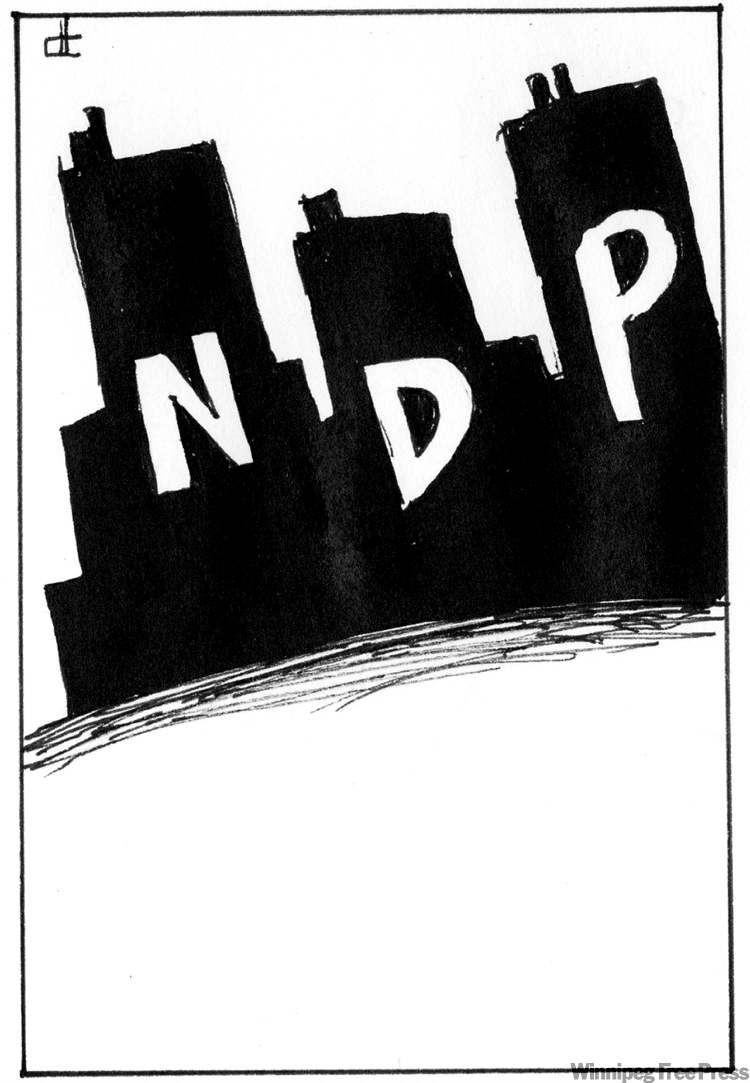
This urban-rural split has been part of the political fabric of Manitoba for as long as most people remember. But it increasingly is unhealthy. Rural Manitoba is shrinking relative to urban Manitoba. Urban issues are so dominant, the need to woo urban voters so necessary to political survival, that the NDP can choose to blight west-side agricultural lands by imposing a bipole line on the rural west side of the province in order to win the support of urban environmentalists — including legions of environmentalists who are not Manitobans.
Encouraging the tyranny of the urban majority does not a healthy polity make. Mr. Selinger would be wise to adopt a recommendation of the Business Council of Manitoba and create a commission of experts to determine whether the west-side route is the way to go, and that it is not simply politically expedient.
After 12 years in office, it would seem the NDP should have been ripe for a fall. But if this was a time for a change, it was a time for very little change. The only evidence that change was on voters’ minds can be found in the popular vote, where the Conservatives gained seven points to climb to about 45 per cent (mostly at the expense of the Liberal party) and create a virtual tie with the NDP, who dropped a few percentage points. But again, this appeared to be evidence of a widening urban-rural split, evidence that rural Manitobans are hardening against the urbanization of provincial politics. Urban voters, meanwhile, expressed minor irritation, but not enough to diminish the power of a clear, city-based NDP majority.
If it had been time for a change, it seemed the Progressive Conservatives under Hugh McFadyen got so far in front of the parade that they lost sight of its route. Mr. McFadyen seemed to abandon his party’s traditional strength as fiscal conservatives, moving to the middle with a campaign that was long on spending and deficits. To be sure, the Conservatives appeared to have gained somewhat with the move, but the growth of a single seat and a modest uptick in popularity seemed to indicate only that Mr. McFadyen enjoys unshakable support from his base despite the failed experiment.
The Liberals, meanwhile, are reduced to one seat, that of leader Jon Gerrard, who held on in River Heights. What that means is difficult to say, but it certainly would appear to signal that it was a vote for a stalwart — a consolation prize much like the one Alberta Conservatives repeatedly gave to Liberal Anne (Landslide Annie) McLellan and stubborn former prime minister Joe Clark, a show of respect for pluck, but little more.
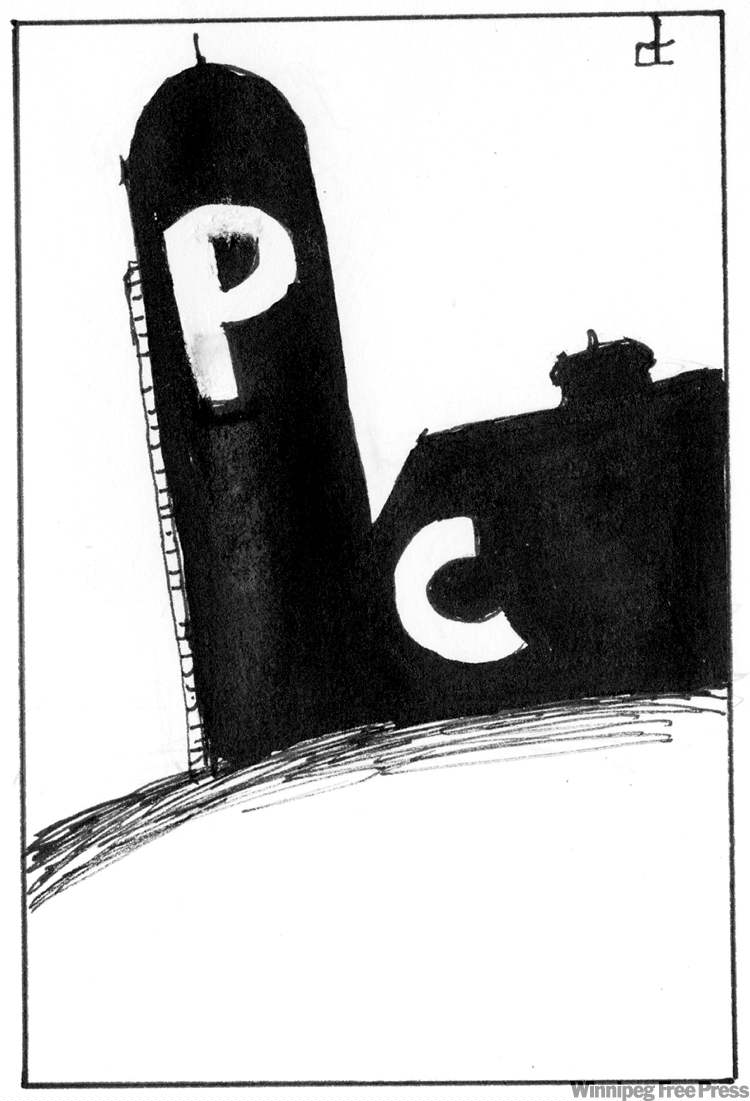

Liberals, of course, now have some hard decisions to make. Not immediately, but it is clear that Mr. Gerrard doesn’t really lead a party so much as he has become a successful independent unable to appeal outside of his local environs.
Conservatives, too, have some hard work ahead. Mr. McFadyen has announced that he will step down as leader for failing to deliver. It was the right decision — having campaigned on the basis of extending the deficit to 2018, on what credible basis was he going to hold the government to its promise to balance the books in 2014?