

Playing politics with rapid transit
Advertisement
Read this article for free:
or
Already have an account? Log in here »
To continue reading, please subscribe:

Digital Subscription
One year of digital access for only $205*
- Enjoy unlimited reading on winnipegfreepress.com
- Read the E-Edition, our digital replica newspaper
- Access News Break, our award-winning app
- Play interactive puzzles
*First annual payment billed as $205.00 + GST for one year. This annual subscription will automatically renew at $233.00 + GST every 52 weeks (10% off the regular annual price of $259.35). Offer available to new and qualified returning subscribers only. Cancel any time.
To continue reading, please subscribe:
Add Free Press access to your Brandon Sun subscription for only an additional
$1 for the first 4 weeks*
- Enjoy unlimited reading on winnipegfreepress.com
- Read the E-Edition, our digital replica newspaper
- Access News Break, our award-winning app
- Play interactive puzzles
*Your next Brandon Sun subscription payment will increase by $1.00 and you will be charged $17.95 plus GST for four weeks. After four weeks, your payment will increase to $24.95 plus GST every four weeks.
Read unlimited articles for free today:
or
Already have an account? Log in here »
Hey there, time traveller!
This article was published 06/09/2014 (4369 days ago), so information in it may no longer be current.
Mayoral hopeful Gord Steeves is doing a disservice to the community by disseminating incomplete and even false information about the social and financial benefits of completing the Southwest Rapid Transit Corridor.
Mr. Steeves claims if the city goes ahead with Phase 2 of the project from Jubilee Avenue to the University of Manitoba, Pembina Highway will suffer an irreversible decline, while the $600-million corridor will only shave a few minutes off travelling time. It’s not only a waste of money, he says, but a threat to the future of the community.
If the former councillor, who voted for the project in the past, has evidence to back up these charges, he should have presented it long ago.
So far, his allegations are just that — unsubstantiated statements that seem intended to appeal to his base and to those who don’t see any personal benefit in the project.
Civic reports have repeatedly said rapid transit will have an immediate positive impact on travel time, and the time savings and the cost benefits will improve as the city expands and its population grows. The city calculates every $1 spent on Phase 2 will reap a benefit of $1.22, or more if the cost of reconstructing the Jubilee Underpass is excluded. The benefits come in many forms, including reduced carbon emissions, time savings and demands on infrastructure.
Phase 2 of the southwest corridor will save passengers eight minutes in travel time on average, civic reports say, and it could be 30 minutes or more, depending on the time of day and road conditions.
Congestion as a result of heavy snow, construction and traffic accidents, for example, will never be obstacles on the dedicated bus corridor.
The dogleg route west of Pembina will position the corridor closer to the densely populated neighbourhoods in Whyte Ridge, Lindenwoods and Waverley West. It means these residents will be able to hop on a bus that can connect with the rapid-transit corridor.
This is one of the advantages of BRT over light rail; buses can enter and exit the transitway to meet local and regional demands.
Mr. Steeves also says the transit corridor will not spur new development. Some developers might agree it won’t be an immediate catalyst, but they add it is a factor for those who are considering building in the area, including a plan for a multi-use residential project at the site of the former sugar-beet plant.
Unfortunately, none of the other mayoral candidates in Winnipeg’s civic election have done a credible job in outlining the social and financial benefits of completing the Southwest Rapid Transit Corridor.
Judy Wasylycia-Leis, for example, has merely said she supports rapid transit. She and others, including Brian Bowman, need to show why they are convinced it’s a good idea for Winnipeg, one of the last major cities to get started on rapid transit.
The issue is just too important to be reduced to throwaway lines and false information.
Mayor Sam Katz should be speaking out, but he has never been an enthusiastic supporter. During the last election in 2010, he was still balking at bus rapid transit in favour of a scheme for light rail.
When that was shown to be unaffordable, he reluctantly endorsed the current plan, but it was never a warm embrace.
The lack of strong leadership has left some Winnipeggers questioning the wisdom of the project, which is understandable since it has not had an effective cheerleader. Nor has the city itself done as much as it should to explain the concept.
No one is saying rapid transit will eliminate congestion, save the planet or usher in a new era of social justice, but it is one component of a healthy, progressive city. The question of whether it is a desirable social good should no longer be on the table.
Related Articles
City to unveil plans for Stage 2 of Southwest Transitway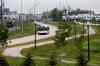
Advertisement Advertise With Us