

Let’s review snow-clearing policy
Advertisement
Read this article for free:
or
Already have an account? Log in here »
To continue reading, please subscribe:
Monthly Digital Subscription
$1 per week for 24 weeks*
- Enjoy unlimited reading on winnipegfreepress.com
- Read the E-Edition, our digital replica newspaper
- Access News Break, our award-winning app
- Play interactive puzzles
*Billed as $4.00 plus GST every four weeks. After 24 weeks, price increases to the regular rate of $19.95 plus GST every four weeks. Offer available to new and qualified returning subscribers only. Cancel any time.
Monthly Digital Subscription
$4.99/week*
- Enjoy unlimited reading on winnipegfreepress.com
- Read the E-Edition, our digital replica newspaper
- Access News Break, our award-winning app
- Play interactive puzzles
*Billed as $19.95 plus GST every four weeks. Cancel any time.
To continue reading, please subscribe:
Add Free Press access to your Brandon Sun subscription for only an additional
$1 for the first 4 weeks*
- Enjoy unlimited reading on winnipegfreepress.com
- Read the E-Edition, our digital replica newspaper
- Access News Break, our award-winning app
- Play interactive puzzles
*Your next Brandon Sun subscription payment will increase by $1.00 and you will be charged $17.95 plus GST for four weeks. After four weeks, your payment will increase to $24.95 plus GST every four weeks.
Read unlimited articles for free today:
or
Already have an account? Log in here »
Hey there, time traveller!
This article was published 12/01/2015 (4133 days ago), so information in it may no longer be current.
In the days of the Red River cart, Winnipeg’s rutted streets were a sign of a booming community. The more ruts the better, because they were a measure of commercial activity.
In modern times, however, the ruts of winter (and the potholes of summer) are evidence of a city that can’t keep traffic moving, at least not at a rate that is safe and efficient.
We need a better system.
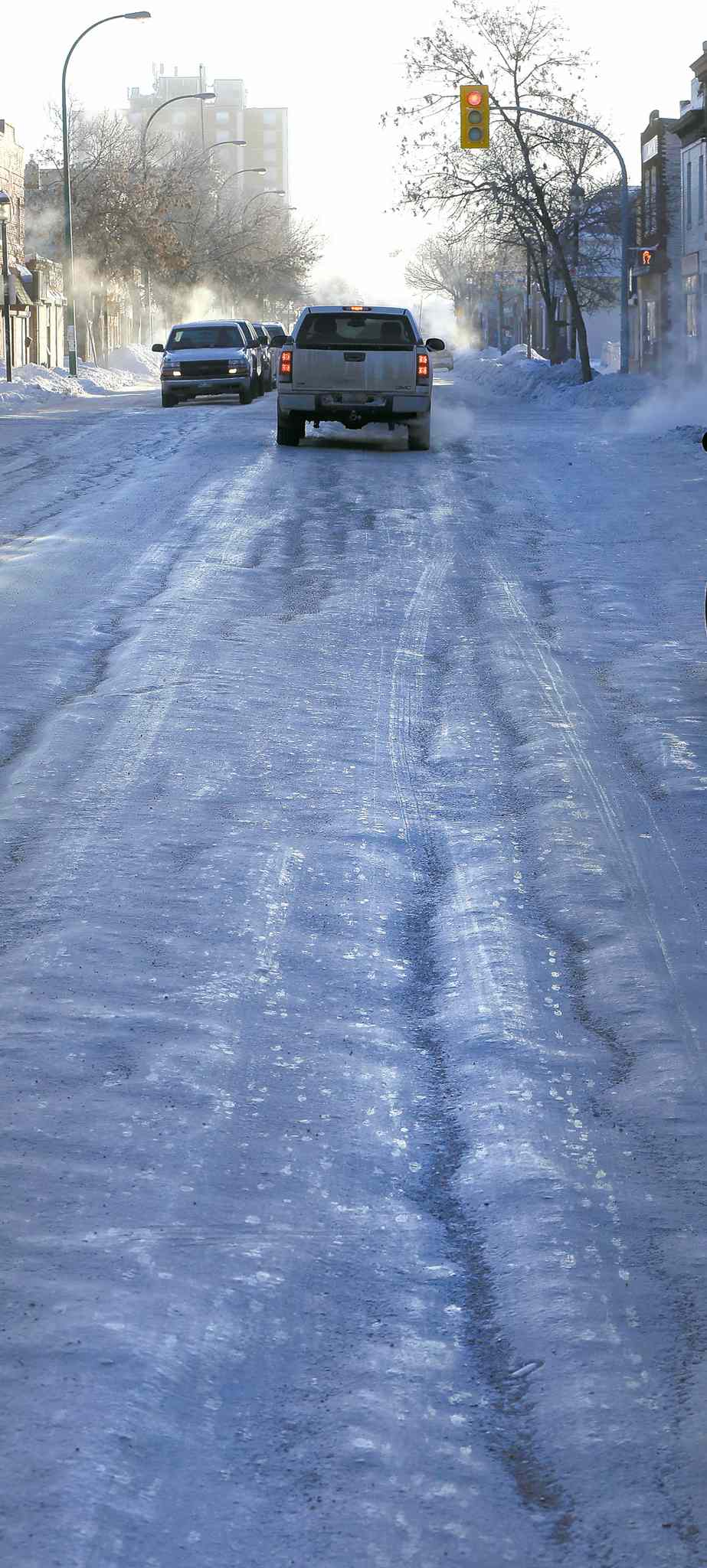
Motorists were bitterly unhappy last year with the quality of snow clearing. Even though it was a winter from hell, with too much snow and brutal temperatures, citizens still believed the city should have done a better job clearing the streets.
Their anger might have been a little unfair because Winnipeg’s extreme weather can sometimes overwhelm man and machine, but with climate change a part of the everyday lexicon, extreme weather has become the new normal, and the city needs to get ready.
This year, after a modest dump of snow, the city deployed its mechanized army of private and public contractors to make the roads safe for humanity.
For whatever reason, however, the famous ruts were there following the alleged cleanup. Just as bad, the snow on some streets morphed into that famous black ice. Between the ruts and the ice, every day was a white-knuckle drive for most Winnipeggers last week.
How is that possible?
Well, we don’t have an explanation yet, but we need one.
Nor is this merely more of the idle complaining for which Winnipeggers are famous. Mayor Brian Bowman himself has said the snow-clearing job was inadequate and unacceptable.
The mayor said more sand should have been spread and ruts levelled and removed.
As Free Press Ottawa correspondent Mia Rabson discovered in a feature report in Saturday’s paper, it’s difficult to compare the snow-clearing policies and budgets of Canada’s cities. The weather conditions are not identical, and the layout and size of cities can also affect the methods and budgets of the annual war against snow.
Salt helps to melt snow in moderate temperatures, but it’s useless during Winnipeg’s deepfreezes.
Some cities, such as Calgary and Edmonton, require property owners to clear sidewalks to bare pavement, while Winnipeg tends to leave public sidewalks to the last, which is usually too late to remove hard-packed snow and ice.
Winnipeg tends to spend less on snow clearing than other cities, but without a detailed analysis of the unique conditions of each city, it’s difficult to say if the service is inferior. Winnipeg city council, however, should be committed to spending what it takes to make the streets safe in winter.

A more controversial issue is whether the city is getting value from the private contractors who are responsible for 80 per cent of snow removal in Winnipeg. The balance is done by city employees.
This policy has been unexamined since it was introduced in 1987. The city says it works well because the contracts guarantee enough equipment will be available after a storm. Other cities rely more on their own workforce, which has its own problems when heavy snowfalls require the hiring of contractors who may or may not be available.
Mayor Bowman says he wants to meet with civic unions to consider whether they could do the work as well or better for a cheaper rate. A more balanced system between private and public providers might give the city more leverage in negotiating contracts with the private sector, which currently has a near-monopoly on the work.
The bottom line is the city should conduct a study of best practices across Canada. Such a study would help policy-makers and citizens get a better grasp on the challenge of living in a winter city. Winnipeg needs and deserves a quality snow-clearing program, but presently it is unclear if that’s the case.
The days of the Red River cart are over, and so should be the ruts and ice that put life, limb and property at risk.
History
Updated on Monday, January 12, 2015 8:41 AM CST: Adds photo