

The cost of living in a city
Advertisement
Read this article for free:
or
Already have an account? Log in here »
To continue reading, please subscribe:

Digital Subscription
One year of digital access for only $205*
- Enjoy unlimited reading on winnipegfreepress.com
- Read the E-Edition, our digital replica newspaper
- Access News Break, our award-winning app
- Play interactive puzzles
*First annual payment billed as $205.00 + GST for one year. This annual subscription will automatically renew at $233.00 + GST every 52 weeks (10% off the regular annual price of $259.35). Offer available to new and qualified returning subscribers only. Cancel any time.
To continue reading, please subscribe:
Add Free Press access to your Brandon Sun subscription for only an additional
$1 for the first 4 weeks*
- Enjoy unlimited reading on winnipegfreepress.com
- Read the E-Edition, our digital replica newspaper
- Access News Break, our award-winning app
- Play interactive puzzles
*Your next Brandon Sun subscription payment will increase by $1.00 and you will be charged $17.95 plus GST for four weeks. After four weeks, your payment will increase to $24.95 plus GST every four weeks.
Read unlimited articles for free today:
or
Already have an account? Log in here »
Hey there, time traveller!
This article was published 03/03/2016 (3826 days ago), so information in it may no longer be current.
It will cost more to be a citizen of Winnipeg this year and not just if you are a property owner.
In addition to increases in property taxes and frontage levies — a property tax by another name — citizens are also facing rate increases above the rate of inflation for about 100 user fees. Everything from dog licences and burial lots to fireworks permits and penalties for late tax payments are going up. There are also brand-new fees, including a $500 charge to get married at city hall and $40 to adopt a pet from the city’s animal services branch. Developers and builders will be hit the hardest, including more than $12,000 to approve a subdivision plan and rezoning.
Other services that are more commonly used, such as the city’s swimming pools, libraries and golf courses, will go up at the rate of inflation, or less than two per cent this year, as usual.
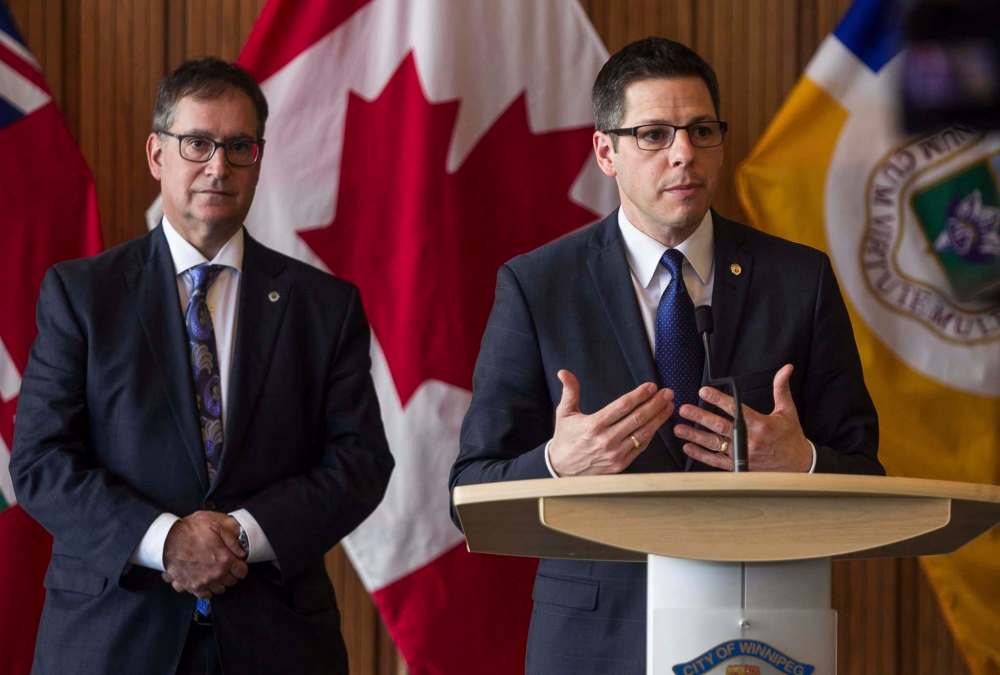
The arguments have already begun about the fairness and wisdom of some of these increases. Unlike provincial budgets, citizens will have the right to express their opinions in a series of meetings before council meets March 22 to approve the document.
The backdrop to all this Sturm und Drang, of course, is the city’s claim it lacks the revenue and financial levers to raise the money it needs to provide the services citizens want. Indeed, people want better roads, arenas, community centres, back lanes, and so on.
The city could rearrange its budget priorities by rolling frontage levies into property taxes, for example, but the bottom line would remain the same.
The city, unfortunately, undermined its own finances starting in the 1990s when it was obsessed with freezing or lowering taxes on the grounds Winnipeg was one of the highest-taxed cities in Canada. Today, the city claims it is one of the lowest-taxed in Canada, which might be something to brag about if the city’s infrastructure was shiny and new.
In recent years, the city has regularly raised taxes and user fees, but it is still falling behind.
The reasons are twofold:
First, Winnipeg needs to consider how it can reduce the cost of emergency services, which are nearly 50 per cent of the budget and growing. Other cities are grappling with the same challenge. At the current rate, however, police officers and firefighters will price themselves out of the market, so it should be in everyone’s interest to find a solution before cities are left with no choice but to start cutting.
Second, Canadian cities are too reliant on property taxes, a regressive form of taxation.
Mayor Brian Bowman and other Manitoba mayors have launched a campaign to increase their share of the provincial sales tax, but it’s a narrow vision of a new deal.

Cities should consider, as former mayor Glen Murray proposed 15 years ago, a much wider tax-sharing formula.
Many American cities, for example, share a variety of state taxes, including those levied on restaurant and liquor sales, gambling, land transfers, motor vehicles and tobacco.
That’s why property taxes are less than 20 per cent of municipal revenues in many American cities, compared with more than 50 per cent in their Canadian counterparts. Ratepayers in Manitoba also pay education taxes on their property bills, leaving municipalities little room to hike their share. That is something the provincial government has to address.
For now, citizens can debate whether Mayor Bowman and his executive policy committee have divided the revenue pie appropriately, or if it should be sliced another way.
Eventually, however, the city must contain emergency costs, while looking for a much broader revenue-sharing formula than exists now with the province.
Related Articles
Builders decry new city fees
Advertisement Advertise With Us
Advertisement Advertise With Us