

More effort required for blue bin
Advertisement
Read this article for free:
or
Already have an account? Log in here »
To continue reading, please subscribe:
Monthly Digital Subscription
$1 per week for 24 weeks*
- Enjoy unlimited reading on winnipegfreepress.com
- Read the E-Edition, our digital replica newspaper
- Access News Break, our award-winning app
- Play interactive puzzles
*Billed as $4.00 plus GST every four weeks. After 24 weeks, price increases to the regular rate of $19.95 plus GST every four weeks. Offer available to new and qualified returning subscribers only. Cancel any time.
Monthly Digital Subscription
$4.99/week*
- Enjoy unlimited reading on winnipegfreepress.com
- Read the E-Edition, our digital replica newspaper
- Access News Break, our award-winning app
- Play interactive puzzles
*Billed as $19.95 plus GST every four weeks. Cancel any time.
To continue reading, please subscribe:
Add Free Press access to your Brandon Sun subscription for only an additional
$1 for the first 4 weeks*
*Your next subscription payment will increase by $1.00 and you will be charged $16.99 plus GST for four weeks. After four weeks, your payment will increase to $23.99 plus GST every four weeks.
Read unlimited articles for free today:
or
Already have an account? Log in here »
Hey there, time traveller!
This article was published 21/04/2018 (2915 days ago), so information in it may no longer be current.
Reduce. Reuse. Recycle.
Rethink. Redefine. Re-educate.
Reorganize. Re-sort. Remove.
Rinse. Repeat.
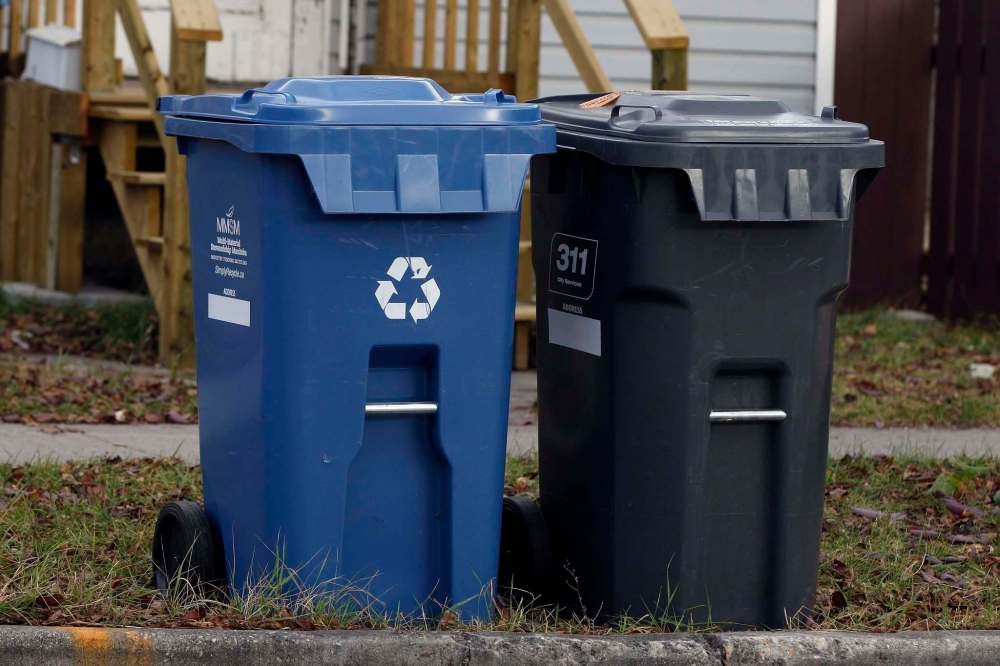
Winnipeggers suddenly find themselves with a lot more “Rs” to consider as they continue a practice that has, thankfully, become an eco-friendly part of most household routines. Sorting refuse from recyclables and placing each in the appropriate city-issued (garbage grey or Earth-friendly blue) two-wheeled bins for weekly collection will become more complicated and time consuming as a result of dramatic changes in the materials-recycling industry.
The looming changes became apparent this week during discussions at city hall related to the proposed awarding of a 10-year, $112-million contract for processing and marketing of curbside recycling to Canada Fibers, a Toronto-based firm. According to Winnipeg’s acting manager of solid waste, the requirements for acceptable blue-bin materials have become more stringent as the primary buyer of recyclables — China — has drastically lowered its limits for contamination in those goods.
Randy Park told the Free Press this week the city plans to shift the focus of public information related to its recycling program from merely encouraging citizens to recycle to teaching them to make sure items headed for the blue-bin cart are appropriate and sufficiently clean.
“Residents really need to educate themselves on what is acceptable,” Mr. Park explained. “In the past, when someone was unsure if it was acceptable, they just tossed it in the bin. Now, on a going-forward basis, if you’re not sure, find out — because that’s really important.”
China’s recycled-goods market demands a lower level of contamination in materials shipped to that country, meaning food jars must be rinsed clean before being placed in the bin and recycled newspapers cannot be contaminated by spilled coffee or food. In addition, the range of materials acceptable for recycling has been reduced — for instance, disposable beverage cups, long a staple of blue-bin castoffs, are no longer allowed and black-plastic containers commonly used for take-out food are also on the non-recyclable list.

What’s at risk for the city if residents don’t adhere to the expanded list of Rs, simply put, is money. A recent administrative report suggests Winnipeg earns about $3.3 million annually from recycled-materials sales, but more than half that income — $1.9 million — is at risk because of China’s adjusted contamination standards. If recyclables are too dirty, China won’t accept them; if China turns them away, the chances of finding another buyer anywhere in the world are slim.
When it comes to clearing out its trash, it’s time for Canada to clean up its act.
Educating the public about recycling is possible. After all, it wasn’t too many years ago that Winnipeggers were tossing everything into one big garbage bin and sending it all off to the landfill, with no regard whatsoever for the environmental consequences. Over time and after extensive public-education initiatives, Canadians embraced the notion of recycling; in 2018, most households’ blue bins contain more material on a weekly basis than their garbage-receptacle grey carts.
The new standards for sorting and cleaning will undoubtedly shift that balance back in the other direction, with many items that had been part of the recyclables load being transferred back to the landfill-bound refuse pile.
But we still have two other traditional “Rs” at our disposal. With recycling now demanding greater discernment and applied effort, it’s time for Winnipeggers to dedicate more time and energy to reducing the waste they produce and reusing whatever they can.