

Bold steps required to address surgical delays
Advertisement
Read this article for free:
or
Already have an account? Log in here »
To continue reading, please subscribe:

Digital Subscription
One year of digital access for only $205*
- Enjoy unlimited reading on winnipegfreepress.com
- Read the E-Edition, our digital replica newspaper
- Access News Break, our award-winning app
- Play interactive puzzles
*First annual payment billed as $205.00 + GST for one year. This annual subscription will automatically renew at $233.00 + GST every 52 weeks (10% off the regular annual price of $259.35). Offer available to new and qualified returning subscribers only. Cancel any time.
To continue reading, please subscribe:
Add Free Press access to your Brandon Sun subscription for only an additional
$1 for the first 4 weeks*
- Enjoy unlimited reading on winnipegfreepress.com
- Read the E-Edition, our digital replica newspaper
- Access News Break, our award-winning app
- Play interactive puzzles
*Your next Brandon Sun subscription payment will increase by $1.00 and you will be charged $17.95 plus GST for four weeks. After four weeks, your payment will increase to $24.95 plus GST every four weeks.
Read unlimited articles for free today:
or
Already have an account? Log in here »
Hey there, time traveller!
This article was published 04/10/2021 (1807 days ago), so information in it may no longer be current.
This is, one might argue, what austerity looks like. Or perhaps more fittingly in the current excruciating context, this is what austerity feels like.
Pain. Uncertainty. Hopelessness. Despair.
As the wait list for hip- and knee-replacement surgeries continues to grow in Manitoba — exacerbated greatly by the demands placed on the health-care system by the ongoing COVID-19 pandemic — frustrated orthopedic surgeons went public last week with a declaration that they are willing and able to step up the joint-replacement pace to address the crisis but are prevented by budgetary constraints from doing so.
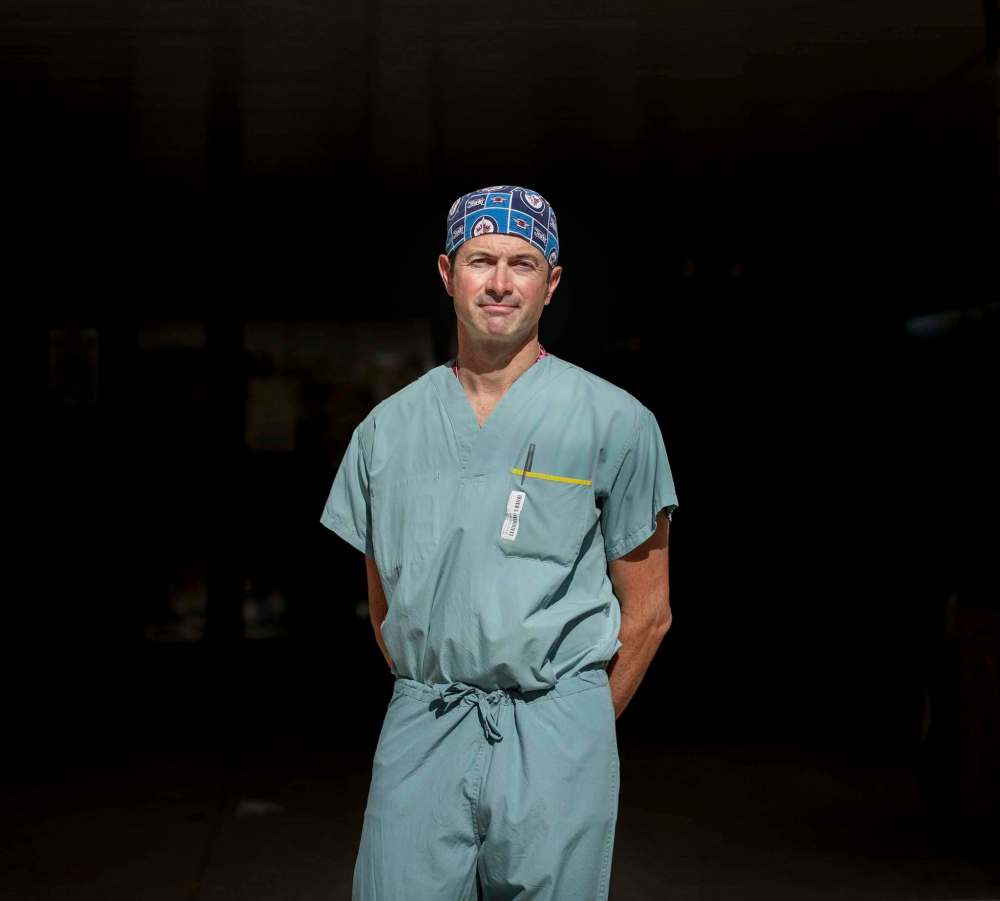
“We’ve got to clear this backlog to get back to a normal state, and that is certainly going to take a lot of work,” said Dr. Eric Bohm, an orthopedic surgeon at Concordia Hospital, professor of surgery at the University of Manitoba and the medical adviser for the Winnipeg Regional Health Authority’s orthopedic wait list. “Certainly, all the surgeons I know would be happy to do more cases.”
The backlog to which the physician refers — the number of Manitobans waiting in severe discomfort and with limited mobility, for a procedure that will allow them to resume some semblance of a normal life — has increased sharply since COVID-19 arrived in the province and stretched already-overburdened medical services to the breaking point. For Dr. Bohm alone, a list of 175 patients waiting for surgery has doubled to 350.
Despite the surgeons’ willingness to expand their slates, the province has maintained a cap of 4,000 on the number of surgeries that can be performed in the four facilities in which they are mainly done — Concordia and Grace hospitals, Winnipeg’s Health Sciences Centre and the Boundary Trails Health Centre between Morden and Winkler.

Three years ago, amid concerns over the growing wait list, the province agreed to increase the cap to 5,000 surgeries annually; that plan was scuttled as COVID-19-related demands caused delays and cancellations across the system. As a result, more Manitobans are consigned to ever-longer waiting lists while a fortunate few opt to travel out of province and pay for surgery at private clinics.
What the current situation related to knee- and hip-replacement surgeries illustrates — and, in fact, is relatable to a much wider range of health-service limitations and surgical delays — is the profound fragility of a system in which an aggressive and comprehensive restructuring was overlaid with austerity measures that called for across-the-board cuts during the massive, complex and controversial reorganization.
It was a plan doomed to almost-certain failure, as former premier Brian Pallister’s zealous pursuit of a balanced budget and a promised provincial sales tax reduction required strict cost containment in all departments. Successful navigation of systemic change combined with relentless restraint would only have been possible under the most ideal of conditions; becoming engulfed in a global pandemic while health care was in a state of flux effectively guaranteed the anguished frustration now being experienced by those in the seemingly interminable joint-replacement queue.
There is, of course, a path toward eventual alleviation of the strain. It involves spending — something the previous premier was passionately and resolutely disinclined to do. With a new premier-designate set to take the reins at month’s end, one hopes the leadership candidates’ pledges of a new regime informed by fewer dictates and more dialogue will lead to an opening of both productive conversation and the provincial purse, resulting in the funding of more hip and knee surgeries.
They say money talks. In this case, it could also be seen to walk — in the hips and knees of Manitobans whose long, agonizing wait has finally ended.