

Food-bank demand signals deeper issues
Advertisement
Read this article for free:
or
Already have an account? Log in here »
To continue reading, please subscribe:
Monthly Digital Subscription
$1 per week for 24 weeks*
- Enjoy unlimited reading on winnipegfreepress.com
- Read the E-Edition, our digital replica newspaper
- Access News Break, our award-winning app
- Play interactive puzzles
*Billed as $4.00 plus GST every four weeks. After 24 weeks, price increases to the regular rate of $19.95 plus GST every four weeks. Offer available to new and qualified returning subscribers only. Cancel any time.
Monthly Digital Subscription
$4.99/week*
- Enjoy unlimited reading on winnipegfreepress.com
- Read the E-Edition, our digital replica newspaper
- Access News Break, our award-winning app
- Play interactive puzzles
*Billed as $19.95 plus GST every four weeks. Cancel any time.
To continue reading, please subscribe:
Add Free Press access to your Brandon Sun subscription for only an additional
$1 for the first 4 weeks*
*Your next subscription payment will increase by $1.00 and you will be charged $16.99 plus GST for four weeks. After four weeks, your payment will increase to $23.99 plus GST every four weeks.
Read unlimited articles for free today:
or
Already have an account? Log in here »
Hey there, time traveller!
This article was published 13/12/2021 (1578 days ago), so information in it may no longer be current.
Manitobans are hungry, and getting hungrier. Local food banks have seen a marked increase in new clients recently, owing to a wave of food insecurity brought on by rising inflation and waning pandemic income-support programs.
This issue isn’t new, and it can’t be fixed by donating a tin to the bin.
In November, Harvest Manitoba distributed food to more than 83,000 people across the province, half of whom were children — a 76 per cent increase in demand over the same time last year. It was a similar story during the 2008 recession, when more than 40,000 people accessed emergency food support. Even after the financial catastrophe subsided, food bank use has continued to increase year over year.
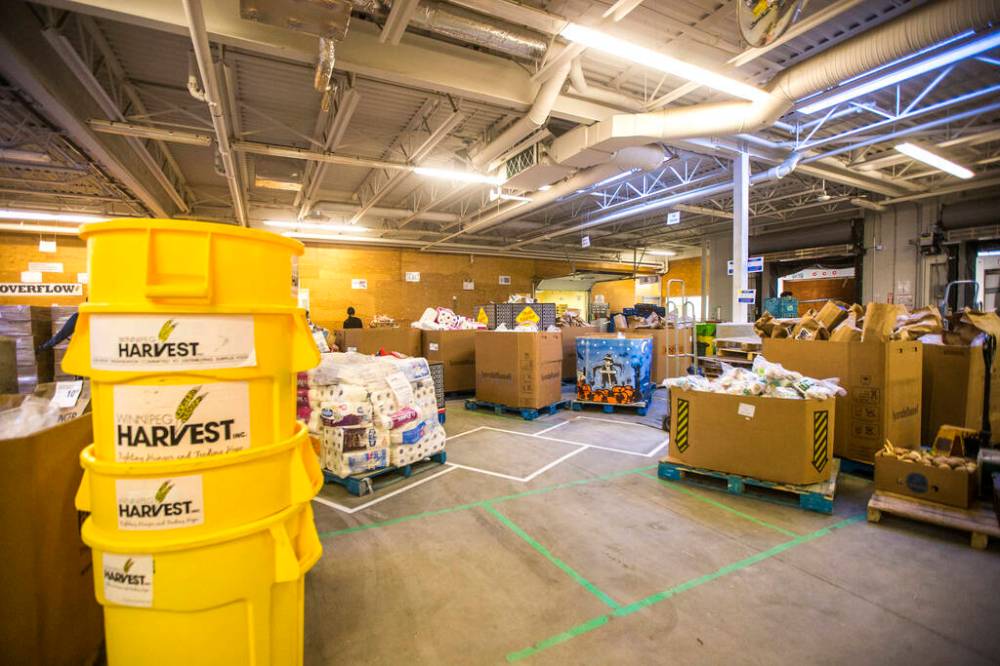
Harvest launched in 1985 as a temporary way to divert safe, edible food away from the landfill and into people’s cupboards. Since then, it has become one of the largest food distribution agencies in Canada. While Harvest plays an important role in addressing short-term hunger, it was never designed to solve the deep-rooted, systemic problems that lead to hunger in the first place. The agency says as much in a new report on food bank usage released last week.
Over six months, Harvest surveyed nearly 400 food bank clients to get a better sense of who is accessing its services and why. The results paint a picture of a province that is not doing enough to support its most vulnerable residents, leaving food banks and social service organizations to fill the gaps.
The majority of food bank users are women — a likely symptom of lower-income jobs compared to male counterparts, as well as greater caregiving responsibilities — and more than one-third are Indigenous, a disproportionate number compared to population.

Eighty per cent of clients live below the poverty line, with many citing disability or illness that impedes their ability to work. Those who are employed, however, still struggle to make ends meet. In Manitoba, someone working full-time at a minimum-wage job earns slightly more than $22,000 a year, which is below the national poverty line.
Food insecurity is a complex issue that has less to do with food and more to do with inadequate income, unaffordable housing, lack of child care and poor social safety nets. Those living at or below the poverty line often have little left over for groceries after monthly expenses are accounted for. Throw a pandemic or personal crisis into the mix, and food insecurity becomes inevitable. In 2018, more than 14 per cent of Manitobans regularly didn’t have enough to eat — a number that has almost certainly increased.
Higher personal income is one of the most effective ways to combat food insecurity. More money means less compromising over basic needs. More money means more food in the fridge. But it shouldn’t only be up to individuals to find ways to earn more cash; a minimum-wage job should provide a liveable salary.
Ontario recently announced plans to increase its minimum wage to $15 per hour. One policy won’t fix the problem, but if Manitoba followed suit, a higher minimum wage could lift thousands of people out of poverty and make a huge difference for the more than 180,000 residents who are food insecure.
The holidays are a time of giving and, yes, those who are able should continue to support local food banks — there is a clear immediate need, after all. But this year, while delivering hampers and donating tins of soup, we should also be demanding action from our elected officials. Hunger isn’t an individual issue; it’s a societal one.