

EU membership a useful barrier for Ukraine
Advertisement
Read this article for free:
or
Already have an account? Log in here »
To continue reading, please subscribe:

Digital Subscription
One year of digital access for only $205*
- Enjoy unlimited reading on winnipegfreepress.com
- Read the E-Edition, our digital replica newspaper
- Access News Break, our award-winning app
- Play interactive puzzles
*First annual payment billed as $205.00 + GST for one year. This annual subscription will automatically renew at $233.00 + GST every 52 weeks (10% off the regular annual price of $259.35). Offer available to new and qualified returning subscribers only. Cancel any time.
To continue reading, please subscribe:
Add Free Press access to your Brandon Sun subscription for only an additional
$1 for the first 4 weeks*
- Enjoy unlimited reading on winnipegfreepress.com
- Read the E-Edition, our digital replica newspaper
- Access News Break, our award-winning app
- Play interactive puzzles
*Your next Brandon Sun subscription payment will increase by $1.00 and you will be charged $17.95 plus GST for four weeks. After four weeks, your payment will increase to $24.95 plus GST every four weeks.
Read unlimited articles for free today:
or
Already have an account? Log in here »
Hey there, time traveller!
This article was published 04/07/2022 (1553 days ago), so information in it may no longer be current.
With bombs continuing to rain down on Ukraine, it’s understandable that the country’s immediate concern is defending itself in the short term. But in the long term, a decision on June 23 by the European Union could eventually provide the country with a degree of permanent protection from its Russian predator.
The 27-country bloc has approved Ukraine and its adjacent country Moldova as “candidate countries,” the first step toward EU membership. The hope, as expressed by Ukraine President Volodymyr Zelenskyy, is that initiating the process of EU memberships will free Ukraine from Russia’s sphere of influence.
He described it as “a unique and historical moment. Ukraine’s future is within the EU.”
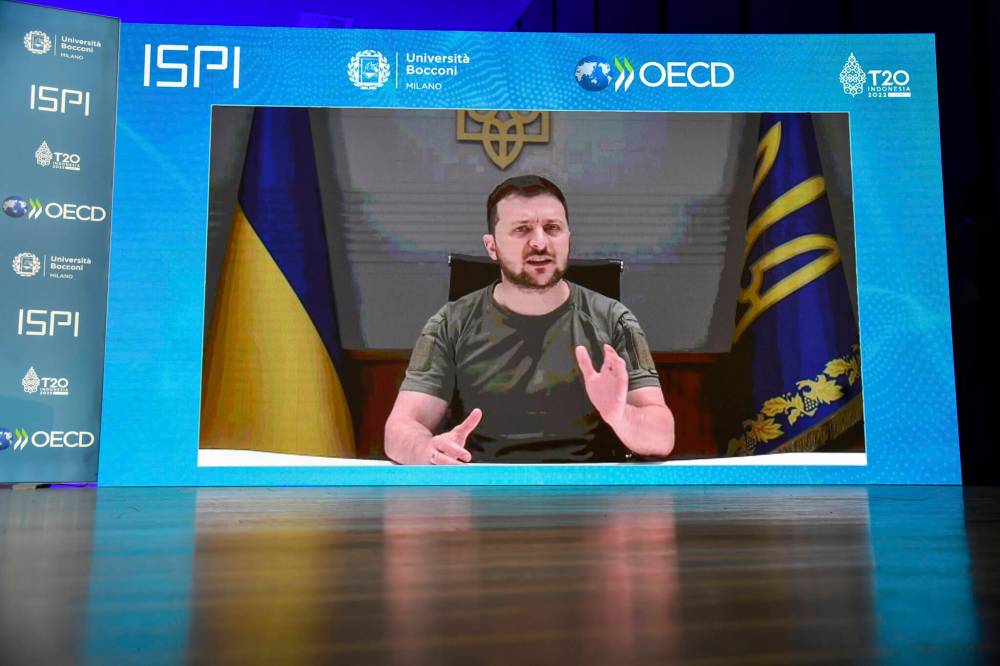
Since Ukraine applied to join the EU alliance days after the Russian invasion in February, the EU has accelerated the process that usually takes several years, moving at record speed to give the green light to candidacy.
The swift consideration given to Ukraine sends a commendable message of symbolic solidarity, but the membership status that would offer EU benefits and protection could still be years away, if ever.
The EU has made it clear Ukraine’s candidacy would be based on merit, without a fast-track process, despite the ongoing onslaught directed by Russian tyrant Vladimir Putin. The by-the-book procedure for full membership in the EU has taken from five to seven years for other countries.
It is by no means a given that Ukraine will be able to comply with extensive criteria that must be successfully negotiated before EU membership is granted. Ukraine is historically rife with corruption and EU requires entrenched practices of human rights, democracy and rule of law. Achieving membership will also mean reducing the power of oligarchs and restoring legitimacy to Ukraine’s court system.
Fulfilling the EU demands would mean radical systemic changes for Ukraine, but the motivations for change are as powerful as the ongoing devastation of Ukraine and the substantial benefits of joining the EU. Membership in the political and economic union would bolster Ukraine’s economy and include benefits such as free movement of people and products within the alliance.
Also of considerable interest, given Ukraine’s current invasion by a much larger country, membership in the EU includes a mutual defence provision that obliges countries to help a member country if it is attacked.
It’s to be expected Mr. Putin would resent Ukraine’s membership in the EU, in the same way a schoolyard bully is alarmed when his perennial victim is suddenly bolstered by a crowd of supporters. It’s of significant concern that this bully is armed with nuclear weapons capable of colossal destruction.

Mr. Putin has previously said he opposes Ukraine’s historic desire to join the North Atlantic Treaty Organization military alliance, but that he has “nothing against” Ukraine joining the EU.
However, the Kremlin said it will give the application “increased attention” because the EU is considering its own defence force. “The military, defence and security components are being discussed,” the Kremlin said. “We are, of course, observing it all thoroughly.”
For understandable reasons, Mr. Zelenskyy distrusts soft words from the Kremlin and instead warns that Russia might retaliate over Ukraine’s application to join the EU
“Obviously, we should expect greater hostile activity from Russia,” he said. “And not only against Ukraine, but also against other European countries.”
Achieving the social and political transformations necessary to join the EU will challenge Ukraine, but the alternative is as bleak as the death toll of the approximately 14,000 Ukranians killed in the first four months of the Russian invasion. For Ukraine, the EU offers an escape route out of Russia’s evil orbit.
Related Articles
'Hell on earth': Ukrainian soldiers describe eastern front
Advertisement Advertise With Us
Advertisement Advertise With Us