

Pandemic prompts re-evaluation of tipping
Advertisement
Read this article for free:
or
Already have an account? Log in here »
To continue reading, please subscribe:

Digital Subscription
One year of digital access for only $205*
- Enjoy unlimited reading on winnipegfreepress.com
- Read the E-Edition, our digital replica newspaper
- Access News Break, our award-winning app
- Play interactive puzzles
*First annual payment billed as $205.00 + GST for one year. This annual subscription will automatically renew at $233.00 + GST every 52 weeks (10% off the regular annual price of $259.35). Offer available to new and qualified returning subscribers only. Cancel any time.
To continue reading, please subscribe:
Add Free Press access to your Brandon Sun subscription for only an additional
$1 for the first 4 weeks*
- Enjoy unlimited reading on winnipegfreepress.com
- Read the E-Edition, our digital replica newspaper
- Access News Break, our award-winning app
- Play interactive puzzles
*Your next Brandon Sun subscription payment will increase by $1.00 and you will be charged $17.95 plus GST for four weeks. After four weeks, your payment will increase to $24.95 plus GST every four weeks.
Read unlimited articles for free today:
or
Already have an account? Log in here »
Hey there, time traveller!
This article was published 24/10/2022 (1414 days ago), so information in it may no longer be current.
You’ve heard of pandemic fatigue. You’ve heard of Zoom fatigue. Now, a new kind fatigue has arrived on the scene: tipping fatigue.
During the height of the pandemic, many people re-calibrated their approach to tipping. They were galvanized to support their favourite local restaurants, many of which were closed to in-person dining, to ensure their survival. This ushered in an era of tipping on services people might not have tipped on before, such as on pick-up takeout orders.
Services that were figuring out ways to stay open during the pandemic were also navigating new safety protocols and equipment requirements — as well as new risks — which also made people want to open their wallets in order to express their appreciation.
BORIS MINKEVICH / WINNIPEG FREE PRESS FILES
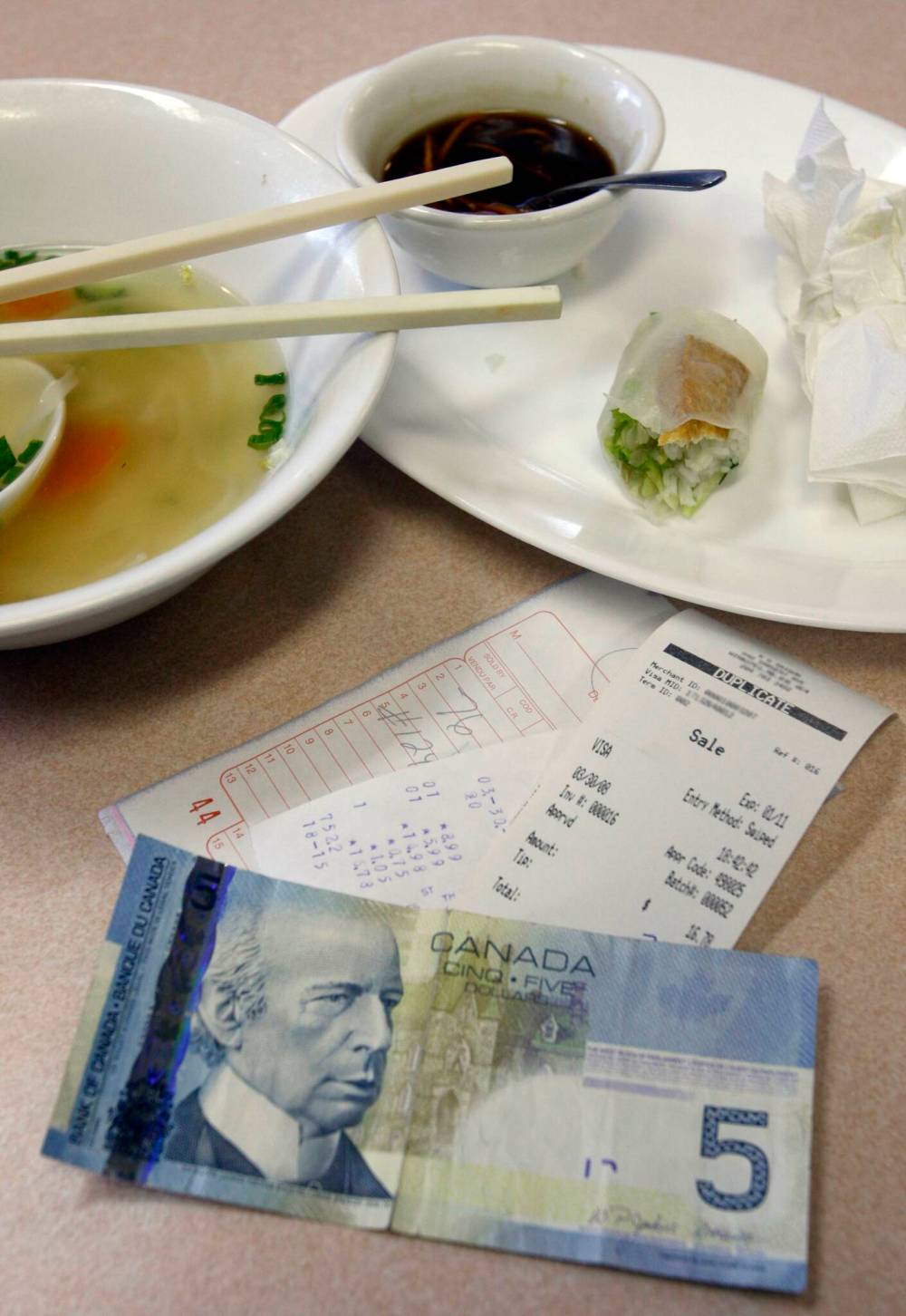
The pandemic introduced ‘tipping fatigue’ to consumers’ experience.
It wasn’t long before the practice began to spill over into other industries where, unlike in hospitality, tipping is not an accepted norm.
Now that the world has reopened amid a period of inflation — and the ongoing pandemic — there’s mounting pressure to tip above and beyond a rate with which people are comfortable.
Tipping sits at the confluence of social norms and peer pressure, which is exploited by point-of-sale machines and app-based payment systems. Part of the “frictionless experience” promised by technology is that we no longer have to engage in the awkward dance of servers asking patrons how much they want to leave as a tip. But tipping prompts make it far easier to opt into tipping — often at higher percentages than someone might otherwise leave — than they do to opt out.
For a long time, a 15-percent tip was considered standard. Now 20 per cent is increasingly the norm. Many point-of-sale systems have the default tip prompt set at 18 per cent. Some machines even assign comments to the tip value —“good,” “great,” “wow!” — which, of course, taps into people’s anxiety around being a “good tipper” and what that quality says about them.
No one wants to be seen as a miserly Grinch, even if that 20 per cent tip didn’t necessarily correspond with the quality of the service.
Tipping has tipped from a discretionary show of appreciation to something that feels compulsory, which can make some people chafe. And while many may want to support, say, a server who must rely on tips to top up their income, it’s not always transparent where, exactly, those tips are ending up.

But if one feels tip fatigue, image how tiring it must be for front-facing service professionals who have to withstand abuse from customers who think they are always right, or lose their tips entirely over issues that are not in their control — such as rising menu prices.
They are also people navigating the rising costs of housing, groceries and gas, like everyone else. The pinch is felt everywhere.
While “tipping fatigue” may be a buzzy phrase, the debate over whether tipping should regulated or abolished completely is practically as old as the kitchen brigade system. Some believe it creates inequities in environments such as restaurants, or offers an excuse for employers to pay less — especially in the U.S., where tip culture is deeply entrenched.
Gratuities, as well as how one responds to “tipping fatigue,” are still mostly in the consumer’s control, however. Unless the tip is added to the cheque, one is still free to leave the tip they feel comfortable with (you may just have to do some math). And thinking about who we tip — and who we don’t tip — and why we tip at all might be a useful exercise in building compassion.
And here’s another tip: it costs absolutely nothing to be patient and kind.