

Danger shouldn’t be part of the job
Advertisement
Read this article for free:
or
Already have an account? Log in here »
To continue reading, please subscribe:

Digital Subscription
One year of digital access for only $205*
- Enjoy unlimited reading on winnipegfreepress.com
- Read the E-Edition, our digital replica newspaper
- Access News Break, our award-winning app
- Play interactive puzzles
*First annual payment billed as $205.00 + GST for one year. This annual subscription will automatically renew at $233.00 + GST every 52 weeks (10% off the regular annual price of $259.35). Offer available to new and qualified returning subscribers only. Cancel any time.
To continue reading, please subscribe:
Add Free Press access to your Brandon Sun subscription for only an additional
$1 for the first 4 weeks*
- Enjoy unlimited reading on winnipegfreepress.com
- Read the E-Edition, our digital replica newspaper
- Access News Break, our award-winning app
- Play interactive puzzles
*Your next Brandon Sun subscription payment will increase by $1.00 and you will be charged $17.95 plus GST for four weeks. After four weeks, your payment will increase to $24.95 plus GST every four weeks.
Read unlimited articles for free today:
or
Already have an account? Log in here »
Hey there, time traveller!
This article was published 24/04/2023 (1254 days ago), so information in it may no longer be current.
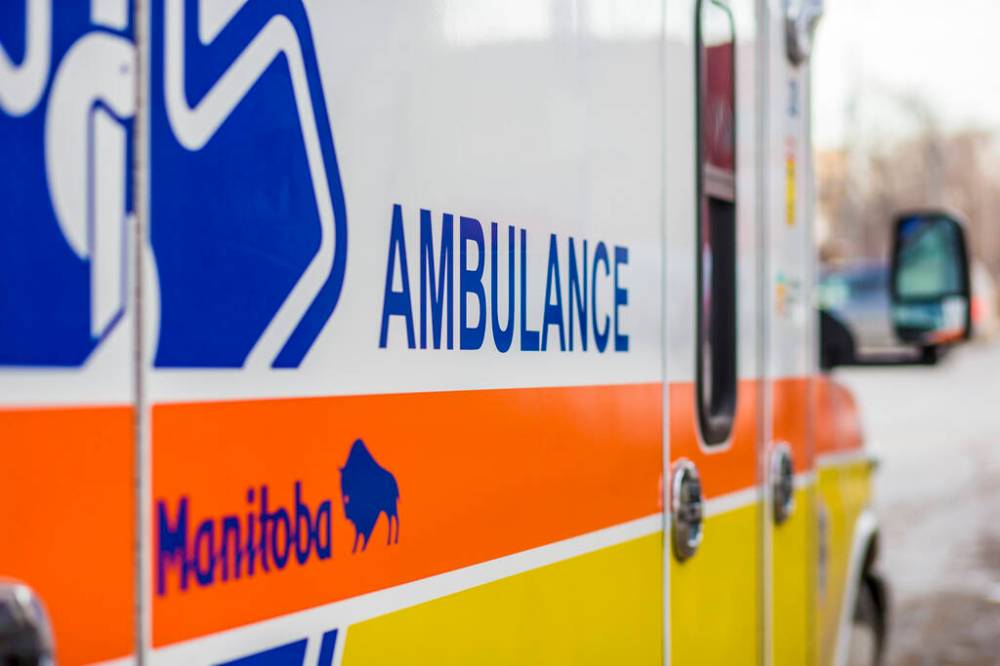
On Easter Sunday, a Winnipeg Fire Paramedic Service paramedic was hospitalized after an attack by a patient inside an ambulance.
The victim? A relatively newly hired paramedic.
“To somebody new to the WFPS, this is the type of thing that makes it tough to retain paramedics here — the constant violence and situations that paramedics find themselves in.” Ryan Woiden, president of Manitoba Government and General Employees’ Union Local 911, told the Free Press. “I don’t think that there’s a paramedic who works for the WFPS today that hasn’t been assaulted, been nearly assaulted, verbally assaulted or knows somebody who’s been assaulted.”
MIKAELA MACKENZIE / WINNIPEG FREE PRESS FILES
A worker died of carbon monoxide poisoning in a home under construction in Charleswood Wednesday evening. Winnipeg Fire Paramedic Service crews were called to the medical emergency at the construction site on Beck Cove shortly after 8 p.m. Wednesday, the service said Thursday.
A paramedic has to watch for a lot of things on the job: they have to monitor vital signs and treat injuries, administer drugs and set up IVs, establish the changing condition of their patients and try to determine the level of care and the speed of medical intervention their charges may need.
They have to do it trusting their own skills and training at the very leading edge of the medical system, with little in the way of a safety net.
They’re also often collecting information the public might never even think of: at an accident scene, they are keeping track of things that will be needed later to assess likely injury and potential treatments.
The mechanics of injury — that is, the pattern and forces that cause injury at an accident — make up an important package of detail that other medical professionals will use to try to establish the types and severity of injuries that may not be readily apparent.
What’s more, emergency workers are keeping mental notes that will later have to be recorded formally: explaining what you did, when and why is part of the job now, especially if there’s a serious and unexpected outcome in a case.
Try doing all that while also trying to stay alert to the fact there is a risk your patient may lash out to injure you — you, the very person who is trying to help them. You can even be attacked while you essentially have your back turned, while you’re attending to a serious injury.
Patients can become violent for a number of reasons —methamphetamine overdoses, mental-health issues, some medical conditions and even head injuries can make a patient become violent with the very people who are trying to give them care.
It’s perhaps understandable, but it’s not acceptable — because paramedics and other emergency workers have every bit as much of a right to a safe workplace as anyone else.
Paramedics are allowed to wait for additional help before heading into a potentially violent situation — but faced with a situation in which someone is in clear medical distress, that’s a hard thing to ask professional caregivers to do.
To be clear, it’s not only paramedics who face risks: all sorts of health-care workers face violence in the workplace, and the problem only seems to have grown since the pandemic, and as health-care resources become even more stretched and strained.

There are steps that can be taken to help the situation, something the WFPS says it is open to doing.
Some suggestions? Slash-proof vests in case a violent patient is armed with a knife or other sharp-edged weapon, the ability to search potentially violent patients for weapons — and always, training. Options exist to at least lessen the risk.
But they can’t come soon enough.
If the job can’t be done safely, we will not be able to find trained professionals willing to do it.
Being a professional caregiver shouldn’t mean the public expects you to risk your life.