

Some insight into the obvious
Advertisement
Read this article for free:
or
Already have an account? Log in here »
To continue reading, please subscribe:
Digital Subscription
One year of digital access for only $1.44 a week*
- Enjoy unlimited reading on winnipegfreepress.com
- Read the E-Edition, our digital replica newspaper
- Access News Break, our award-winning app
- Play interactive puzzles
*Billed as $5.77 plus GST every four weeks. After 52 weeks, price increases to the regular rate of $19.95 plus GST every four weeks. Offer available to new and qualified returning subscribers only. Cancel any time.
To continue reading, please subscribe:
Add Free Press access to your Brandon Sun subscription for only an additional
$1 for the first 4 weeks*
- Enjoy unlimited reading on winnipegfreepress.com
- Read the E-Edition, our digital replica newspaper
- Access News Break, our award-winning app
- Play interactive puzzles
*Your next Brandon Sun subscription payment will increase by $1.00 and you will be charged $17.95 plus GST for four weeks. After four weeks, your payment will increase to $24.95 plus GST every four weeks.
Read unlimited articles for free today:
or
Already have an account? Log in here »
Hey there, time traveller!
This article was published 16/06/2023 (1218 days ago), so information in it may no longer be current.
In tendering his resignation from the role of special rapporteur on foreign interference, former governor general David Johnston offered what, at first glance, seems an astute observation:
“When I undertook the task of independent special rapporteur on foreign interference, my objective was to help build trust in our democratic institutions,” Johnston wrote in his letter to Prime Minister Justin Trudeau. “I have concluded that, given the highly partisan atmosphere around my appointment and work, my leadership has had the opposite effect.”
While this assessment strikes the figurative nail squarely upon the head, the suggestion it’s a just-arrived-upon moment of clarity prompts a rather vexing question: how could Johnston — by all accounts an esteemed academic and statesman — ever have believed his involvement in the partisan tug-of-war over how to address allegations of interference in Canadian politics could be anything but divisive and doomed to fail?
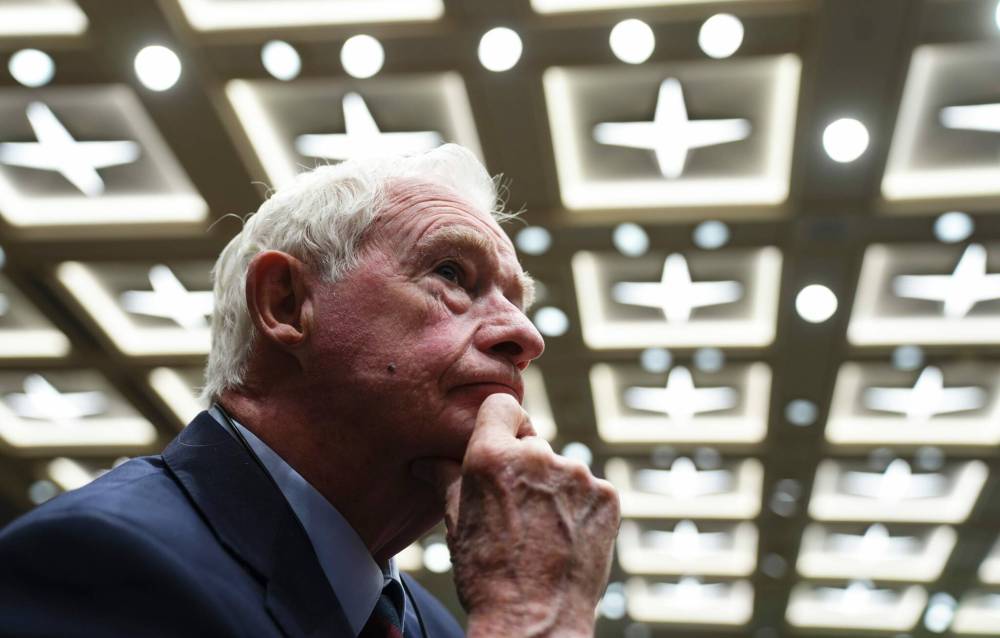
Sean Kilpatrick / Canadian Press Files
David Johnston, the former Independent Special Rapporteur on Foreign Interference, now seems to have realized what everyone else already knew.
Any other outcome is difficult to imagine. Trudeau’s decision to appoint Johnston to this nebulously titled position was fraught from the outset. And the fault for the ultimate failure of the appointee’s murky mission belongs fully to Trudeau; he placed Johnston in a no-win situation.
The issue at the core of this belaboured and bungled process could hardly be more grave — the assertion, based on rather compelling evidence, that agents of the Chinese government sought actively to interfere in this country’s democratic processes during the 2019 and 2021 federal elections, by funding certain candidates and engaging in misinformation campaigns (China has denied any such meddling occurred).
After the allegations were made public by news-media reporting of information that had been gathered by the Canadian Security Intelligence Service (CSIS) and provided to the prime minister, opposition parties demanded a public inquiry into the alleged interference and the Liberal government’s failure to adequately confront it.
Rather than calling a full public inquiry, in March Trudeau opted to appoint Johnston — a longtime close friend of the prime minister’s family — as special rapporteur. Because of those personal ties, he immediately became the target of opposition-party criticism and skepticism regarding his perceived inability to impartially assess the prime minister’s actions.

His preliminary report, issued last month, advised a public inquiry is unnecessary and, in fact, inadvisable, owing to the sensitivity of the intelligence involved. Rather, he concluded, it would be best if he, in his continuing role, oversaw public hearings which would inform his final report, due in October.
Opposition parties, not surprisingly, would have none of it; an NDP motion in the House of Commons, supported by the Conservatives and Bloc Quebecois, called for Johnston to step aside because of an “appearance of bias.”
In the aftermath of Johnston’s inevitable resignation, Conservative Party Leader Pierre Poilievre professed a willingness to work with other parties to set the terms of reference for a public inquiry Trudeau’s government now says it’s willing to entertain. Whether that gesture turns out to be sincere or just more of the Tory leader’s signature partisan showboating remains to be seen.
The main takeaway from this sorry spectacle is that it was all so unnecessary. Trudeau, yet again, made a decision that suggests an abiding sense of entitlement (remember the private-island vacations? The SNC-Lavalin fiasco?) and an inclination to protect his government from possible security-lapse humiliation rather than focusing solely on preserving the nation’s democratic integrity.
One might argue it’s Canada, not just its current government, that now stands embarrassed. And one might wonder if somewhere out there, mischievous foreign meddlers are sharing a rather satisfied chuckle at what their handiwork has wrought.