

Keeping the door open at city hall
Advertisement
Read this article for free:
or
Already have an account? Log in here »
To continue reading, please subscribe:

Digital Subscription
One year of digital access for only $205*
- Enjoy unlimited reading on winnipegfreepress.com
- Read the E-Edition, our digital replica newspaper
- Access News Break, our award-winning app
- Play interactive puzzles
*First annual payment billed as $205.00 + GST for one year. This annual subscription will automatically renew at $233.00 + GST every 52 weeks (10% off the regular annual price of $259.35). Offer available to new and qualified returning subscribers only. Cancel any time.
To continue reading, please subscribe:
Add Free Press access to your Brandon Sun subscription for only an additional
$1 for the first 4 weeks*
- Enjoy unlimited reading on winnipegfreepress.com
- Read the E-Edition, our digital replica newspaper
- Access News Break, our award-winning app
- Play interactive puzzles
*Your next Brandon Sun subscription payment will increase by $1.00 and you will be charged $17.95 plus GST for four weeks. After four weeks, your payment will increase to $24.95 plus GST every four weeks.
Read unlimited articles for free today:
or
Already have an account? Log in here »
Hey there, time traveller!
This article was published 20/06/2023 (1190 days ago), so information in it may no longer be current.
It looks like virtual presentations are here to stay at Winnipeg city hall.
Earlier this month, Coun. Russ Wyatt raised a motion to require applicants for new developments to appear in-person at East Kildonan-Transcona community committee public hearings for their projects, removing the option to participate remotely. He cited audio and video glitches as a problem.
Other council members believe virtual participation should be open to all, permanently. The executive policy committee has rejected Wyatt’s motion.
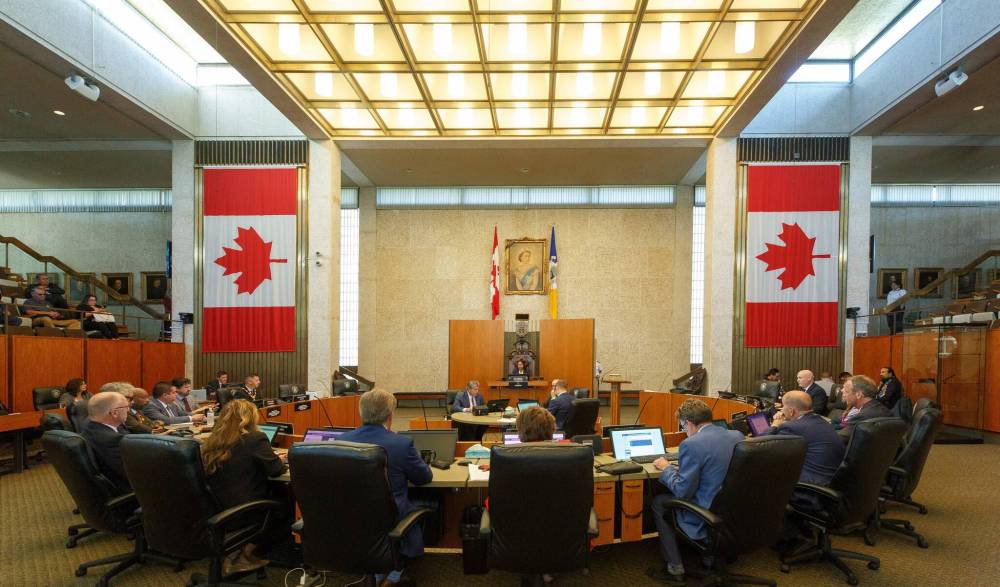
MIKE DEAL / WINNIPEG FREE PRESS/FILE
Citizens should still be able to make remote presentations to city council.
“I think as a council and as a city organization, we should, for the sake of the public, make use of the technology that’s available to us to make it easier for people to participate in democratic processes,” said Mayor Scott Gillingham.
He’s absolutely right. There is no downside to keeping a remote option for those who may need it — whether we’re talking about city hall or in other spheres of society.
One positive upshot of the pandemic was major gains in accessibility. When the first COVID-19 lockdowns sent everyone home, many accommodations — which disabled people and accessibility advocates have long been asking for, by the way — were not only rolled out quickly but embraced widely.
In particular, the ubiquity of video conferencing tools such as Zoom — to the point where “Zoom” is now a verb — opened up life considerably for people with disabilities.
Remote, hybrid and flexible office hours made work more accessible. Telemedicine and virtual medical and psychological appointments meant immunocompromised and people with mobility challenges didn’t have to leave their homes to access care.
Professional opportunities such as conferences, panel discussions or networking events, cultural events such as plays, ballets, concerts, social gatherings such as birthday parties, baby showers and book clubs, and faith-based ceremonies and celebrations all went virtual, allowing everyone to participate in them.

Fitness classes also went virtual, meaning that people with physical challenges could also access wellness in their own homes.
Pandemic interventions meant to reduce droplet spray, such as the use of microphones at the front of the classroom or having the music at a lower volume in public spaces so people don’t need to shout over it, also improve accessibility for people who are hard of hearing or have sensory sensitivities. The list goes on and on.
These are a handful of examples of accommodations that should not be rolled back because COVID-19 is no longer considered a public health emergency. In fact, organizations should build on the precedent set by the pandemic and be working toward expanding accommodations by consulting with disabled and neurodivergent people and those with chronic illnesses. There is no downside to making things, whether they are cultural events or conferences or city hall presentations, more accessible to people. In fact, it may encourage participation if people feel welcomed instead of boxed out by institutions.
One way to do this is by investing in better technology for remote access, so that audio and video glitches and delays are less of a problem. That will necessarily include improving cellular and Wi-Fi access for people who live in rural areas.
Removing barriers to participating in society — including in civic politics and democracy — is the right move.