

Honesty should be best policy for military
Advertisement
Read this article for free:
or
Already have an account? Log in here »
To continue reading, please subscribe:
Monthly Digital Subscription
$1 per week for 24 weeks*
- Enjoy unlimited reading on winnipegfreepress.com
- Read the E-Edition, our digital replica newspaper
- Access News Break, our award-winning app
- Play interactive puzzles
*Billed as $4.00 plus GST every four weeks. After 24 weeks, price increases to the regular rate of $19.95 plus GST every four weeks. Offer available to new and qualified returning subscribers only. Cancel any time.
Monthly Digital Subscription
$4.99/week*
- Enjoy unlimited reading on winnipegfreepress.com
- Read the E-Edition, our digital replica newspaper
- Access News Break, our award-winning app
- Play interactive puzzles
*Billed as $19.95 plus GST every four weeks. Cancel any time.
To continue reading, please subscribe:
Add Free Press access to your Brandon Sun subscription for only an additional
$1 for the first 4 weeks*
*Your next subscription payment will increase by $1.00 and you will be charged $16.99 plus GST for four weeks. After four weeks, your payment will increase to $23.99 plus GST every four weeks.
Read unlimited articles for free today:
or
Already have an account? Log in here »
Hey there, time traveller!
This article was published 28/07/2023 (980 days ago), so information in it may no longer be current.
In Canada, respect for the military runs deep. While this is most evident during annual Remembrance Day services, Canadians’ sense of appreciation for enlisted people extends beyond World War-era heroism; in 2023, the sight of a person in uniform is often an invitation to many to offer thanks (and in the case of some businesses, maybe a discount).
It is unfortunate, then, that Canada’s Armed Forces seem to lack the same regard for the public it serves, at least when it comes to being honest and forthright about what its members get up to.
On Monday, the Free Press reported it had obtained documents regarding more than 80 soldiers stationed at CFP Winnipeg and CFP Shilo which hinted at misbehaviour in the ranks but offered little else. Heavily redacted, the documents leave a reader in the dark about the details of the offences and the subsequent discipline for them, among other pieces of useful information.
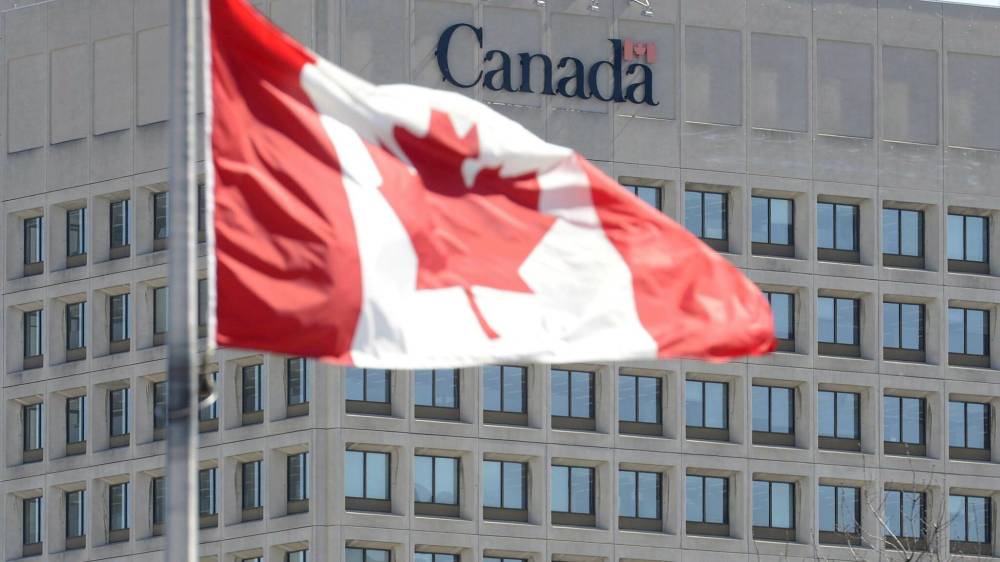
Adrian Wyld / Canadian Press Files
Department of National Defence headquarters in Ottawa.
It’s a discouraging bit of secrecy considering that recent years have proved the Armed Forces’ reticence in letting the public know about concerning developments among its troops. For example, it was only after the Free Press exposed ex-reservist Patrik Mathews as a neo-Nazi recruiter that the military released classified documents showing it had investigated Mathews as a possible threat.
In 2021, it was widely reported that extremist elements within the Ukrainian military bragged on social media about the training they received from Canadian troops, which pointed to a lack of proper vetting of who was benefiting from Canadian military instruction.
Recent years have also brought to light a long and deep-seated crisis of sexual harassment in the military — one assault survivor called the problem a “national embarrassment.”
Not many would say the Canadian military constitutes a spoiled bunch. Unlike our American neighbours, which floods its armed forces with cash, funding and reverence (arguably to the detriment of all other institutions), Canada’s military is often comically underequipped and underfunded.
However, many of the military’s public embarrassments have been a result of discipline and ethics, not resources. Among the records requested by the Free Press, there were many reports of soldiers being absent without leave; regarding the redacted information, a lack of luxury (or even essentials) does not preclude the military’s ability to provide the public with information to which it is entitled.
Whatever a pittance it may be compared to our neighbours’ military budget, the Canadian Armed Forces nevertheless lives on the taxpayers’ dime. Soldiers and their commanding officers are paid out of the public purse and therefore, have a public responsibility to be accountable when the time comes for it.

So when a soldier gets into a fight in Latvia or starts a fire on base (per this paper’s earlier coverage), and someone requests the records for that soldier down the line, that information should be complete. Cynicism about its capabilities aside, the military is no joke; it is a gravely serious institution, with a serious duty to perform, and when its members behave badly it carries significance on many levels.
The people we allow to wear the Canadian uniform, by their actions, can enhance or diminish Canada’s reputation abroad, or the military’s reputation within our own borders. Therefore it cannot be a place where its members can make trouble (or even commit crimes) under a veil of secrecy.
It is neither realistic, nor is it necessary, for the Armed Forces to volunteer information regarding offences and punishments for all its enlisted members. Per a 2021 census, there were more than 97,000 Canadians counted as serving in the Armed Forces. We can’t expect to be told about every single one at regular intervals.
We can, however, expect that when a question is asked about one of our enlisted troops, it is answered in full. Nothing left on the table.
It’s a matter of respect — and it needs to go both ways.