

Nature moves quicker than you think
Advertisement
Read this article for free:
or
Already have an account? Log in here »
To continue reading, please subscribe:

Digital Subscription
One year of digital access for only $205*
- Enjoy unlimited reading on winnipegfreepress.com
- Read the E-Edition, our digital replica newspaper
- Access News Break, our award-winning app
- Play interactive puzzles
*First annual payment billed as $205.00 + GST for one year. This annual subscription will automatically renew at $233.00 + GST every 52 weeks (10% off the regular annual price of $259.35). Offer available to new and qualified returning subscribers only. Cancel any time.
To continue reading, please subscribe:
Add Free Press access to your Brandon Sun subscription for only an additional
$1 for the first 4 weeks*
- Enjoy unlimited reading on winnipegfreepress.com
- Read the E-Edition, our digital replica newspaper
- Access News Break, our award-winning app
- Play interactive puzzles
*Your next Brandon Sun subscription payment will increase by $1.00 and you will be charged $17.95 plus GST for four weeks. After four weeks, your payment will increase to $24.95 plus GST every four weeks.
Read unlimited articles for free today:
or
Already have an account? Log in here »
Hey there, time traveller!
This article was published 26/09/2023 (1069 days ago), so information in it may no longer be current.
Ain’t nature wonderful?
Not always.
The American Centers for Disease Control and Prevention (CDC) is warning about a new parasite, the rat lungworm, being found in the brains of humans in the southeastern United States.
Files
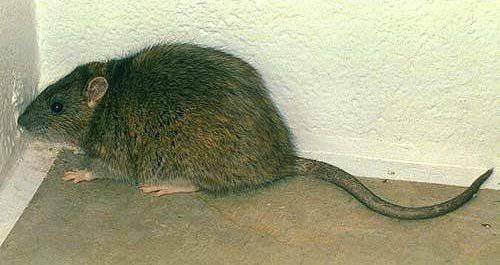
Norway rat — a potential host.
The rat lungworm, Angiostrongylus cantonensis, is a creature with a fascinating — almost horror-movie-like — life cycle.
Get ready.
The creature’s eggs and larvae are coughed up from an infected rat’s lungs, swallowed, and larvae are excreted in feces. The larvae either burrow into, or are eaten by, slugs and snails, go through three larval stages inside their new gastropod hosts, and, after the snails are eaten by a new round of rats, travel through the bloodstream to the central nervous system and brain, and then moult twice before becoming full adults, which then mate in their host’s pulmonary artery, sending eggs out through the lungs once again. A complicated process, with much left to chance.
(The rat lungworm isn’t even the only parasite that works this way. Elaphostrongylus rangiferi, a reindeer brainworm, is similar, with four particular types of snails being the most successful midstream hosts.)
Problem is, A. cantonensis is showing up in a new place: a study has found new concentrations of the parasite in Atlanta, Ga.
“Clearly, A. cantonensis lungworm in urban rat populations, gastropod intermediate hosts, and other paratenic hosts in the populous greater Atlanta area pose a possible threat to the health of humans and domestic, free-ranging, and captive animals,” the CDC warns. “Although details of A. cantonensis invasion and spread are not fully known, identification of introduced gastropods as intermediate hosts and Cuban tree frogs as paratenic hosts in the southern United States suggest anthropogenic disturbance and climate-induced change in local food webs might be amplifying A. cantonensis transmission.” So, climate change may be resulting in increased transmission (climate change is apparently increasing the incidence of the reindeer brainworm, too).
The rat lungworm is also ending up in human brains, either by humans accidentally eating snails and slugs on improperly washed vegetables in salads, or by eating undercooked things like shrimp or freshwater crab that have been dining on the snails and slugs. To make matters worse, drugs used to fight the parasite may actually make the symptoms worse — in the worst-case scenario, the parasitic infestations can cause paralysis, coma, and even death.
So, why tell you all this?
Not to horrify or suggest you’re in any cinematically flamboyant new danger, but to point out that nature is infinitely complex, right down to parasitic worms— and beyond — and that if we think we are in the driver’s seat on any of it, we’re horribly wrong.
There’s probably little danger rat lungworms will find their way to your brain in Manitoba.

But this isn’t an editorial about a threat, it’s an editorial about a fact.
Overall, nature is far more adaptable than the human species is: it doesn’t matter that we have big brains and rule the roost at the moment. It still takes 20 years or so for each new generation of humans to appear.
Viruses replicate every eight to 72 hours. Fourteen days after a house fly egg hatches, the fly can reproduce. And a successful mutation in an existing creature is more likely the quicker it reproduces.
Nature adapts to any range of circumstances — its variations and potential variations are near endless. Some elements of the natural world are far more able to adapt to change than we are. And some of those adaptations have greater dangers for us than others.
We forget, at our peril, that we are just one small formulation in a huge and changing natural world. And when we change the world, it reacts. Easily.