Time to work together
Advertisement
Read this article for free:
or
Already have an account? Log in here »
To continue reading, please subscribe:

Digital Subscription
One year of digital access for only $205*
- Enjoy unlimited reading on winnipegfreepress.com
- Read the E-Edition, our digital replica newspaper
- Access News Break, our award-winning app
- Play interactive puzzles
*First annual payment billed as $205.00 + GST for one year. This annual subscription will automatically renew at $233.00 + GST every 52 weeks (10% off the regular annual price of $259.35). Offer available to new and qualified returning subscribers only. Cancel any time.
To continue reading, please subscribe:
Add Free Press access to your Brandon Sun subscription for only an additional
$1 for the first 4 weeks*
- Enjoy unlimited reading on winnipegfreepress.com
- Read the E-Edition, our digital replica newspaper
- Access News Break, our award-winning app
- Play interactive puzzles
*Your next Brandon Sun subscription payment will increase by $1.00 and you will be charged $17.95 plus GST for four weeks. After four weeks, your payment will increase to $24.95 plus GST every four weeks.
Read unlimited articles for free today:
or
Already have an account? Log in here »
Hey there, time traveller!
This article was published 07/10/2023 (1074 days ago), so information in it may no longer be current.
In the aftermath of Tuesday’s provincial election, there will an intense but necessary period of renewal, revitalization, redefinition and repair. The New Democratic Party government of premier-designate Wab Kinew will have its figurative hands full as it seeks to systematically address the many issues the party promised to prioritize should voters offer it the opportunity to lead.
Voters, most overwhelmingly within the city of Winnipeg, have given the NDP that chance with an emphatic majority mandate. What happens in the coming days and weeks will be of abiding interest to all Manitobans, regardless of for whom their ballots were cast.
The province’s deeply afflicted health-care system will, of course, be the primary order of business once the government sets its legislative processes in motion. Mr. Kinew’s campaign pledges revolved so frequently around health care that it often seemed to be the NDP’s sole focus; clearly, this resonated deeply with voters, who will now expect decisive action to match the election-trail rhetoric.
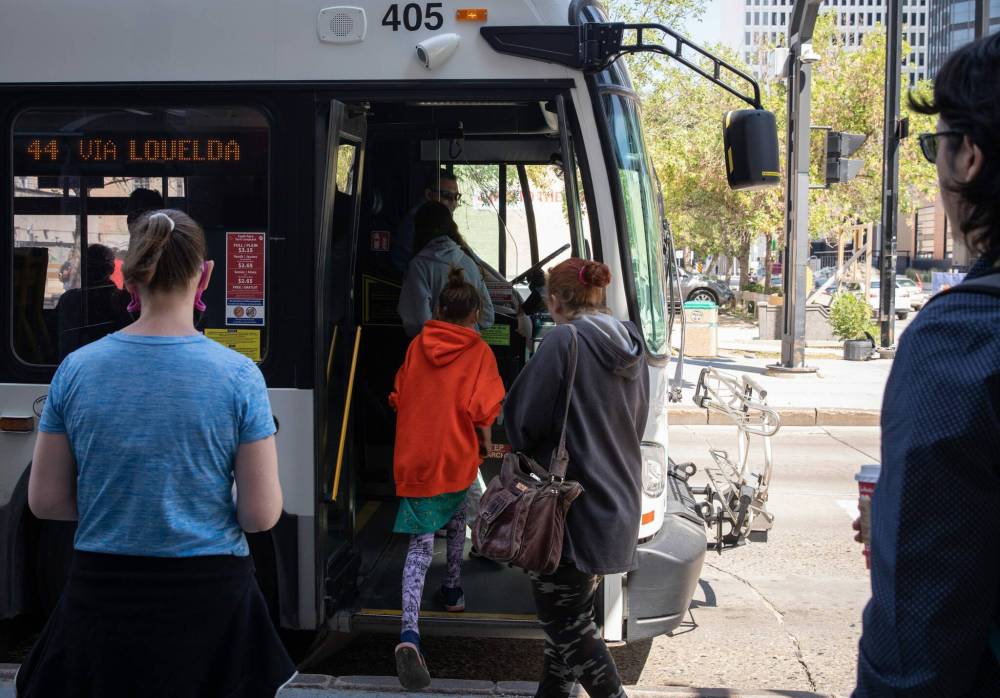
JESSICA LEE / FREE PRESS FILES
Winnipeg Transit felt the provincial government chill.
In his first public statement after Tuesday’s triumph, the premier-designate also pledged to follow through on a temporary suspension of the provincial gas tax and to engage in productive discussions aimed at moving forward with the controversial search of the Prairie Green Landfill for the remains of two murdered Indigenous women.
One issue that was not front-of-mind during the campaign but must now be given serious consideration is rehabilitating the fractured relationship between provincial and municipal governments — specifically, setting a new and more productive direction for ongoing co-operation between the NDP government and the city of Winnipeg’s mayor and council.
When the Progressive Conservatives took power in 2016 under the leadership of then-premier Brian Pallister, Winnipeg immediately felt the impact of the new government’s blunt-force austerity agenda.
Funding to municipalities, including the capital, was effectively frozen; the long-established 50-50 funding formula for transit was rescinded, and the Pallister government’s ongoing disinclination to participate in tri-level infrastructure funding left the city of Winnipeg unable to access untold millions of federal infrastructure dollars.
Beyond that, Pallister — seldom one to engage in collaborative niceties when a more combative avenue was available — showed little interest in having any kind of relationship with the city’s leadership. Then-mayor Brian Bowman remarked early in 2019 that it was easier to arrange a meeting with the prime minister than with Pallister; 18 months later, in September 2020, he said he couldn’t remember the last time he’d spoken to the premier.

Things did improve slightly after Heather Stefanson assumed the PC leadership, with acrimony and apparent disdain replaced by a seeming willingness to engage. A transit-grant announcement last December and, earlier this year, a merciful end to the PCs’ six-year freeze on municipal funding signalled that an election-year change of attitude on Broadway might bode well for operations on Main Street.
Kinew would do well to continue that trend, recognizing that much of what he aspires to achieve as premier — particularly on issues of grave concern such as homelessness, addiction, public safety and more — will be more easily achieved in collaboration with civic government, which is directly responsible for executing the required ground-level action.
What the city needs are the tools, capacity and budgetary latitude to get things done; what the province must display is the political will to support those efforts.
“I am optimistic about what we can achieve for our city and our province,” Mayor Scott Gillingham said Tuesday night in response to the election result.
It’s up to Kinew to prove the optimism is justified.