

Criminalizing denial wouldn’t work
Advertisement
Read this article for free:
or
Already have an account? Log in here »
To continue reading, please subscribe:

Digital Subscription
One year of digital access for only $205*
- Enjoy unlimited reading on winnipegfreepress.com
- Read the E-Edition, our digital replica newspaper
- Access News Break, our award-winning app
- Play interactive puzzles
*First annual payment billed as $205.00 + GST for one year. This annual subscription will automatically renew at $233.00 + GST every 52 weeks (10% off the regular annual price of $259.35). Offer available to new and qualified returning subscribers only. Cancel any time.
To continue reading, please subscribe:
Add Free Press access to your Brandon Sun subscription for only an additional
$1 for the first 4 weeks*
- Enjoy unlimited reading on winnipegfreepress.com
- Read the E-Edition, our digital replica newspaper
- Access News Break, our award-winning app
- Play interactive puzzles
*Your next Brandon Sun subscription payment will increase by $1.00 and you will be charged $17.95 plus GST for four weeks. After four weeks, your payment will increase to $24.95 plus GST every four weeks.
Read unlimited articles for free today:
or
Already have an account? Log in here »
Hey there, time traveller!
This article was published 02/12/2023 (1033 days ago), so information in it may no longer be current.
In an era where disinformation spreads like wildfire, the question of how to successfully combat the bad information with the good has proven as difficult as it is important.
At least on one front, the Canadian government is mulling whether or not it should do so through the law itself.
Federal Justice Minister Arif Virani, the Canadian Press reported Sunday, is considering options on how to deal with the issue of residential school denialism — which is to say, speech which marginalizes or denies the abuses against Indigenous children within the residential school system.
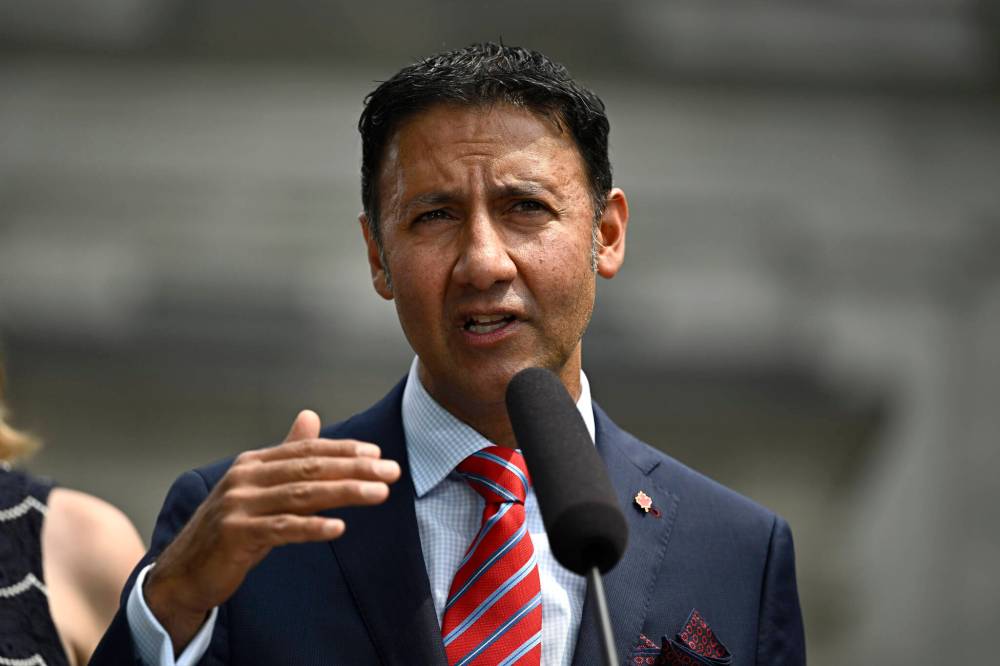
THE CANADIAN PRESS/Justin Tang
Minister of Justice and Attorney General of Canada Arif Virani.
Kimberly Murray, a special interlocutor brought in to advise on the discovery of potential unmarked gravesites at residential schools, has made some recommendations. Among those recommendations is that the government amend the Criminal Code in order to criminalize residential school denialism.
The measure is harsh, and while the impulse to come down hard on rampant denial of history is understandable, to criminalize the speech is wrongheaded. And more than that, such a move is doomed to fail.
Consider the example of Poland. In 2018, the Polish government brought in a law criminalizing speech which attributed responsibility for the crimes of the Holocaust to Poland and the Polish nation. The move was born, partly, out of a long-simmering frustration within Poland over the regular-but-mistaken conflation of atrocities committed within Poland and the actions of Poles themselves and their government: while Poland did not build or operate Nazi concentration camps, the phrase “Polish death camps” fell into regular use, owing to their location.
It was a bad and short-lived idea: after an international outcry against the law, both for its censorious nature and for what many saw as the government’s attempt to assert that no Polish person had any involvement in the crimes of the Holocaust, the Polish government decriminalized the speech yet again. The law only lasted five months before it was amended to be merely a civil offence, the punishment now a fine instead of prison.
A law against residential school denialism — while not an apples-to-apples comparison to the Polish law — has similar problems. Detractors will argue that the government is infringing on free speech, or suppressing information. It is in all likelihood bound to embolden those who deny the abuses of the residential school system. While it may not be formed or intended as a cover-up, or attempt to force a particular narrative, it would sure look that way.
Then there’s the problem of enforcement. Between criminal and civil cases, and incidences of hate speech already covered under existing legislation, it would be difficult if not impossible to successfully keep track of and prosecute scofflaws. Will the Canadian justice system go after every Facebook user who posts conspiracy theories? Will it investigate every report of every tense conversation on the subject?

In the end, such a law is likely to wind up toothless. Recall that Canada has criminalized Holocaust denial, and yet it persists.
Frustrating though it may be, the battle against disinformation and denial of the facts won’t be successfully fought through criminalization. The answer instead has to come from other institutions.
A robust education system, which can provide comprehensive instruction of our history, is paramount. Not only for Canadian history and its dark chapters, but for world history (read: Holocaust education).
There is also something to be said for action at the level of community. If the real facts are to be upheld, we all have a part to play. Our history cannot only be contained in books, or taught in classes, or printed in the newspaper. It must be remembered and the context it brings must be a part of how we live in this country. Which means calling out disinformation where it’s being spread.
It’s not the job of the law to slap cuffs on those who speak falsely. It’s up to the rest of us to keep the truth alive.