

Time to get tough on foreign interference
Advertisement
Read this article for free:
or
Already have an account? Log in here »
To continue reading, please subscribe:

Digital Subscription
One year of digital access for only $205*
- Enjoy unlimited reading on winnipegfreepress.com
- Read the E-Edition, our digital replica newspaper
- Access News Break, our award-winning app
- Play interactive puzzles
*First annual payment billed as $205.00 + GST for one year. This annual subscription will automatically renew at $233.00 + GST every 52 weeks (10% off the regular annual price of $259.35). Offer available to new and qualified returning subscribers only. Cancel any time.
To continue reading, please subscribe:
Add Free Press access to your Brandon Sun subscription for only an additional
$1 for the first 4 weeks*
- Enjoy unlimited reading on winnipegfreepress.com
- Read the E-Edition, our digital replica newspaper
- Access News Break, our award-winning app
- Play interactive puzzles
*Your next Brandon Sun subscription payment will increase by $1.00 and you will be charged $17.95 plus GST for four weeks. After four weeks, your payment will increase to $24.95 plus GST every four weeks.
Read unlimited articles for free today:
or
Already have an account? Log in here »
Hey there, time traveller!
This article was published 18/12/2023 (1022 days ago), so information in it may no longer be current.
Canada’s hockey players are famous for battling for the puck in the corners, even dropping their gloves and fighting for it when the need arises.
The country’s leaders and its diplomatic corps usually must take a more genteel approach when they enter the global political arena.
Canada doesn’t carry the same military muscle nor does it wield the same economic clout as more powerful nations, some of whom are using those advantages brazenly to interfere in Canada’s politics.
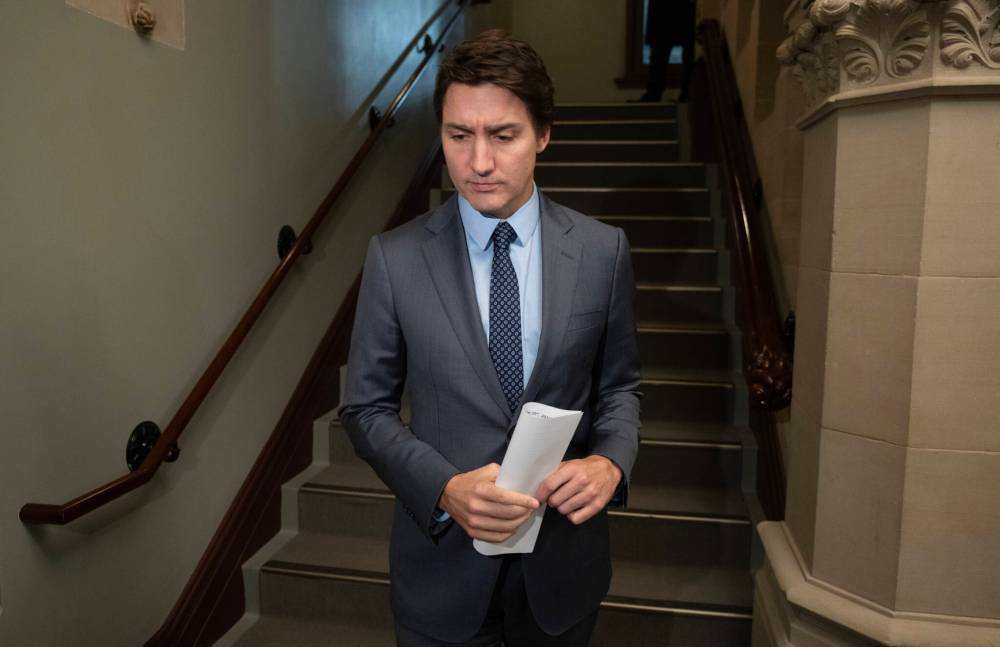
Adrian Wyld / Canadian Press Files
Prime Minister Justin Trudeau has deftly handled his concerns over foreign interference from India.
The most notable offender is India, which Prime Minister Justin Trudeau accused of spearheading the June 18 killing of Hardeep Singh Nijjar outside a gurdwara in Surrey, B.C.
Nijjar was a Sikh-Canadian and supporter of a separate Khalistani state, which is outlawed in India, and Trudeau said Thursday his accusation was meant to “put a chill” on future actions by India.
Narendra Modi, India’s prime minister, has denied any involvement in Nijjar’s slaying although an indictment in a United States court links an Indian government employee to a plan targeting Sikh separatists.
India’s influence on Canada’s political scene doesn’t stop there, according to an intelligence assessment from the Canadian Security Intelligence Service (CSIS).
In a 2022 report, CSIS says agents from India interfered with the 2022 federal Conservative leadership race and funds a number of politicians across Canada.
Canada has also accused China of meddling, most notably when the foreign affairs department said Conservative MP Michael Chong, who has criticized China’s crackdown on Hong Kong’s pro-democracy movement and Muslim Uyghurs, was a target of a disinformation campaign.
The CSIS report says China has also tried to influence candidates in federal, provincial and municipal elections.
Canada has gotten used to strained relations with U.S., its closest ally, especially during trade disputes and when leaders from both countries clash politically and personally.
John Diefenbaker didn’t get along with John F. Kennedy in the 1960s and Richard Nixon’s infamous audio tapes revealed his disdain for Pierre Trudeau, who likened Canada’s relationship with the U.S. as sleeping with an elephant, “affected by every twitch and grunt.”
While the relationship between the two countries has flourished with like-minded leaders — Brian Mulroney once sang with Ronald Reagan and Jean Chrétien and Bill Clinton were close allies — they hit a new low during the presidency of Donald Trump, who chose to court dictators and insult longtime allies, with Justin Trudeau being a favourite target of his bellicosity during Trump’s four tumultuous years in the White House.
American voters dumped Trump in 2020, but his right-wing supporters have fought on, even outside U.S.’s borders.

A significant portion of the millions raised to fund the so-called freedom convoy, which besieged Ottawa and blockaded border crossings to protest against vaccine mandates and Trudeau’s Liberal government, came from the U.S., most of whom were found to be Trump supporters.
Canada rarely has the leverage to use the “speak softly and carry a big stick” doctrine former U.S. president Theodore Roosevelt espoused in the early 20th century.
Instead, Canada ought to try the aggressive tactics of one of its heroes, hockey legend Gordie Howe, a nice guy away from the rink but who would roughhouse rivals who dared to interfere with him.
It’s a tactic Trudeau has employed deftly with India and must pursue against other countries who intrude in Canada’s politics.
Howe was no foreign-relations expert, but Canada’s leaders and diplomats would be wise to throw a nasty elbow once in a while to defend its sovereignty from those who seek to sway Canada’s politics in their favour.
Related Articles
Sharing Nijjar news meant to deter India: Trudeau


Advertisement Advertise With Us
Advertisement Advertise With Us