

Neglecting relationships in Africa is folly
Advertisement
Read this article for free:
or
Already have an account? Log in here »
To continue reading, please subscribe:

Digital Subscription
One year of digital access for only $205*
- Enjoy unlimited reading on winnipegfreepress.com
- Read the E-Edition, our digital replica newspaper
- Access News Break, our award-winning app
- Play interactive puzzles
*First annual payment billed as $205.00 + GST for one year. This annual subscription will automatically renew at $233.00 + GST every 52 weeks (10% off the regular annual price of $259.35). Offer available to new and qualified returning subscribers only. Cancel any time.
To continue reading, please subscribe:
Add Free Press access to your Brandon Sun subscription for only an additional
$1 for the first 4 weeks*
- Enjoy unlimited reading on winnipegfreepress.com
- Read the E-Edition, our digital replica newspaper
- Access News Break, our award-winning app
- Play interactive puzzles
*Your next Brandon Sun subscription payment will increase by $1.00 and you will be charged $17.95 plus GST for four weeks. After four weeks, your payment will increase to $24.95 plus GST every four weeks.
Read unlimited articles for free today:
or
Already have an account? Log in here »
Hey there, time traveller!
This article was published 16/02/2024 (970 days ago), so information in it may no longer be current.
As political and economic power waxes and wanes across the world, it’s important to know who you’re going to need on-side in the long term as well as the short. On this point, Canada is struggling.
The Canadian Press reported earlier this week that experts on the African continent fear that Canada is going to squander its relationships there, making way for bigger (and more eager) competitors to swoop in and reap the benefits.
A common perception of Africa in the first world is that of a continent in distress, its countries falling into war and its people in desperate need of aid. But that is by no means the full picture. A continent of over a billion people, African nations command more than a quarter of votes in the UN General Assembly. They possess great quantities of the rare minerals people the world over will need for the manufacture of everything from green energy technology to the cellphones on which so many of us are hopelessly reliant. As the Canadian Press notes, the continent also has massive potential for solar energy.
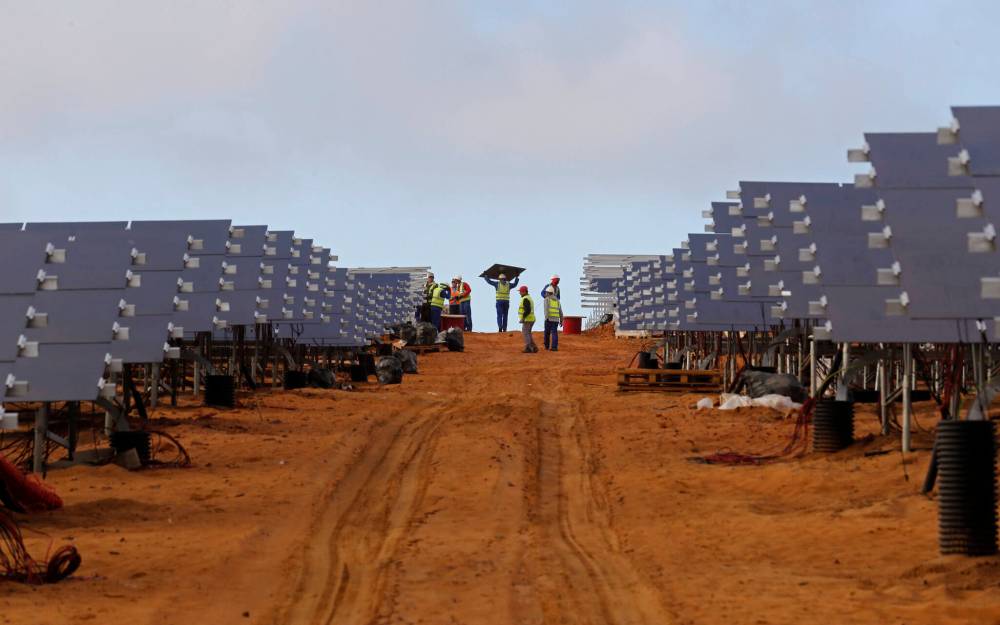
Schalk van Zuydam / AP Files
Solar power is only one small piece of Africa’s potential.
And yet, the federal Liberals’ strategy on Africa, promised long ago, is nowhere to be seen. A proposed strategy from May, 2023 floats support for the African Continental Free Trade Area and advises advancing economic diplomacy and increasing trade and investment promotion. But an official strategy and vision are so far nowhere to be found.
Time’s a-wasting: a continental free-trade deal is on the horizon, which promises to lift 30 million out of extreme poverty and deliver trillions into economics across the continent. There will be major deals to be struck with Africa’s 54 sovereign states, which will of course have their own needs and interests, though a continental trade agreement may make working with the bloc easier. Canada can’t afford to keep dithering on its plans. There are other players on the field. Russia and China, notably, are putting in effort to develop relationships on the continent, and to make partnerships between their countries and African governments known.
While Canada may not be able to match the spending power of the likes of China, it can makes its presence known in other ways. Nicolas Moyer, head of non-profit Cuso International, suggested to the Canadian Press that where Canada lacks financial power, it can make up for it with “long-term commitment to our partners.”
Moyer believes Canada needs Africa more than the other way around. That may well be correct. Many African newcomers — 22,085 from Nigeria alone in 2022 according to Immigration, Refugees and Citizenship Canada data — have arrived in Canada to make it their home and contribute to the country, as the continent’s emigres have done all over the world. (This is another file on which Canada could do better, as African international students have faced difficulties obtaining visas, with some asserting racial profiling is to blame.)
And unlike many parts the globe, Africa has a growing population of young people (its population is set to double by 2050). In an era of aging populations, many countries, including Canada, will be looking to migrants to fill the void. A positive reputation across the African continent will mean more people are willing to move here to live and work.

Canada has enjoyed a strong international reputation, historically, as peacekeepers and deal-makers, and as a key ally to a world superpower. But the influence of our neighbours to the south is weakening, and with it, Canada’s position on the global stage. The competition is hard at work, and great potential is emerging in parts of the world we’ve too long been lukewarm about.
It’s time to end the neglect for what is proving to be an increasingly important relationship.